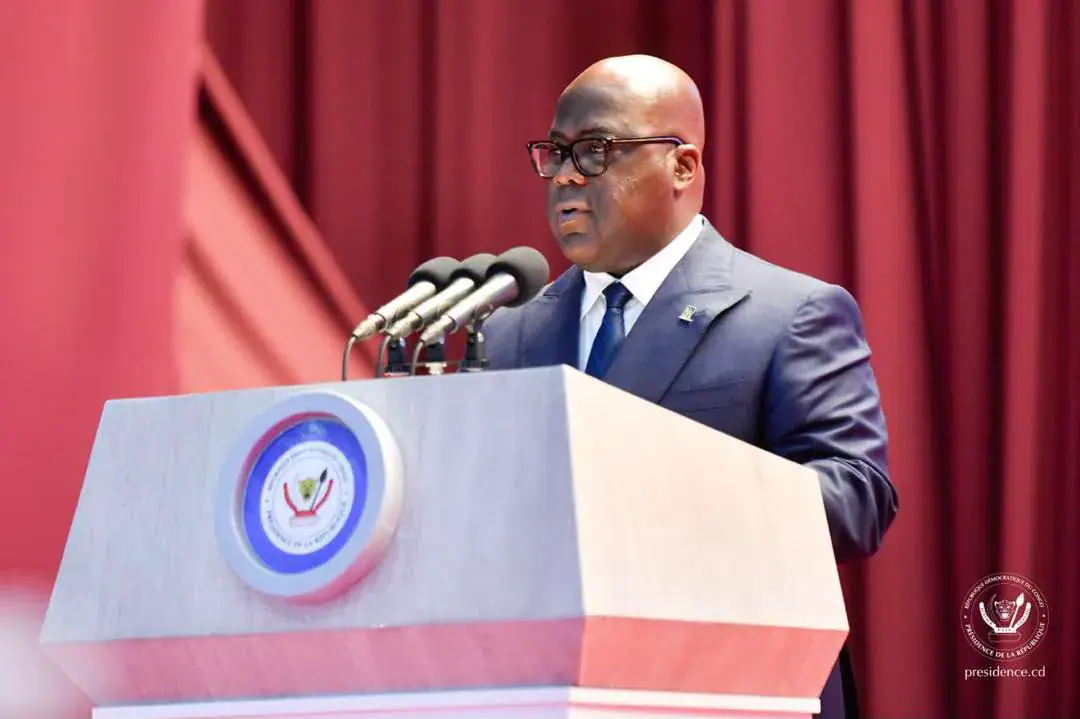
On November 23, Democratic Republic of the Congo President Félix Tshisekedi addressed the 12th Makutano Economic Forum in Kinshasa, emphasizing the need for the country to move beyond being a major mineral producer and become an economy that can effectively transform and manufacture its natural resources. He presented four key requirements to achieve this goal: developing energy, constructing sustainable infrastructure, investing in human capital, and combating anti-values.
Tshisekedi stressed that true mineral sovereignty goes beyond possessing natural resources, but rather lies in the country's ability to transform its minerals into sustainable economic wealth. He noted that the country should no longer just be a major producer of minerals, but an economy that can control the transformation and manufacturing of these resources. The President highlighted that his vision for economic sovereignty involves more than just exploiting natural resources, but also ensuring that the wealth generated benefits the nation, provinces, and local communities.
The President's first requirement for achieving this vision is increasing energy production to meet the needs of the national industry. He emphasized that the country, which has one of the world's largest electrical potentials, cannot accept its factories lacking electricity. Tshisekedi added that developing refining and mineral transformation activities requires reliable and competitive electricity. He also mentioned the importance of producing, transporting, and exchanging electricity with neighboring countries.
Tshisekedi's second requirement concerns infrastructure development, which he considers essential for facilitating trade and strengthening the country's competitiveness. He cited the Lobito corridor, modernizing railways, and improving border fluidity as key infrastructure projects. The President also emphasized the need to develop human capital, highlighting that the skills and talents of Congolese youth are a strategic resource for the country's industrialization.
The President's third requirement is investing in human capital, which he believes is crucial for the country's industrialization. He stated that the skills and talents of Congolese youth represent the country's most valuable resource. Tshisekedi's fourth requirement concerns governance and collective responsibility, emphasizing the need to combat corruption, ensure transparency in contract management, and respect for local populations.
Tshisekedi also highlighted the importance of the country's industrialization being built with private investments, technology, skills, and access to international markets. He emphasized that economic sovereignty does not mean isolation, but rather the ability to choose partners, define priorities, and guarantee a predictable, equitable, and respected legal framework. The President recalled the country's past, marked by the exploitation of natural resources that primarily benefited foreign industries rather than the national economy.
The Makutano Mining 2026 forum, taking place from November 22 to 25 in Kinshasa, brings together public decision-makers, investors, industrialists, and entrepreneurs to discuss the challenges and opportunities related to the local transformation of African mineral resources. The forum's theme, "Mineral Sovereignty in Action," reflects the country's efforts to take control of its natural resources and ensure that the wealth generated benefits its citizens.
Key points
- DR Congo President Félix Tshisekedi outlines four requirements for achieving economic sovereignty through local mineral transformation: developing energy, constructing sustainable infrastructure, investing in human capital, and combating anti-values.