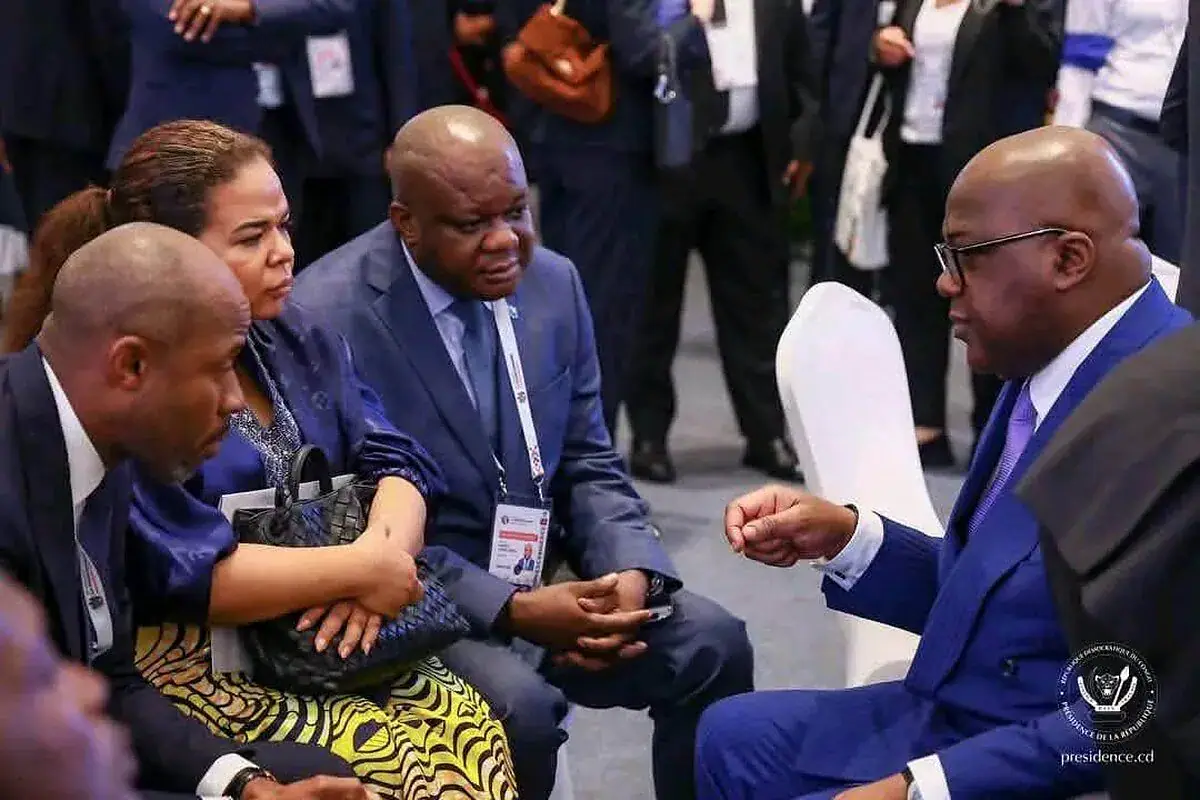
The 20th Francophonie summit in Phnom Penh, Cambodia, has marked a significant diplomatic win for the Democratic Republic of Congo under President Félix Tshisekedi. For the first time since the creation of the secretary general position in 1997, member states failed to reach a consensus on a new leader, pushing the decision to November 2027. This development came amid a tense diplomatic standoff between Kinshasa and Kigali.
A key outcome of the summit was the conditional extension of Louise Mushikiwabo's term as secretary general. Mushikiwabo, who is from Rwanda, will remain in office for 12 months but has committed not to seek another term. Additionally, Rwanda has agreed not to present a candidate for the position in 2027. This was a major objective for the Congolese diplomacy, led by Foreign Minister Thérèse Kanyikwamba, as Kinshasa had expressed strong opposition to Mushikiwabo's potential third term.
The diplomatic confrontation between Kinshasa and Kigali is rooted in the ongoing conflict in eastern DR Congo. The Congolese government accuses Rwanda of aggression, which Rwanda denies. However, the UN Security Council's resolution 2773 of February 21, 2025, condemned the M23 offensive supported by Rwandan forces and demanded their withdrawal from Congolese territory. This context made it imperative for the Francophonie to address the issue coherently with its stated principles of peace, solidarity, and respect for state sovereignty.
The Congolese strategy at the summit evolved significantly. Initially, Juliana Amato Lumumba was put forward as a candidate for secretary general. However, in a last-minute move, DR Congo agreed to withdraw its candidacy in favor of Romanian Dacian Cioloș, aiming for a consensus candidate. This tactical shift was an attempt to open negotiations and test the reciprocity of other member states. By not making its own candidacy a non-negotiable condition, Kinshasa sought to redefine the debate around the legitimacy of Mushikiwabo's potential continuation in office.
The compromise reached at Phnom Penh partially addresses the concerns of the DR Congo. However, it also highlights a deeper challenge facing the Francophonie: its credibility as an international organization advocating for peace, democracy, and human rights. The failure to designate a new secretary general and the need for an exceptional 12-month extension underscore the difficulties the organization faces in translating its principles into political actions, especially when its members are involved in significant security crises.
The outcome of the summit has implications for the future of the Francophonie and its member states. The organization has been forced to consider reforms in its leadership selection process. While several member states played a mediating role to preserve unity, the challenge lies in balancing unity with the upholding of core principles. For the DR Congo, the focus now shifts to leveraging this diplomatic victory to achieve concrete progress in peace and security, particularly in the eastern regions.
President Félix Tshisekedi and his diplomatic team have a critical role in ensuring that the momentum from Phnom Penh translates into tangible outcomes. This includes continued engagement at international forums, defense of UN Security Council resolutions, and insistence on the principles of sovereignty and territorial integrity. The 12-month transition period must be utilized effectively to advance these goals, rather than becoming an institutional pause.
Key points
- DR Congo's President Félix Tshisekedi secured a diplomatic victory at the Francophonie summit, ensuring Louise Mushikiwabo's term is extended with conditions and Rwanda will not present a candidate in 2027.