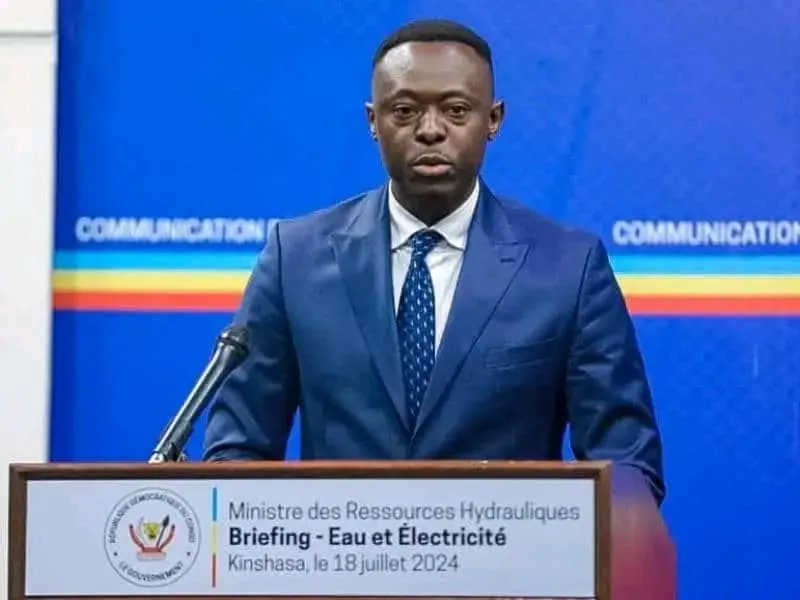
The Société nationale d'électricité (SNEL) of the Democratic Republic of Congo has announced plans to deploy a floating power plant to mitigate the persistent electricity outages in Kinshasa, the country's capital. According to Teddy Lwamba, SNEL's director-general, the 134 MW power plant will provide temporary relief to the city's residents and businesses, which have been experiencing frequent and prolonged power outages. The move is part of a broader effort to address the country's electricity challenges.
Lwamba attributed the power outages to a significant decline in water levels, which has affected the country's hydroelectric power generation capacity. He noted that the reduced water levels have resulted in some machines being idle, exacerbating the power shortage. The situation is further complicated by increasing demand for electricity, particularly in Kinshasa. The director-general emphasized that the floating power plant is a short-term solution to alleviate the crisis.
The floating power plant is expected to improve the power supply in Kinshasa by 20%, according to Lwamba. The plant will help to stabilize the grid and reduce the frequency and duration of power outages. However, it remains to be seen whether this temporary measure will address the underlying structural issues affecting the country's electricity sector. The DR Congo continues to face significant challenges in providing reliable and efficient electricity to its citizens.
Lwamba also highlighted the financial challenges facing SNEL, including unpaid electricity bills from government institutions. He stated that the government accounts for 25% of the country's electricity consumption but often fails to pay its bills. This situation creates an uneven playing field for the company and undermines its ability to provide reliable electricity services. Lwamba called for a review of the payment system to ensure that government institutions settle their electricity bills promptly.
The SNEL director-general also advocated for a subsidy for the electricity sector, similar to those provided to other strategic sectors of the economy. He argued that this would enable SNEL to maintain its equipment, upgrade its infrastructure, and improve the quality of its services. The proposal is part of a broader effort to address the country's electricity challenges and ensure that the sector is adequately funded.
The persistent power outages in Kinshasa have significant economic and social impacts on the city's residents and businesses. The outages disrupt economic activities, affect household operations, and compromise the delivery of essential services. The deployment of the floating power plant is expected to provide some relief, but a more comprehensive solution is needed to address the underlying issues affecting the electricity sector.
The success of SNEL's efforts to improve the power supply in Kinshasa will depend on various factors, including the availability of resources, the state of the infrastructure, and the company's ability to mobilize sufficient funding. Lwamba emphasized that a sustainable solution to the country's electricity challenges requires a multi-faceted approach that involves increasing power generation, improving infrastructure, and ensuring that government institutions pay their electricity bills.
Key points
- DR Congo's SNEL to deploy a 134 MW floating power plant to alleviate electricity outages in Kinshasa.
- The power outages are attributed to a decline in water levels, which has affected the country's hydroelectric power generation capacity.
- The floating power plant is expected to improve the power supply in Kinshasa by 20%.