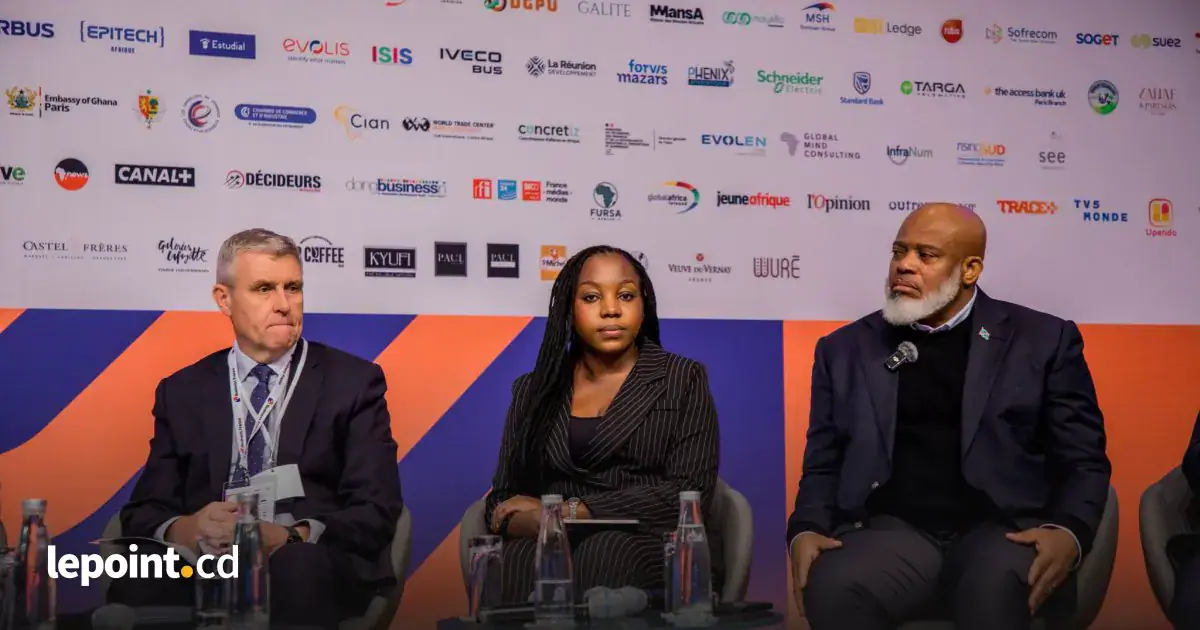
The Democratic Republic of the Congo's rural electrification efforts have received a significant boost with the allocation of $124 million to the Fonds Mwinda, a fund incubated by the Agence nationale de services et de régulation de l'énergie (ANSER) with World Bank support. This development was announced during the Ambition Africa forum in Paris, where ANSER's deputy director-general presented rural and peri-urban electrification as an open market for investors. The fund aims to increase access to electricity in rural areas, which currently stands at around 21% nationally.
The ANSER agency has been working to address the significant need for electricity in rural areas, with a goal of achieving 50% access by 2030 in rural and peri-urban areas, which cover nearly 80% of the country's territory. To achieve this, the agency has developed financial instruments that enable it to act as a guarantor for international funding. The Fonds Mwinda, with its four windows, including start-up grants, project support, result-based grants, and risk-sharing guarantees, is a key vehicle for this strategy.
The Fonds Mwinda was launched in September 2025 with an initial contribution of $5 million from the head of state in 2021. The fund aims to reach $500 million over three years, with a focus on supporting private sector projects. The World Bank's project AGREE, which finances access to electricity and water, has allocated $124 million to the fund, up from $78 million in 2024. This increase of $46 million, or 59%, will be used to support projects through a results-based financing mechanism.
The funding will be managed by a group led by GreenMax/Persistent, with subsidies disbursed in tranches once installations are verified by an independent agent. Two windows have been opened, one for mini-grid developers looking to expand their networks and another for distributors of solar home kits. The subsidy varies depending on the system's power, ranging from $31 for a basic kit sold for cash to $1,168 for a level 5 system sold on credit.
Despite the progress, the World Bank's review in February 2026 noted that no results had been recorded on the ground for the private sector access component, citing prolonged preparation and costly transactions. The overall disbursement rate for the AGREE project was 6.88% as of February. The review recommended dedicating all fund resources to projects ready to start in 2026.
ANSER is also exploring other options to support rural electrification, including the rehabilitation of existing but unused rural power plants. In October 2025, ANSER's director-general, Cyprien Musimar, highlighted the Fonds Mwinda and a German cooperation program as important steps, but noted that more efforts are needed. The agency has also signed a contract with India's Angelique International to upgrade the Mbombo hydroelectric plant in Kananga.
The effectiveness of ANSER's guarantee will depend on the success of the first subsidies disbursed and households connected through the Fonds Mwinda. As the DR Congo continues to address its significant energy needs, the support of international organizations and private sector investment will be crucial in achieving the country's electrification goals. The progress of the Fonds Mwinda and ANSER's efforts will be closely watched in the coming months.
Key points
- The DR Congo's ANSER agency has allocated $124 million to the Fonds Mwinda to support rural electrification projects.
- The fund aims to increase access to electricity in rural areas to 50% by 2030.
- The World Bank's project AGREE has increased its allocation to the Fonds Mwinda by 59% to support results-based financing.