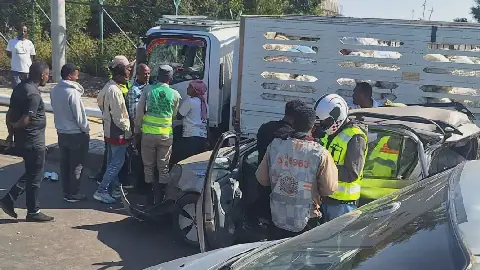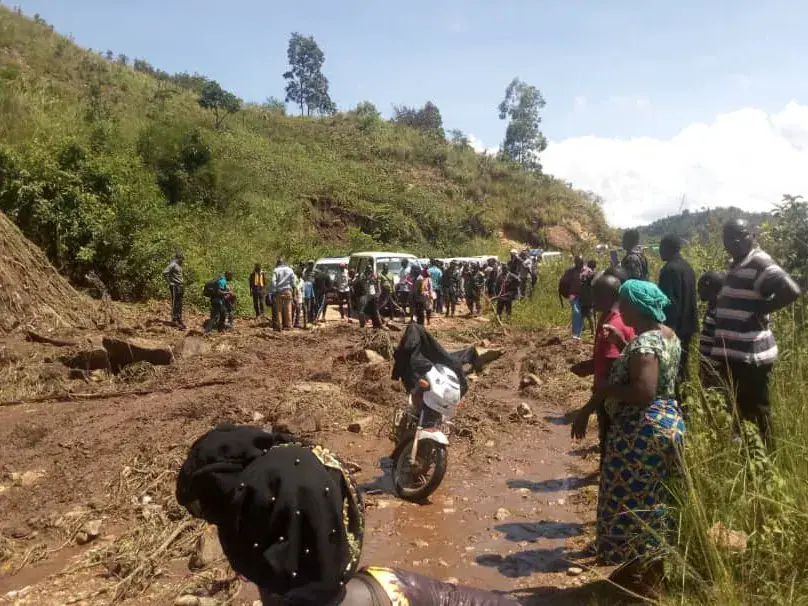
The national road No. 2 (RN2) in the Democratic Republic of the Congo, which connects Bukavu to Walungu, Mwenga, Kamituga, and Kitutu, has been facing severe degradation for several months. This has significantly disrupted the movement of people and goods, with numerous potholes forming along various sections, making traffic increasingly difficult and causing many vehicles to become immobilized.
According to the Citizen's Parliament for Democracy and Good Governance, known as "Baraza la Raiya," the most critical points of degradation are located at Kibumba, Muzombo, Munzele, Mungombe, Kipori, Kakulu, Kibanda, and Bilembo. In several of these areas, vehicles are stuck in the mud, while others have broken down or overturned. Motorcyclists are also experiencing significant difficulties navigating this route.
The consequences of the RN2's degradation are already being felt by the population of Mwenga and surrounding localities. The transportation of food, medicine, fuel, and construction materials is severely disrupted, leading to a rise in the cost of living and further complicating access to essential goods. This situation has prompted the Citizen's Parliament to sound the alarm.
On October 29, 2026, the organization addressed a note to national authorities, highlighting a genuine "accessibility crisis" on this strategic road axis. Romuald Amani Lwamba, the organization's national president, emphasized that the impassability of the RN2 not only affects the supply of populations but also the evacuation of the sick to Bukavu and the delivery of humanitarian aid to affected areas.
While acknowledging the country's difficult security context, Lwamba called on the government to urgently dispatch a technical mission to assess the road's condition and identify solutions for its rehabilitation. The organization proposes mobilizing available equipment from mining sites operated by, among others, Chinese companies to participate in the work of filling and treating potholes.
The organization also recommends involving security forces, including the FARDC and Wazalendo present in the area, to ensure the protection of equipment and workers responsible for these tasks. According to "Baraza la Raiya," rapid intervention from the authorities is indispensable to restore circulation on this vital axis connecting several territories of South Kivu and prevent a worsening of the economic and humanitarian difficulties already felt by local populations.
The degradation of the RN2 has significant implications for the region, with the potential to exacerbate existing humanitarian challenges. The organization's proposals aim to address the immediate needs of the affected populations and provide a framework for the road's rehabilitation.
Key points
- The RN2 road degradation disrupts travel and goods transport in DR Congo's South Kivu province.
- The situation drives up prices and complicates access to essential goods for local populations.
- Civil society calls for urgent government intervention to assess and rehabilitate the road.