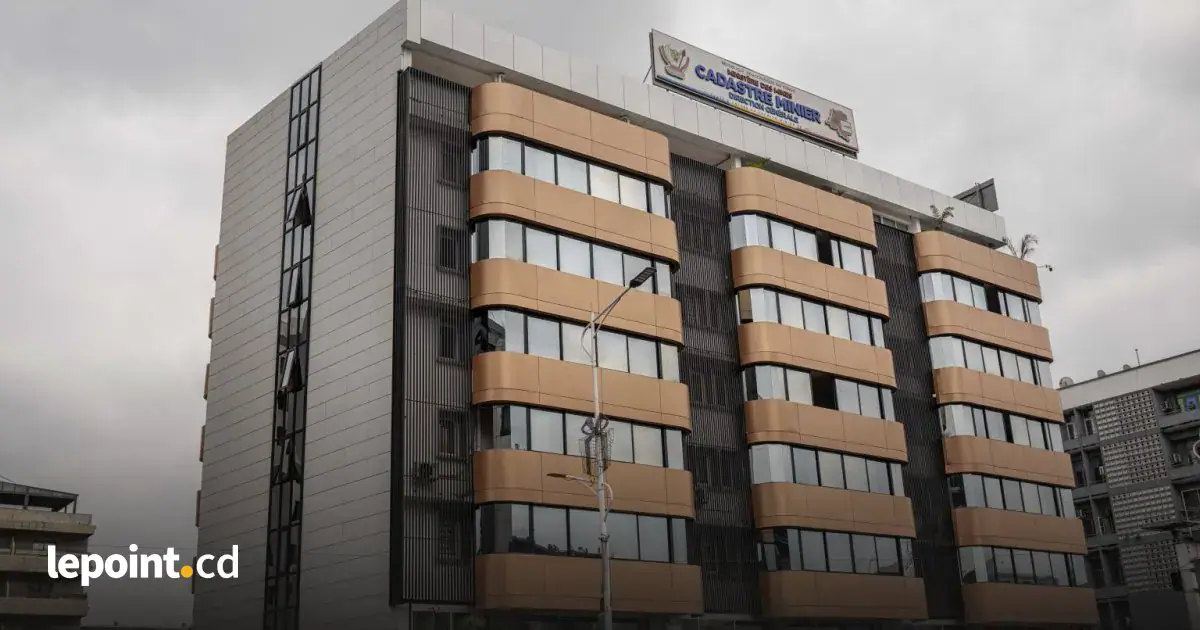
The Democratic Republic of the Congo's mining cadastre, known as CAMI, has seen a significant increase in its workforce over the past three years. According to a letter dated November 13, 2026, from the union delegation, the number of agents has risen from 142 to over 360, representing an increase of more than 218 agents or 150%. This rapid growth has raised concerns about the institution's ability to manage its salary mass and maintain financial viability.
The union delegation has expressed alarm over the impact of this increase on CAMI's financial sustainability. As a public institution whose resources depend on its activity, the rapid growth in personnel costs poses a significant challenge. The union emphasizes that the recruitment of new agents continued despite measures to suspend hiring, attributed to the Minister of Mines and the Chairman of the Board of Directors. If confirmed, this would indicate a lack of control and authority within the institution.
The union has also denounced practices it considers irregular, including "complacent" promotions and alleged deductions from agents' bonuses, referred to as "kata-kata". These practices, if confirmed, would affect both the fairness of treatment and the transparency of remuneration, two essential factors for internal cohesion. The union has requested explanations from the General Management on four key points: recruitment, respect for suspensions, disputed promotions, and remuneration management.
The union has threatened to take action before the competent courts if it does not receive a satisfactory response. This case highlights a recurring problem of governance in Congolese public institutions: the articulation between the supervisory authority, management bodies, and management, as well as the control of staffing and financial transparency. These elements are essential for the credibility of an institution responsible for a strategic sector for the national economy.
The rapid increase in the workforce has also raised concerns about the risk of insolvency. According to information that remains to be confirmed, the Financial Directorate has alerted to this risk. If confirmed, this would make the growth in personnel a subject of financial viability, not just personnel management. The union's concerns go beyond recruitment and promotions, highlighting the need for greater transparency and accountability within CAMI.
The case has sparked a confrontation between the union and the institution's hierarchy. The union's demands for explanations and action highlight the need for better governance and management within Congolese public institutions. The mining sector is a strategic sector for the Congolese economy, and the credibility of CAMI is essential for the proper functioning of this sector.
The outcome of this case will be closely watched, as it has implications for the governance of public institutions in the Democratic Republic of the Congo. The union's action and the institution's response will determine the future of CAMI and its ability to manage its workforce and finances effectively.
Key points
- The union has raised concerns over the rapid increase in CAMI's workforce and its impact on the institution's financial viability.
- The union has denounced irregular practices, including "complacent" promotions and alleged deductions from agents' bonuses.
- The case highlights a recurring problem of governance in Congolese public institutions, including the need for greater transparency and accountability.