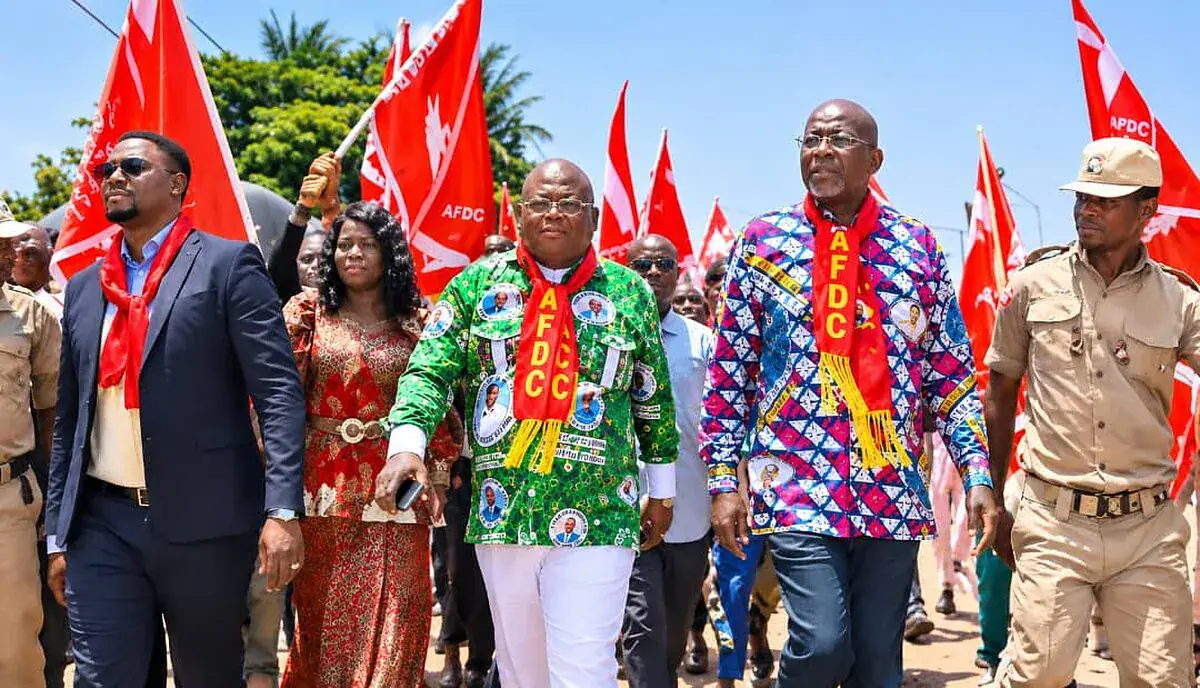
The AFDC party, led by a crisis committee headed by Clovis Otto Bahizi and Thierry Betu Tshibadi, is working to consolidate its presence in provinces amid internal tensions over leadership. A delegation recently visited Mbuji-Mayi in the Kasaï Oriental province to launch a campaign to revitalize party structures. The visit included a meeting with militants and the presentation of a new provincial leadership team.
The crisis committee's efforts aim to reaffirm its position within the Union Sacrée de la Nation, the political platform supporting President Félix-Antoine Tshisekedi Tshilombo. The committee has clarified its position, reiterating its commitment to the majority president and condemning any use of arms against the Republic. This move seeks to maintain the party's visibility within the presidential majority.
Clovis Otto Bahizi has defended the legitimacy of the crisis committee, stating that it is currently managing the party's daily affairs pending a new institutional stage to clarify leadership. He also announced an upcoming congress to designate future AFDC leaders, following the dismissal of Modeste Bahati Lukwebo. This congress is a key element of the crisis committee's strategy to institutionalize its approach.
The AFDC party's crisis is rooted in a battle for legitimacy over leadership, with the committee seeking to demonstrate its effectiveness through organizational restructuring and militant mobilization. The new federal team in Kasaï Oriental must convince stakeholders of its ability to structure local bases, maintain militant mobilization, and sustain party organs beyond major political gatherings.
The crisis committee's visit to Mbuji-Mayi included an audience with Governor Jean-Paul Mbue Kapo, where they discussed the country's political and security situation, the Union Sacrée de la Nation's vision, and the AFDC leadership crisis. This meeting reflects the committee's effort to integrate its provincial deployment into an institutional visibility dynamic.
The AFDC party's revitalization efforts in Kasaï Oriental will be a test of its ability to translate mobilization into lasting implantation. The crisis committee's strategy aims to extend its influence nationwide, with the leadership crisis remaining a central issue. The outcome of this battle for control will depend on the committee's capacity to federate militants and gain recognition.
Key developments in the AFDC party's crisis include the announcement of a new congress, efforts to revitalize provincial structures, and reaffirmation of commitment to the Union Sacrée de la Nation.
Key points
- The AFDC party's crisis committee is pushing for a new congress to determine future leaders.
- The committee is working to revitalize provincial party structures amid internal leadership tensions.
- The party's efforts aim to maintain its position within the Union Sacrée de la Nation and support President Félix-Antoine Tshisekedi Tshilombo.