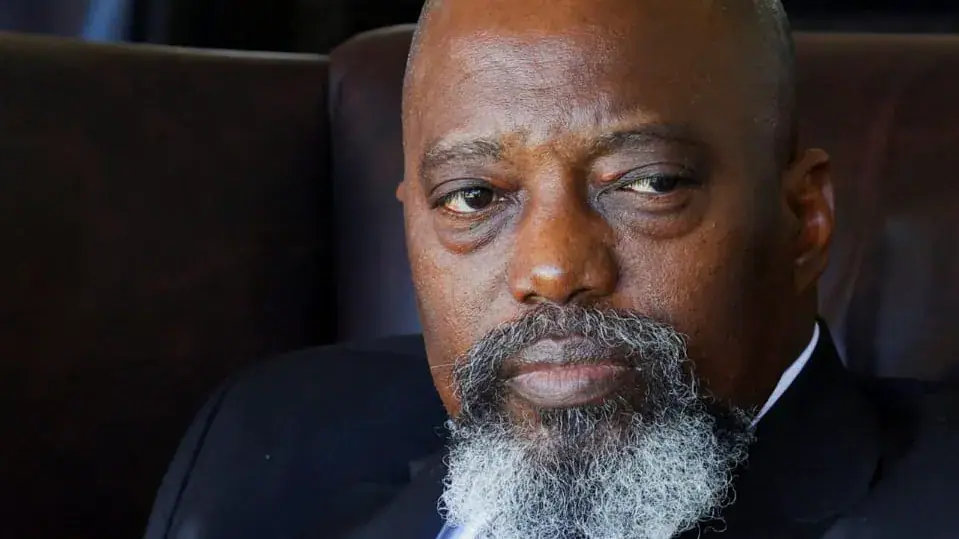
The government of the Democratic Republic of Congo has launched an effort to remove former President Joseph Kabila's name from public spaces. The initiative, led by the Vice Prime Minister of the Interior, Jacquemin Shabani, aims to identify and rename all streets, squares, buildings, and public installations that still bear Kabila's name. This move is seen as a significant step in the current administration's efforts to distance itself from Kabila's legacy.
The decision to remove Kabila's name from public spaces comes amid a complex and tumultuous period in Congolese politics. Kabila, who ruled the country from 2001 to 2019, has been at odds with current President Félix Tshisekedi since their alliance fell apart. In 2025, Kabila was condemned to death in absentia for "treason" and "war crimes" by the Haute Cour militaire. His party, the PPRD, was suspended, and his immunity as a senator was lifted.
The removal of Kabila's name from public spaces is part of a broader effort to erase his legacy and limit his influence on Congolese politics. The government has also imposed sanctions on Kabila, and the US has followed suit, sanctioning him in May 2026. The move to rename public spaces is seen as a way to symbolically distance the current administration from Kabila's rule and to assert control over the country's narrative.
The process of renaming public spaces will begin with an inventory of 16 sites, and governors have been given 30 days to submit a certified list of sites that still bear Kabila's name, along with proposed new names. The goal is to inscribe in the national consciousness that no personal ambition can justify treason or collaboration with a hostile power. The renaming process will be carried out in a methodical and protocol-driven manner.
The current administration's efforts to erase Kabila's legacy have been met with mixed reactions. While some see it as a necessary step to move forward, others argue that it is an attempt to erase history. The move has also raised questions about the impact on the country's collective memory and the potential for a backlash against the current administration.
Kabila's influence on Congolese politics is still being felt, despite his efforts to launch a new platform, Sauvons la RDC, and a politico-military movement, the Front pour la refondation nationale (FRN). The government has accused him of supporting the M23 rebel group, and his relationship with President Tshisekedi has deteriorated significantly since their initial alliance in 2019.
The removal of Kabila's name from public spaces marks a significant turning point in the country's efforts to move forward from his rule. As the government continues to assert its control over the country's narrative, it remains to be seen how this will impact the country's politics and collective memory in the long term.
Key points
- The government of the Democratic Republic of Congo has ordered the removal of former President Joseph Kabila's name from public spaces.
- The move is part of a broader effort to erase Kabila's legacy and limit his influence on Congolese politics.
- The process of renaming public spaces will begin with an inventory of 16 sites, and governors have been given 30 days to submit a certified list of sites that still bear Kabila's name.