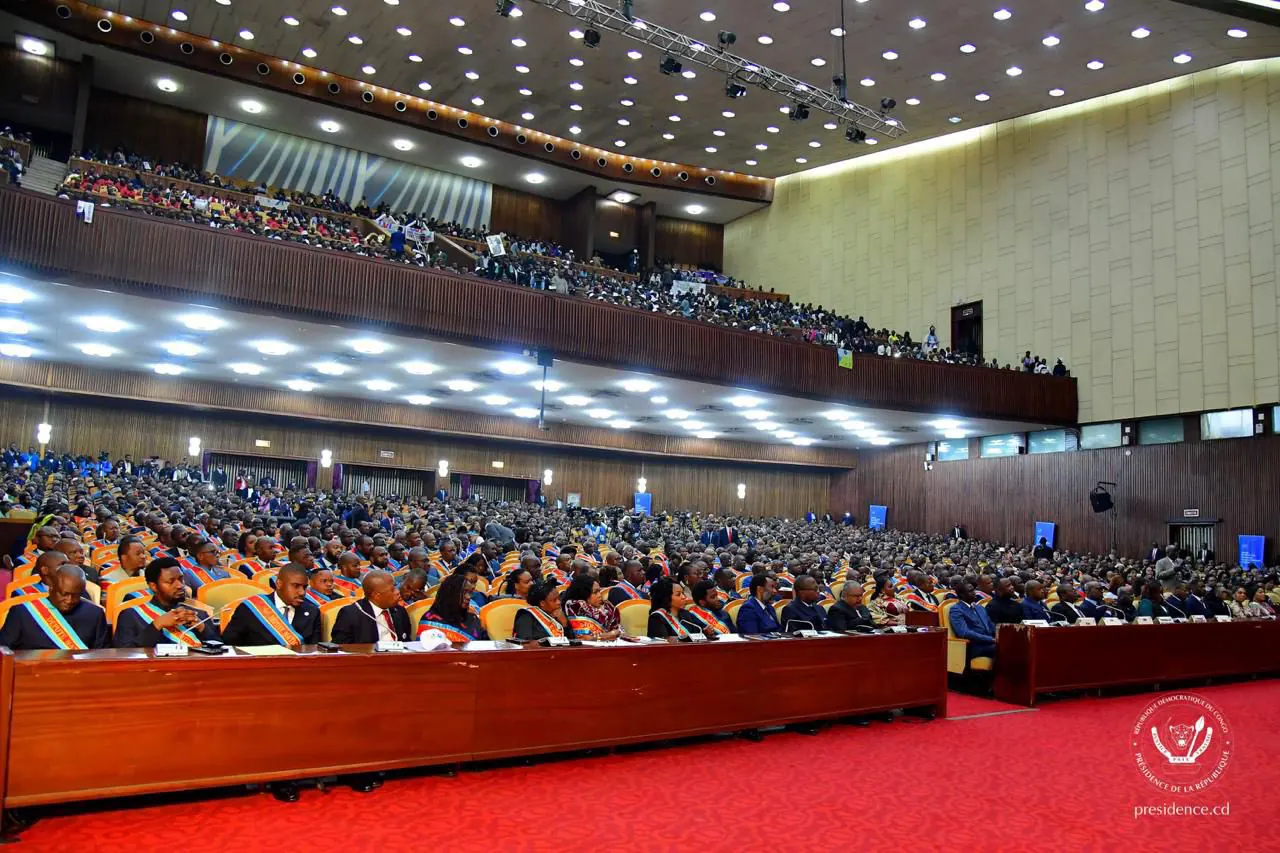
The Democratic Republic of Congo's National Assembly has issued a communiqué requesting that deputies document social infrastructure and achievements in their constituencies. This move has sparked controversy and debate over the role of deputies and the source of funding for these projects. The request was made to identify health centers and schools built or rehabilitated by deputies but not yet taken over by the state.
On October 7, National Assembly President Aimé Boji Sangara clarified the objective of this initiative, stating that it aims to identify centers of health and schools constructed or rehabilitated at the expense of national deputies but not yet supported by the state. The goal is to facilitate the mechanization and staffing of these facilities in the education and health sectors. According to Boji Sangara, deputies often go beyond their institutional roles to address social needs in their constituencies.
Boji Sangara recalled that Article 100 of the Constitution defines parliamentarians as legislators and controllers of government action, public enterprises, and public services. However, in their constituencies, deputies regularly face social solicitations from their constituents and intervene beyond their institutional missions. He justified the communiqué as an effort to inventory these social achievements and ensure they are taken over by the state.
The president of the National Assembly commended deputies for their assistance to constituents, including healthcare, school fees, and support for families during bereavement. He acknowledged that deputies often go beyond their role in addressing social problems presented to them daily by citizens. This clarification, however, has not convinced the New Congolese Civil Society (NSCC).
The NSCC's coordinator, Jonas Tshiombela, disputes the approach and calls for vigilance, questioning the constitutionality of deputies engaging in construction of schools, health centers, roads, and water access projects. Tshiombela demands transparency on the funding of these projects, particularly the sums allocated to deputies during parliamentary recess.
Tshiombela fears that the social achievements recorded may be used to justify the use of funds allocated to deputies and warns of confusion between the responsibilities of the executive and legislative branches. He questions whether the state is attempting to shirk its responsibilities or transform the role of deputies.
The controversy highlights the limits of social action by elected officials, the origin of its funding, and the state's responsibility in realizing and maintaining social infrastructure. The debate raises essential questions about the role of deputies and the need for transparency in their activities.
Key points
- The DR Congo's National Assembly has asked deputies to document social infrastructure built in their constituencies.
- The move has sparked controversy over the role of deputies and the source of funding for these projects.
- The New Congolese Civil Society demands transparency on the funding of these projects and questions the constitutionality of deputies engaging in construction activities.