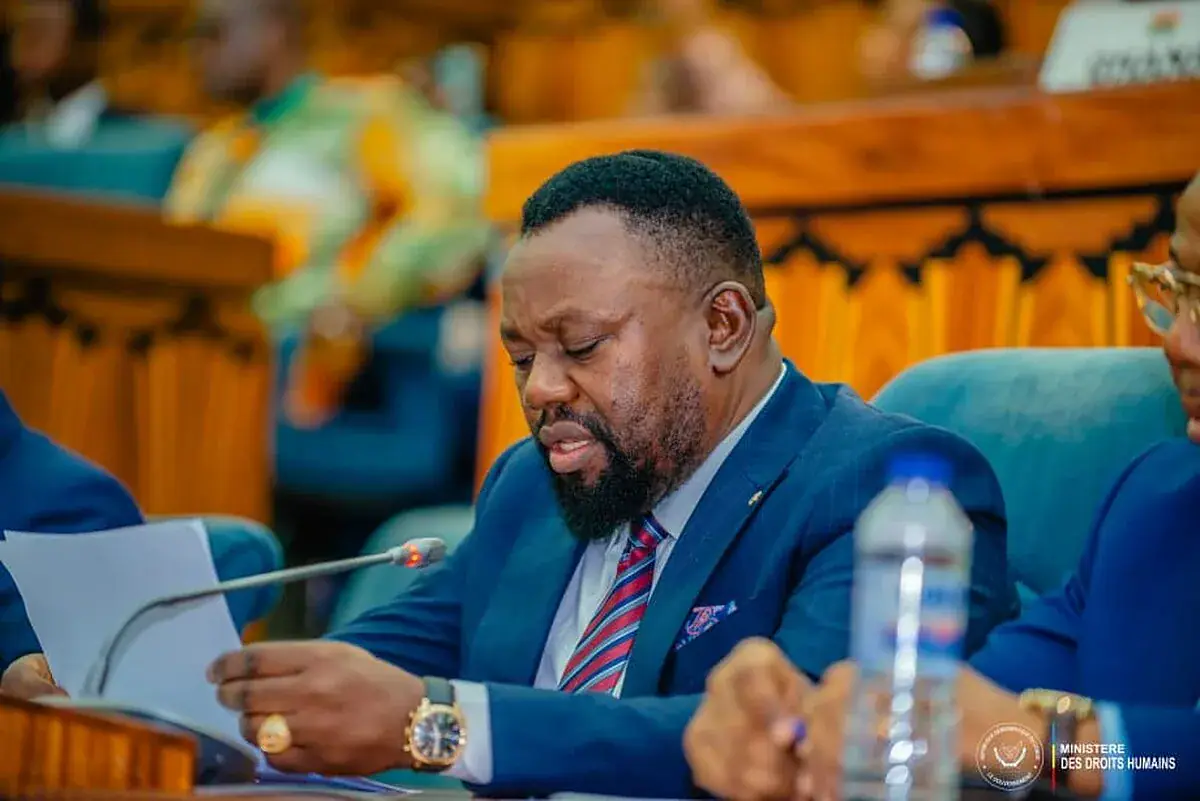
The Democratic Republic of Congo is intensifying its international advocacy for recognition of the genocides committed on its territory and the fight against impunity. A high-level diplomatic dialogue was held in Addis-Abeba, Ethiopia, attended by institutions, diplomatic representations, and human rights defenders. The Congolese delegation, led by Human Rights Minister Samuel Mbemba, aimed to push for concrete actions against those responsible for atrocities in the country.
During the closing ceremony on November 20, 2026, Minister Mbemba called on represented countries and institutions to support sanctions against Paul Kagame and Joseph Kabila, as well as adopt resolutions recognizing the Congolese genocides. He recalled the devastating impact of three decades of violence in the DRC, particularly on women, children, and the elderly. The Minister emphasized the Congolese government's determination to obtain justice for victims and their families.
Minister Mbemba urged participants to take the cause to the African Union and mobilize their governments to respond concertedly to human rights violations committed against Congolese civilians. He stressed the need to support peace initiatives, ensure effective implementation of commitments, and combat impunity to end the suffering of civilian populations. The DRC aims to continue its diplomatic efforts on the international stage to achieve recognition of the Congolese genocides.
The Congolese government is working to establish responsibilities and ensure accountability for atrocities committed in the country. Under the supervision of the Ministry of Human Rights, the Interministerial Commission for Assistance to Victims of Conflict-Related Sexual Violence and Other Serious Crimes (CIA-VAR) and the National Fund for Reparations for Victims (FONAREV) are contributing to this effort through scientific and technical expertise.
The DRC's efforts to combat impunity and seek justice for victims have been ongoing for several years. The country's human rights situation has been marked by numerous atrocities, including sexual violence, killings, and displacement of civilians. The international community has been called upon to support the DRC's efforts to bring perpetrators to justice and provide reparations to victims.
The African Union has been urged to take a stronger stance on human rights violations in the DRC. The organization's role in promoting human rights and protecting civilians has been questioned, particularly in cases where member states are accused of committing atrocities. The DRC's push for recognition of the genocides and action against impunity is seen as a test of the African Union's commitment to human rights.
The DRC's diplomatic efforts are expected to continue in the coming months, with the government seeking to mobilize international support for its cause. The country's human rights situation remains a major concern, with ongoing violence and human rights abuses reported in various parts of the country. The international community will be watching closely to see if the African Union and other international actors take concrete actions to support the DRC's efforts to combat impunity and seek justice for victims.
Key points
- The DR Congo's government is pushing for international recognition of the genocides committed on its territory and action against impunity.
- Human Rights Minister Samuel Mbemba called on the African Union to take action against those responsible for atrocities in the country.
- The DRC's efforts to combat impunity and seek justice for victims have been ongoing for several years, with the government seeking to mobilize international support for its cause.