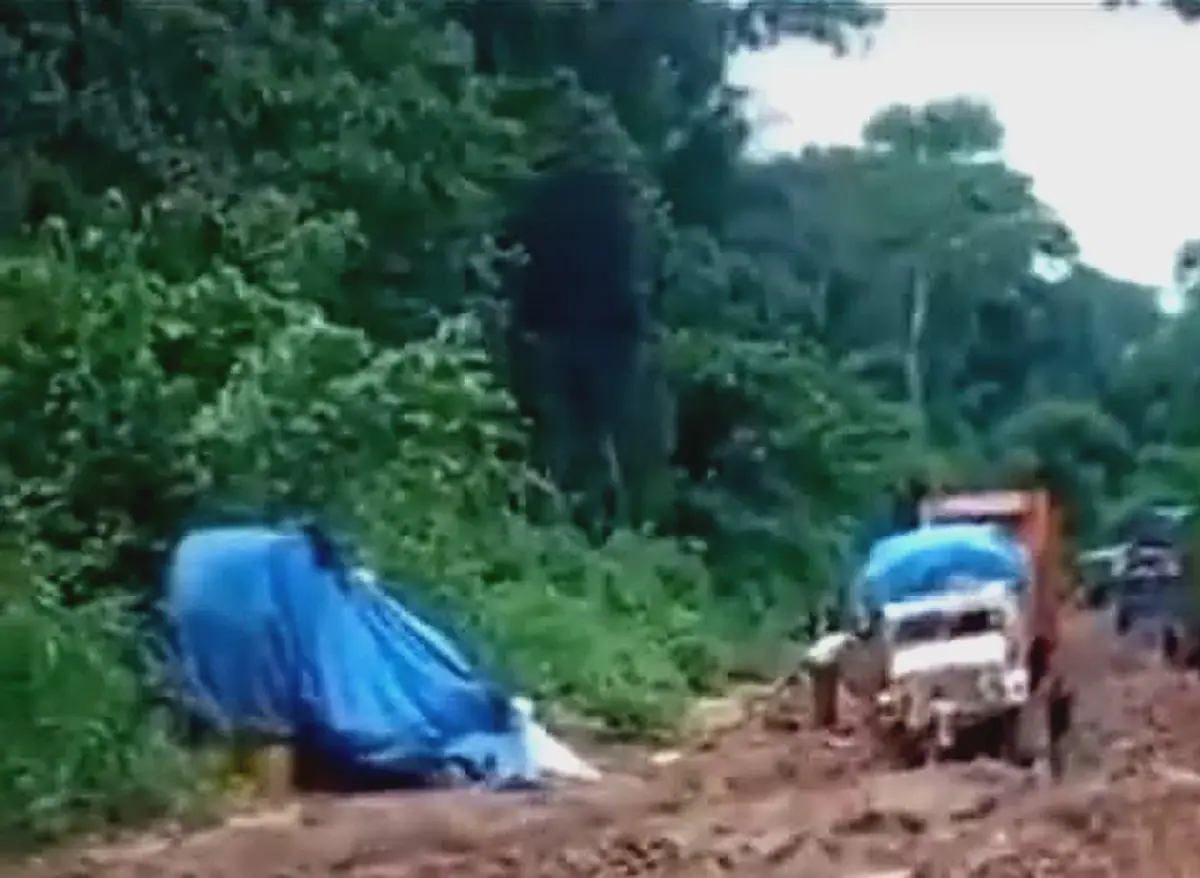
The management of the RN4 road in Ituri province, Democratic Republic of the Congo, by Molo Service has been contested by a provincial deputy, Isaac Lebisabo Gayabo. In a letter dated November 9, 2026, Lebisabo Gayabo expressed deep concern over the road's degradation, which is crucial for the circulation of people and goods, commercial exchanges, and stabilization operations in the province. He noted that the current state of the road is unsatisfactory, especially compared to the period before Molo Service was awarded the contract at the end of 2025.
Lebisabo Gayabo questioned how Molo Service, which benefits from 70% of the revenue generated by the road, can justify the lack of visible results on the ground. He cited the poor condition of the Komanda-Luna section, criticizing the company's performance and calling for an objective evaluation of the services provided. The deputy also raised concerns about the company's material capabilities, mentioning old equipment in Ndalya village and outdated vehicles near the Luna roadblock.
The deputy further argued that the evaluation of Molo Service should be based on actual work done, documentation, and concrete improvements in traffic conditions on the RN4. He emphasized that 70% of the revenue allocated to Molo Service must correspond to verifiable services and results that meet contractual obligations. Lebisabo Gayabo stressed that there should be no financial privilege without performance and no remuneration without results.
Lebisabo Gayabo requested that the military governor conduct an urgent, independent technical inspection of the Komanda-Luna section, along with a detailed report on revenue, expenses, available equipment, and Molo Service's achievements. He also called for a financial and technical audit of the contract, focusing on the distribution of 70% of the revenue and associated obligations. The deputy suggested that Molo Service's financial benefits should be conditional on meeting its contractual commitments.
If Molo Service's shortcomings are established, Lebisabo Gayabo recommended considering contract termination and transparently selecting a new operator with the necessary technical, material, and financial capabilities. He urged the provincial authorities to strengthen oversight of the road's management through a permanent monitoring mechanism and publication of maintenance results. The deputy invited the military governor to personally assess the RN4's condition during his visit to the area.
Lebisabo Gayabo emphasized the importance of ensuring that revenue generated by the strategic RN4 road benefits users through regular maintenance, smoother traffic, and transparent management. He called on the authorities to prioritize accountability and verify that Molo Service's operations align with the expectations of the province. The deputy encouraged the governor to evaluate Molo Service's performance based on concrete achievements rather than just the presentation of material resources.
Molo Service has not publicly responded to Lebisabo Gayabo's concerns. The company's stance and the military governor's position on the audit demands remain to be seen. The situation highlights the need for transparent management and accountability in the handling of critical infrastructure in Ituri province.
Key points
- The RN4 road in Ituri province is crucial for the circulation of people and goods, commercial exchanges, and stabilization operations.
- A provincial deputy has demanded an audit of Molo Service's management of the RN4 road due to concerns over the road's degradation and lack of visible results.
- The audit aims to verify Molo Service's performance, revenue distribution, and adherence to contractual obligations.