President Félix Tshisekedi of the Democratic Republic of the Congo has identified two major factors contributing to the country's deforestation: slash-and-burn agriculture and the exploitation of wood energy, which remains the primary source of domestic energy for many households. To combat this issue, Tshisekedi is advocating for the sedentarization of agriculture and the promotion of agroforestry. This approach aims to increase the productivity of already exploited land and limit the clearing of new forest areas.
The second axis of Tshisekedi's strategy focuses on accelerating access to electricity and developing alternative energy sources. The goal is to gradually reduce the population's dependence on firewood and charcoal for domestic needs. By transitioning to cleaner energy sources, the government hopes to mitigate the environmental impact of wood energy consumption. This initiative is part of a broader effort to balance the country's development needs with environmental preservation.
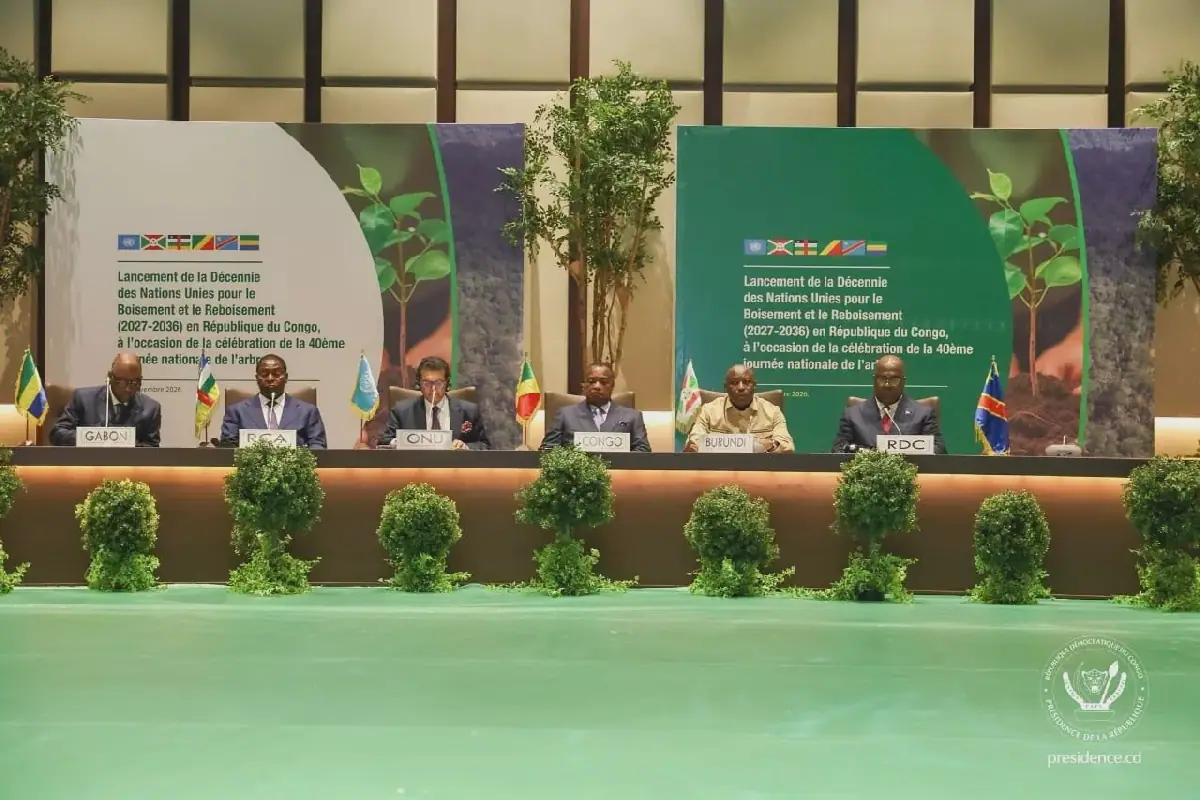
Tshisekedi's third lever for addressing deforestation involves strengthening reforestation initiatives, particularly through the national program "La forêt, c'est nous" (The Forest is Us), as well as the opportunities offered by the United Nations' Decade on Restoration. This strategy aligns with the vision of the Green Corridor Kivu-Kinshasa, an initiative that seeks to reconcile biodiversity preservation, sustainable agriculture development, access to clean energy, job creation, and improved living conditions for local communities.
The president's challenge is to preserve the country's forest heritage while meeting the food and energy needs of a constantly growing population. To achieve this, Tshisekedi is promoting a multi-faceted approach that addresses the root causes of deforestation. By engaging local communities and promoting sustainable land use practices, the government aims to reduce the country's reliance on forest resources.
Agroforestry, in particular, is seen as a key strategy for reducing deforestation while improving agricultural productivity. By integrating trees into agricultural landscapes, farmers can enhance soil fertility, increase biodiversity, and promote ecosystem services. This approach has the potential to improve food security while reducing the pressure on forest ecosystems.
The Green Corridor Kivu-Kinshasa initiative is a comprehensive program that aims to promote sustainable development in the region. By promoting agroforestry, clean energy, and reforestation, the initiative seeks to create jobs, improve living standards, and preserve biodiversity. This program is seen as a model for sustainable development in the region and has the potential to be replicated in other areas.
The success of Tshisekedi's strategy will depend on the effective implementation of these initiatives and the engagement of local communities. With the right approach, the Democratic Republic of the Congo can reduce deforestation, promote sustainable development, and improve the livelihoods of its citizens. The international community is watching closely, as the country's experience could inform efforts to address deforestation and promote sustainable development globally.
Key points
- President Tshisekedi is promoting agroforestry, clean energy, and reforestation to address deforestation in the Democratic Republic of the Congo.