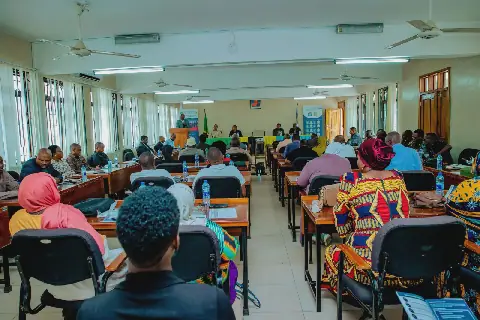
On October 7, 2026, President Félix-Antoine Tshisekedi addressed the 12th edition of ExpoBéton RDC in Kinshasa, emphasizing the need to link large infrastructure projects with national skills development. He called for better utilization of the experience of local workers and artisans, promotion of professional certification, and imposition of commitments on training, apprenticeships, and local employment in major construction projects.
Tshisekedi stressed that transforming Congolese cities depends not only on infrastructure but also on the qualifications of those building them. He advocated for recognizing the experience gained by workers, artisans, and site managers, which he believes deserves to be complemented by tailored training and certified to broaden workers' professional prospects. This approach aims to ensure that large infrastructure projects contribute to developing a skilled Congolese workforce.
To achieve this goal, Tshisekedi highlighted 244 occupational standards recently developed with the help of the Club BTP, the Chamber of Trades and Crafts, and the Ministry of Vocational Training. These standards are expected to align training with real business needs and sector-specific requirements. He tasked Prime Minister Judith Suminwa with coordinating their technical review, validation, and implementation.
The President emphasized the need for training programs that lead to recognized certifications and meet employer expectations. He also urged construction sector companies to take responsibility for transferring skills, open their construction sites to young apprentices, support trainers, and facilitate access to qualified trades. By doing so, Tshisekedi aims to make investments in infrastructure an additional driver of human capital development.
Tshisekedi's vision is to ensure that large construction projects not only produce roads, buildings, and infrastructure but also contribute to training a qualified, recognized, and adaptable Congolese workforce. He believes that each major construction project should enhance the country's skills. To achieve this, project implementers must integrate specific commitments to apprenticeships, training, certification, local employment, and skills transfer.
The President's initiative has been welcomed by industry stakeholders, who recognize the importance of developing local skills to drive sustainable development in the Democratic Republic of Congo. By prioritizing skills development, Tshisekedi aims to create a more competitive and self-reliant workforce, capable of driving the country's economic growth and development.
The implementation of Tshisekedi's vision will be closely watched by stakeholders, who expect to see significant improvements in the skills and employability of Congolese workers. With the right support and resources, the President's initiative has the potential to transform the country's workforce and drive sustainable economic growth.
Key points
- DR Congo President Félix Tshisekedi has called for large infrastructure projects to prioritize local skills development and create a more qualified Congolese workforce.
- The President has tasked Prime Minister Judith Suminwa with coordinating the validation and implementation of 244 occupational standards to align training with business needs.
- Tshisekedi's initiative aims to make investments in infrastructure a driver of human capital development and create a more competitive and self-reliant workforce.