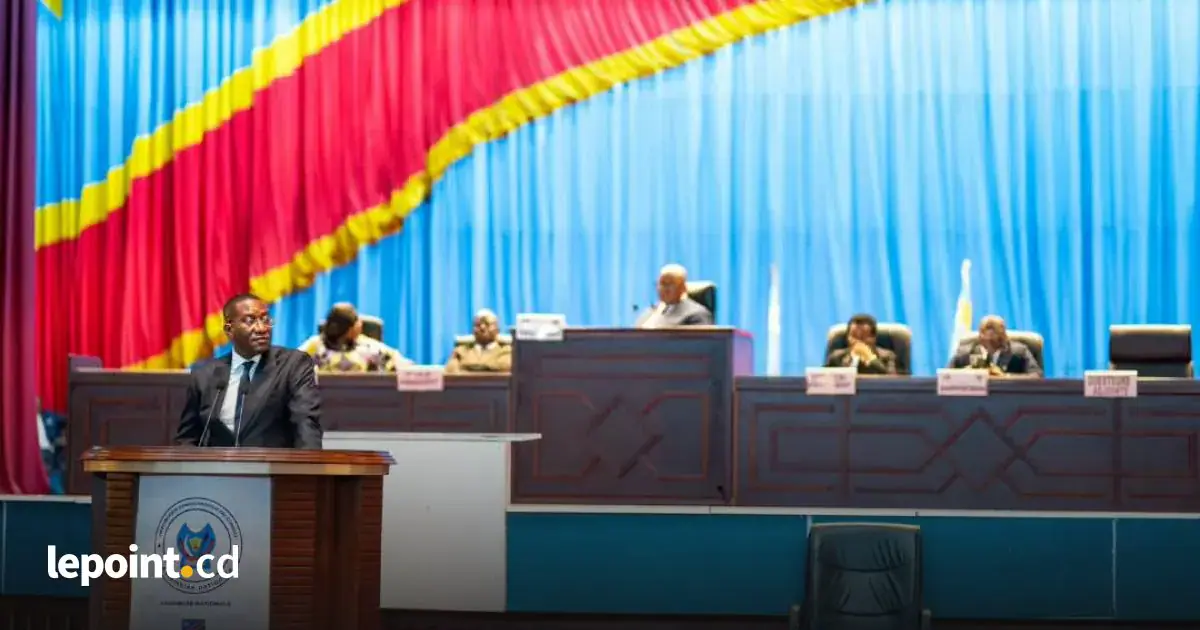
The Democratic Republic of the Congo's Minister of State for Planning, Guylain Nyembo, has introduced a new public-private partnership (PPP) law to the National Assembly. The proposed law aims to attract private investment for infrastructure development, addressing a significant funding gap. The current plan requires $94 billion, with a $44 billion deficit. Nyembo emphasized that no single budget can cover such an effort, highlighting the need for private sector involvement.
The new PPP law replaces the 2018 law, which had weaknesses in governance, project preparation, and financial commitments. The proposed law consists of 119 articles, covering the entire project lifecycle, from identification to execution and control. It introduces an open call for tenders as the standard method for awarding contracts. Private companies can still propose projects, but this will not grant them special rights. The law ensures state ownership and control, with the private partner responsible for financing, construction, and operation.
A key aspect of the new law is the creation of a fund to support project preparation, including technical, legal, and financial studies required by banks before lending. Each project will undergo an evaluation of its impact on public finances, including future payments, state guarantees, and potential risks. Approved contracts will be published, and the law requires national participation, local subcontracting, and knowledge transfer to Congolese companies.
The government aims to use the PPP law to attract private investment in priority sectors such as transportation, energy, water, and digital infrastructure. The Lobito corridor is a significant project that could benefit from this new law. By involving the private sector, the government hopes to accelerate development without incurring hidden debts. The law's effectiveness will depend on the fund's size and the law's implementation timeline.
Nyembo stressed that the new law will ensure transparency and accountability in PPP projects. All projects will be evaluated and monitored to prevent potential risks and ensure that they align with the country's development goals. The law will also help to build trust between the public and private sectors, which is essential for attracting investment.
The proposed law has been deemed receivable by the National Assembly and will now be examined and voted on. The timeline for the law's implementation and the size of the project preparation fund have not been announced. These factors will determine how quickly projects can be proposed to investors and implemented.
The DR Congo's efforts to revamp its PPP law reflect the country's determination to accelerate development and address its infrastructure needs. With the right implementation, the new law could help bridge the funding gap and attract much-needed private investment. The government's commitment to transparency and accountability will be crucial in ensuring the success of this initiative.
Key points
- The new PPP law aims to attract $44 billion in private investment to bridge the funding gap for DR Congo's development plan.