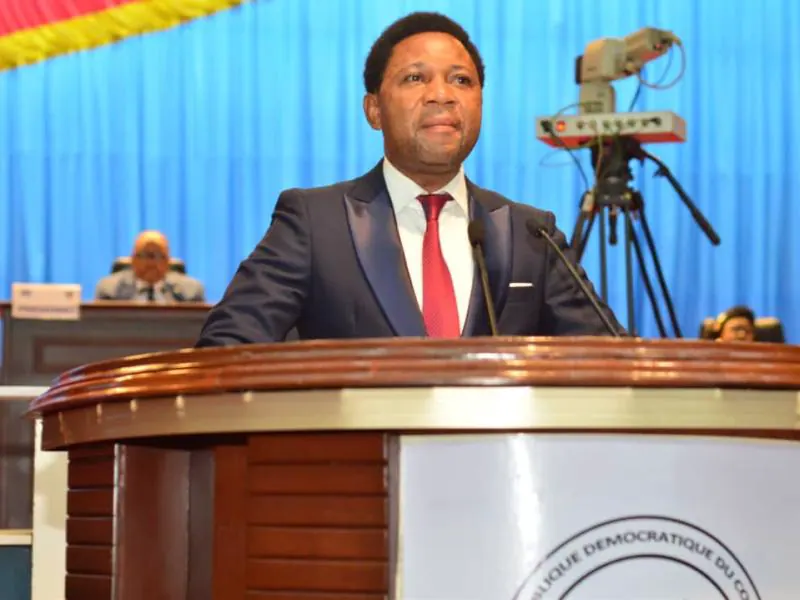
Democratic Republic of the Congo's national deputy, Isaac Tshiswaka Tshilombo, has called for a judicial investigation into the compensation of victims of Kibalongo in Kasumbalesa, a territory in the Haut-Katanga province. On October 9, 2026, Tshilombo wrote to the Minister of State for Justice, raising concerns about the management of funds intended for households affected by Kibalongo. According to Tshilombo, the mining company Musoshi disbursed $3 million for the victims, but many households claim they have not received their compensation.
Tshilombo's concerns include the alleged use of 25% of the funds, while the actual victims claim to have received nothing. He also suspects the existence of a parallel list of fictitious beneficiaries and the absence of publication of the official list of compensated individuals. The MP has requested three main measures: a judicial investigation into the management and use of the funds, a visit by judicial services to verify the identity of victims and the authenticity of beneficiary lists, and control of financial movements and supporting documents related to the disbursed funds.
The objective of Tshilombo's démarche is to establish the facts and determine possible responsibilities in the management of these compensations. In addition to the Kibalongo issue, Tshilombo has also raised concerns about the expropriation of homes in the Sous-station 4 neighborhood of Kasumbalesa. Residents denounce the expropriation measures, which they claim were taken without respect for legal guarantees. Tshilombo recalls that expropriation for public utility is governed by the Constitution and the law of February 22, 1977.
Tshilombo invokes Article 34 of the Constitution, which guarantees the right to private property and provides for fair compensation in the event of expropriation for public utility. He recognizes the state's power to carry out general-interest infrastructure projects but insists on the need to preserve the rights of concerned citizens. The MP also cites the example of Zambia, where a new city was built before the relocation of affected populations, and invites the Congolese government to consider similar solutions.
Tshilombo requests that the government ensure respect for the Constitution and legislation in force, evaluate the affected properties, and guarantee prior compensation. He also advocates for finding relocation solutions before any family displacement. According to Tshilombo, destabilizing the family, one of the foundations of society, also weakens society as a whole. Through these two démarches, Tshilombo places the protection of Kasumbalesa residents' rights at the center of the debate.
The MP's actions aim to shed light on the management of compensations for Kibalongo victims and expropriation procedures in Kasumbalesa. Tshilombo's concerns have been relayed to the national representation, and he hopes that the government will take concrete measures to address the situation. The issue of compensation for Kibalongo victims and expropriation in Kasumbalesa remains a pressing concern for the affected populations.
As the situation continues to unfold, Tshilombo's call for a judicial investigation and his advocacy for the rights of Kasumbalesa residents have sparked attention from various stakeholders. The outcome of his démarches and the government's response will likely have a significant impact on the affected communities. The cases highlight the need for transparency and accountability in the management of public funds and the protection of citizens' rights in the Democratic Republic of the Congo.
Key points
- DR Congo's MP Isaac Tshiswaka Tshilombo requests judicial investigation into compensation for Kibalongo victims.
- Tshilombo also raises concerns about expropriation of homes in Kasumbalesa's Sous-station 4 neighborhood.
- The MP advocates for fair compensation and prior relocation solutions for affected families.