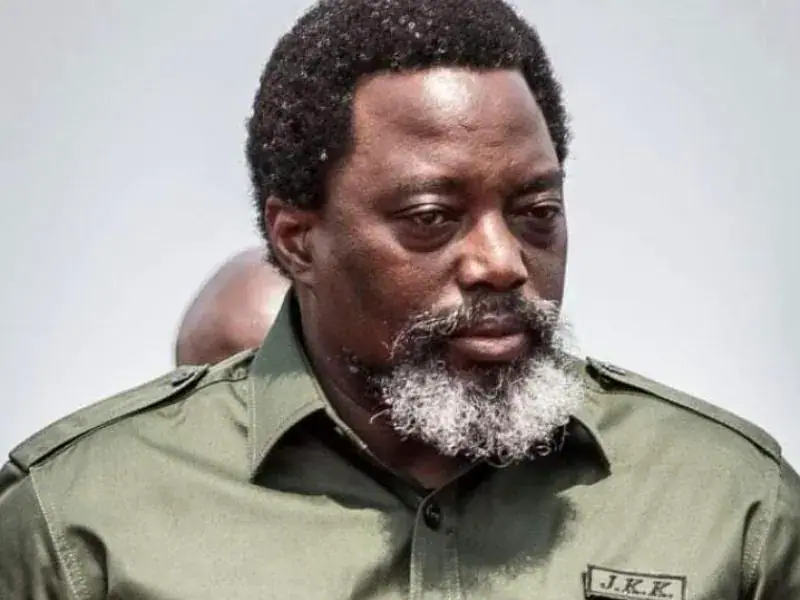
The government of the Democratic Republic of Congo has initiated a process to remove the name of former President Joseph Kabila from streets, squares, and other public places across the country. Provincial governors have been instructed to identify and list sites currently bearing Kabila's name and propose new names. This move comes amid heightened political and security tensions between Kabila, who has become a rebel leader, and the current administration.
A note from the office of Vice Prime Minister and Minister of the Interior, Jacquemin Shabani, was sent to provincial governors requesting they identify all public spaces named after Joseph Kabila with a view to renaming them. The government claims to have already identified 16 locations with Kabila's name. Provincial authorities have been given 30 days to compile a comprehensive inventory and suggest new names. This initiative reportedly has the "principle agreement" of President Félix Tshisekedi.
The decision to rename public spaces is justified by accusations of "treason and complicity with an enemy power" against Joseph Kabila. Kabila served as President of the DRC from 2001 to 2019 and is now opposed to the Kinshasa government, associated with a politico-military coalition known as the Front for the Refoundation of the Nation (FRN). This move does not currently affect his father, Laurent-Désiré Kabila, who ruled from 1997 until his assassination in 2001 and is recognized as a national hero.
This development occurs against a backdrop of escalating violence in eastern DRC. The armed group formerly known as M23, now called the Front for the Refoundation of the Nation, recently launched an offensive in South Kivu province. The group announced its name change and designated Joseph Kabila as its leader in mid-October, sparking concerns about a potential resurgence of violence, especially given its stated goal of overthrowing President Félix Tshisekedi.
In the night from Friday to Saturday, FRN fighters advanced about 50 kilometers along National Route 3 towards the strategic city of Walikale in North Kivu province. According to local and security sources, the attackers had not yet reached the locality. This advance comes after a period of relative stability along the front lines following a peace agreement.
The government's decision to remove Joseph Kabila's name from public spaces reflects the current tense political and military confrontation. The renaming initiative and the accusations against Kabila highlight the deep divisions within the country. The situation remains volatile, with ongoing clashes and political maneuvering.
The renaming of public spaces named after Joseph Kabila is part of a broader political strategy to distance the current government from his legacy. With the deadline for provincial authorities to propose new names approaching, the impact of this decision on the country's public spaces and political landscape will be closely watched.
Key points
- The DR Congo government has ordered the renaming of public spaces previously named after former President Joseph Kabila.
- The move is amid rising tensions between Kabila, now a rebel leader, and the current administration.
- Provincial governors have 30 days to identify and list sites currently bearing Kabila's name and propose new names.