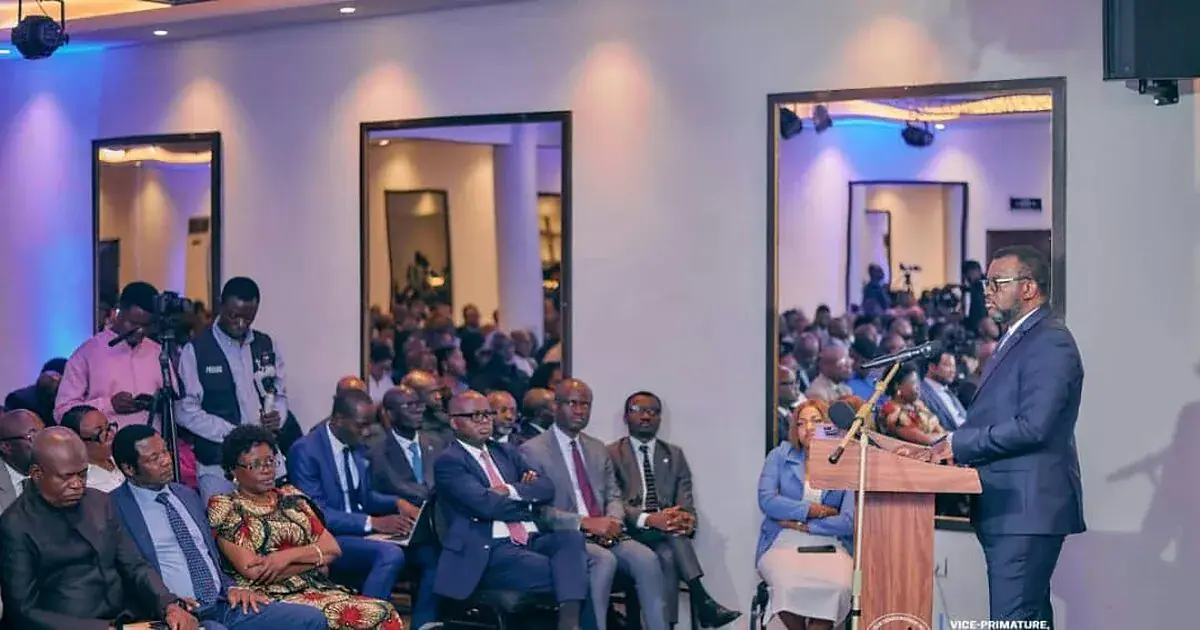
The Democratic Republic of Congo's government has started a new phase in reforming the remuneration system for state agents. On November 6, 2026, in Kinshasa, Vice-Premier Minister Jean-Pierre Lihau Ebua launched a paritary commission comprising government representatives and union leaders. This meeting is part of developing a new salary policy, incorporating recommendations from International Monetary Fund (IMF) and World Bank experts.
The commission's two-day meeting, from November 6 to 7, will review technical proposals, expert contributions, and potential amendments to enrich the final document. The goal is to establish a coherent system governing public administration remuneration nationwide. At the launch, Jean-Pierre Lihau announced that a draft decree for the new policy would be presented to the Council of Ministers on the same day.
According to Lihau, this reform marks a significant shift from previous practices, aiming to establish fairer remuneration distribution rules. He stated that the president of the Republic wants this new era to bring hope to many Congolese serving the state without fair compensation. The reform will not only focus on setting new salary scales but also on a set of principles to sustainably organize the state's salary system.
Key concerns addressed in the reform include reducing treatment disparities between administrations, correcting provincial and Kinshasa disparities, and harmonizing remuneration across state bodies. Lihau aims to eliminate justifiably difficult differences that have fostered a sense of injustice among public agents. He emphasized that the new policy will clearly define salary structures, grade correspondence, and rights for each regime and state body.
Representatives of workers have welcomed this initiative. Bienvenu Mulenda, first vice-president of the National Intersyndicale of Public Administration (INAP), praised the government's willingness to tackle long-standing remuneration imbalances. He believes the new orientation can help reduce unjustified differences between public services, particularly regarding salaries and benefits linked to bonuses.
The INAP plans to actively participate in the announced commissions to raise worker concerns and propose mechanisms to improve professional conditions. Additionally, Lihau addressed concerns about access to public service, including accusations of favoritism and nepotism in recruitment processes. To address these issues, he announced an obligatory competitive exam as a prerequisite for public service recruitment, promoting transparency and meritocracy.
Through these reforms, the government aims to build an administration based on salary equity, transparency, and meritocracy. The new salary policy and competitive exams for public service recruitment are expected to address long-standing concerns and promote fairness in the treatment of public servants.
Key points
- The DR Congo government has launched a salary reform for public servants to address inequalities and promote fairness in remuneration.
- The reform aims to establish a coherent system governing public administration remuneration nationwide, incorporating recommendations from IMF and World Bank experts.
- The government also plans to introduce obligatory competitive exams for public service recruitment to promote transparency and meritocracy.