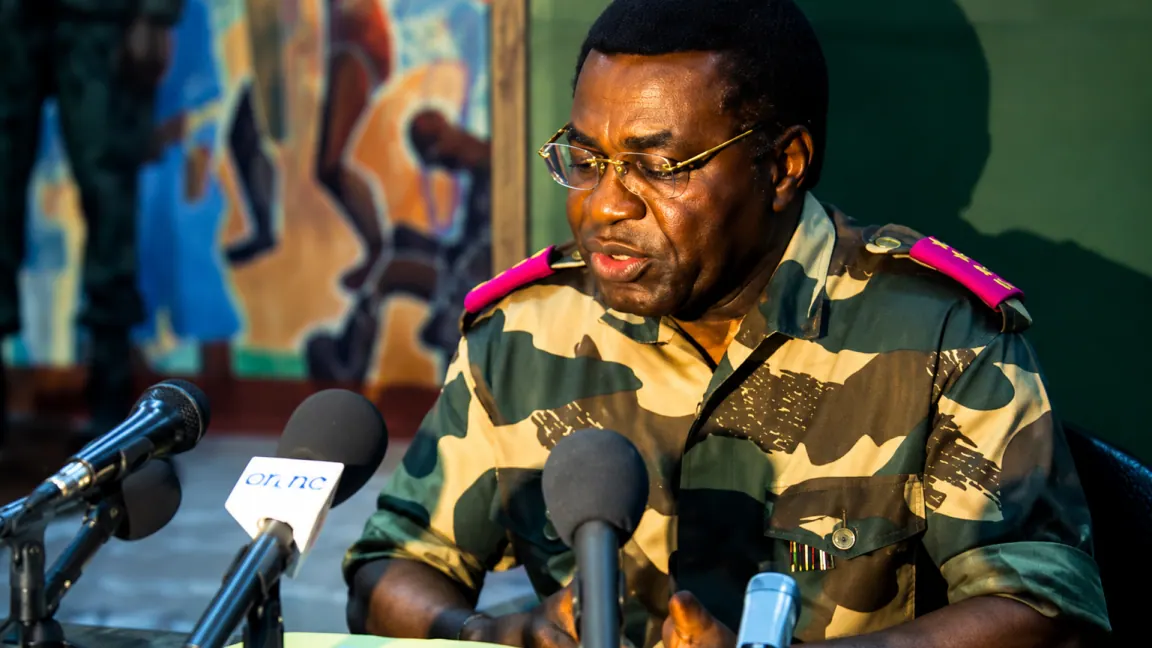
General Norbert Likulia Bolongo Lingbangi, the last Prime Minister of Zaire under President Mobutu Sese Seko, has passed away at the age of 87 in France. Born on July 8, 1939, in Basoko, Belgian Congo, Likulia Bolongo Lingbangi had a long career in politics and the military. He served as the auditor general of the Zairean Armed Forces and was a key figure in the regime of President Mobutu Sese Seko. His tenure as Prime Minister was brief, lasting only a month before the fall of Kinshasa in 1997.
In March 1978, Likulia Bolongo Lingbangi played a crucial role in the Major Kalume case, a highly publicized military trial. As the auditor general of the Zairean Armed Forces, he led the investigation and prosecution of 91 individuals accused of plotting against the Mobutu regime. The trial resulted in 78 convictions, including nearly 20 death sentences, many of which were carried out by firing squad at the Ndolo shooting range in Kinshasa. The case was widely criticized as a sham trial aimed at purging the military of potential opponents.
The Major Kalume case was a significant event in the history of Zaire, highlighting the repressive nature of the Mobutu regime. Major Charles Kalume Kahamba, the main defendant, was a close associate of Likulia Bolongo Lingbangi, having worked with him on a mission to Argentina shortly before his arrest. The trial was seen as a demonstration of the regime's willingness to use violence and intimidation to maintain power. The executions that followed were widely condemned by human rights groups and marked a dark period in Zaire's history.
Likulia Bolongo Lingbangi's legacy is complex and multifaceted. While he was a high-ranking official in a repressive regime, he also held academic positions and was a professor of penal law. His role in the Major Kalume case raises questions about his accountability for human rights abuses committed during the Mobutu era. As the Democratic Republic of Congo continues to grapple with its turbulent past, figures like Likulia Bolongo Lingbangi serve as a reminder of the need for accountability and reconciliation.
The Mobutu regime was marked by widespread corruption, repression, and human rights abuses. Likulia Bolongo Lingbangi was one of many officials who served the regime and benefited from its patronage. However, his role in the Major Kalume case and other human rights abuses committed during his tenure have not been fully acknowledged or addressed. The Democratic Republic of Congo has made significant progress in recent years, but the legacy of the Mobutu era continues to cast a shadow over the country.
Dominique Sakombi Inongo, a longtime associate of Mobutu Sese Seko, was another key figure in the regime. As the minister of information, he was responsible for promoting the regime's propaganda and cultural policies. Sakombi Inongo was a close ally of Mobutu and played a crucial role in shaping the regime's narrative. His legacy is also complex, with some viewing him as a skilled politician and others as a propagandist who helped to legitimize the regime's abuses.
The passing of General Norbert Likulia Bolongo Lingbangi serves as a reminder of the complex and often fraught history of the Democratic Republic of Congo. As the country continues to navigate its past and present, figures like Likulia Bolongo Lingbangi and Sakombi Inongo serve as a reminder of the need for accountability, transparency, and reconciliation. The country's leaders must confront the legacy of the Mobutu era and work towards building a more just and equitable society for all its citizens.
Key points
- General Norbert Likulia Bolongo Lingbangi played a key role in the 1978 Major Kalume case, condemning many young officers to death.