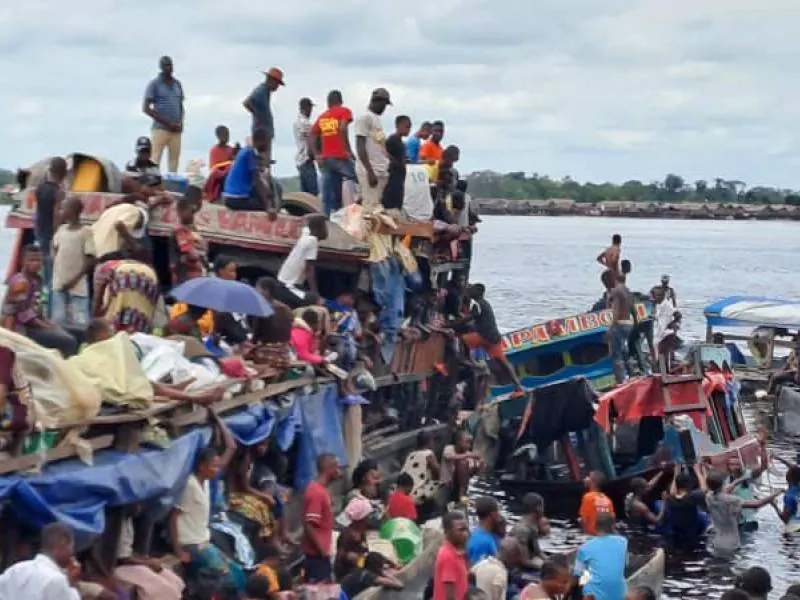
The Democratic Republic of Congo's government has taken steps to address a series of tragic river accidents that have claimed numerous lives. Deputy Prime Minister for Transport, Jean-Pierre Bemba, announced on October 7 that wooden canoes, known as baleinières, will be prohibited from navigating the Congo River, its affluents, and several waterways in the country, effective November 15. This decision aims to reduce the number of accidents and fatalities on the waterways.
The ban on wooden canoes was prompted by the persistent disregard for safety measures implemented to prevent accidents on navigable waterways. According to Bemba, some users of these waterways, particularly operators of wooden canoes, have continued to flout regulations, resulting in loss of life and significant material damage. The Deputy Prime Minister emphasized that this measure is necessary to prevent further incidents and ensure the safety of people and goods on the waterways.
To enforce the ban, Bemba has instructed the Congolese National Police and the Naval Force to intercept and, if necessary, seize wooden canoes found navigating beyond the specified date. The authorities will follow established legal procedures in carrying out these operations. This move is part of a broader effort to improve safety and reduce accidents on the country's waterways.
This is not the first time the government has taken steps to address river accidents. In the past, Bemba had announced a series of measures aimed at reducing naufrages on waterways. These measures included technical inspections of boats, a ban on nighttime navigation, and controls on the training of captains. Additionally, the government had prohibited the manufacture of wooden canoes nationwide and banned the navigation of canoes over five years old.
The need for these measures is underscored by recent statistics. According to a study by ACTUALITE.CD, at least 98 people have lost their lives in river and lake transport accidents in the Democratic Republic of Congo since January 2026. The provinces most affected by these accidents include Équateur, Sud-Kivu, Tanganyika, Kwilu, Kasaï, Maï-Ndombe, and Lomami. Notable incidents include a naufrage on Lake Tanganyika on April 13, which claimed 22 lives, and another incident on September 23, in which 41 people were reported missing.
The government has also committed to gradually replacing wooden boats with metal barges. This effort aims to modernize the country's waterway transportation system and reduce the risk of accidents. By implementing these measures, the government hopes to improve safety and prevent further tragedies on the country's rivers and lakes.
The ban on wooden canoes and other safety measures demonstrate the government's commitment to addressing the issue of river accidents in the Democratic Republic of Congo. The effectiveness of these measures will depend on their implementation and enforcement. The authorities will need to work closely with local communities and stakeholders to ensure that the new regulations are respected and that the safety of people and goods on the waterways is guaranteed.
Key points
- The Democratic Republic of Congo has banned wooden canoes from navigating the Congo River and its tributaries from November 15 to curb river accidents.
- At least 98 people have lost their lives in river and lake transport accidents in the Democratic Republic of Congo since January 2026.
- The government plans to replace wooden boats with metal barges to modernize the country's waterway transportation system.