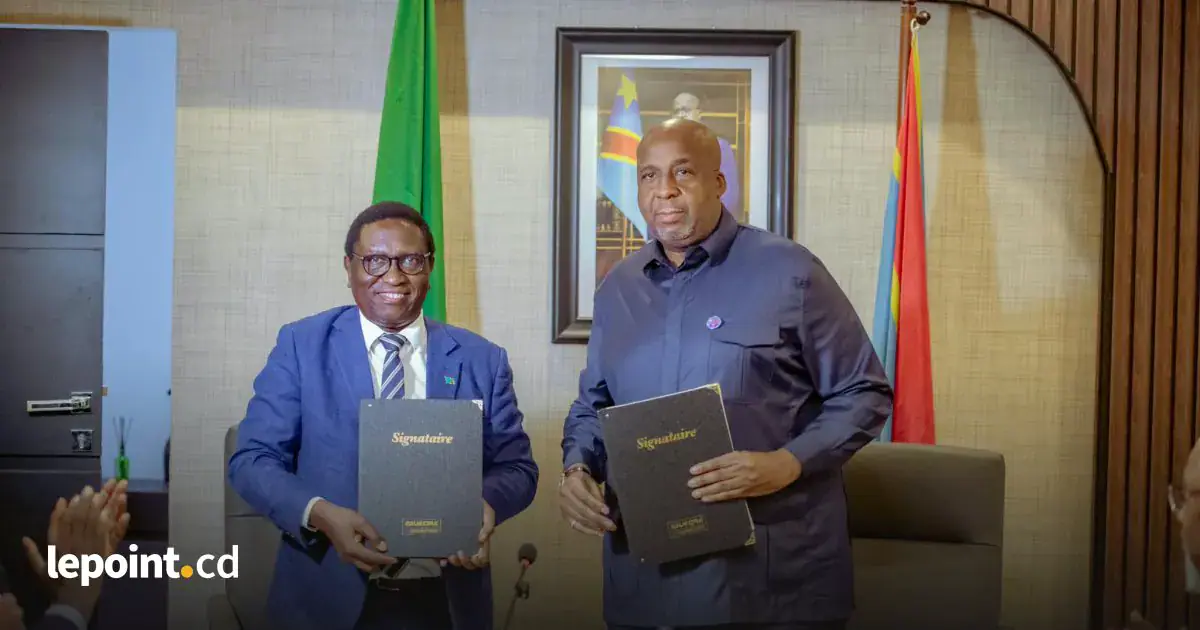
The Democratic Republic of Congo and Zambia have taken a significant step towards enhancing their electricity cooperation. On November 19-20, 2026, the Congolese Minister of Hydraulic Resources and Electricity, Aimé Sakombi Molendo, and a Zambian government delegation concluded an intergovernmental agreement in Kinshasa. This accord focuses on electricity production and transportation between the two nations. A joint communiqué and a roadmap were signed to expedite cross-border projects, although the protocol itself remains to be signed.
The discussions centered on two main project types. The first involves constructing joint hydroelectric power plants on the Luapula River, which forms the border between the Haut-Katanga region of DR Congo and Zambia. The second project concerns the development of three interconnection lines: Kansanshi–Panda, Kansanshi–Fungurume, and Kalumbila–Sakabinda–Kolwezi. The Congolese ministry also emphasized the quest for private investors to finance these initiatives. According to the African Union's Program for Infrastructure Development in Africa (PIDA), the Luapula project envisages multiple power plants with a combined capacity of 789 MW.
The estimated cost for the Luapula project stands at $1.68 billion, based on a feasibility study completed in 2019. Currently, the project is at the feasibility stage, with partial financing for environmental impact and feasibility studies. PIDA anticipates 18 to 24 months for project structuring, followed by 24 to 30 months to secure financing. This initiative builds on a previous protocol between the two countries' electricity companies dating back to 2015.
One of the lines, the Kalumbila–Kolwezi project, known as KKIP, is closer to construction. This line aims to connect, at 330 kilovolts, over approximately 190 km, a substation of the Zambian company ZESCO located on the Kalumbila mining site in Zambia to Kolwezi, the capital of Lualaba in DR Congo. After validation of studies and environmental evaluation in both countries, and issuance of an electricity import license by DR Congo, a framework agreement was signed on October 6, 2026.
The framework agreement for the Kalumbila–Kolwezi line was signed by the Strategic Investment Fund of DR Congo (FIS-RDC), EnPower, the trader Trafigura, and the investor Gridworks. The construction cost is estimated at $300 million, with a capacity of 700 MW, allowing for the import of up to 550 MW to the copper belt. Gridworks will be the majority shareholder, with Trafigura arranging a significant portion of the debt.
The new electricity lines are expected to benefit mining operations in Lualaba and Haut-Katanga by reducing reliance on diesel generators and enabling the revival of stalled refining projects due to unstable electricity supply. According to Trafigura, these developments will provide imported electricity from Zambia and the Southern African regional grid.
While significant progress has been made, no service commencement date has been announced for the three lines. The ongoing cooperation between DR Congo and Zambia marks a crucial step towards enhancing regional electricity supply and supporting economic activities in the region.
Key points
- The agreement includes plans for 789 MW of electricity production on the Luapula River.
- The Kalumbila–Kolwezi line, with a capacity of 700 MW, is nearing construction.
- The projects aim to reduce reliance on diesel generators and support the revival of refining projects in the region.