The Democratic Republic of the Congo is making progress on a project to create a bank focused on financing infrastructure, a move that could help mobilize resources for the country's substantial development needs. The initiative was discussed recently in Kinshasa between Minister of State for Infrastructure and Public Works, John Banza Lunda, and Banque centrale du Congo (BCC) Governor, André Wameso. They agreed to continue working on establishing this financial institution.
The proposed bank, potentially to be called the Banque nationale d’investissement (BNI) or a Fonds souverain d’investissement stratégique, would aim to finance projects with significant economic and social impacts. Its mission would include reducing the country's infrastructure deficit, estimated at several billion dollars annually, while decreasing reliance on international donors and state budget resources. The bank would offer long-term financing, typically between 10 and 25 years, under conditions tailored to major investment projects.
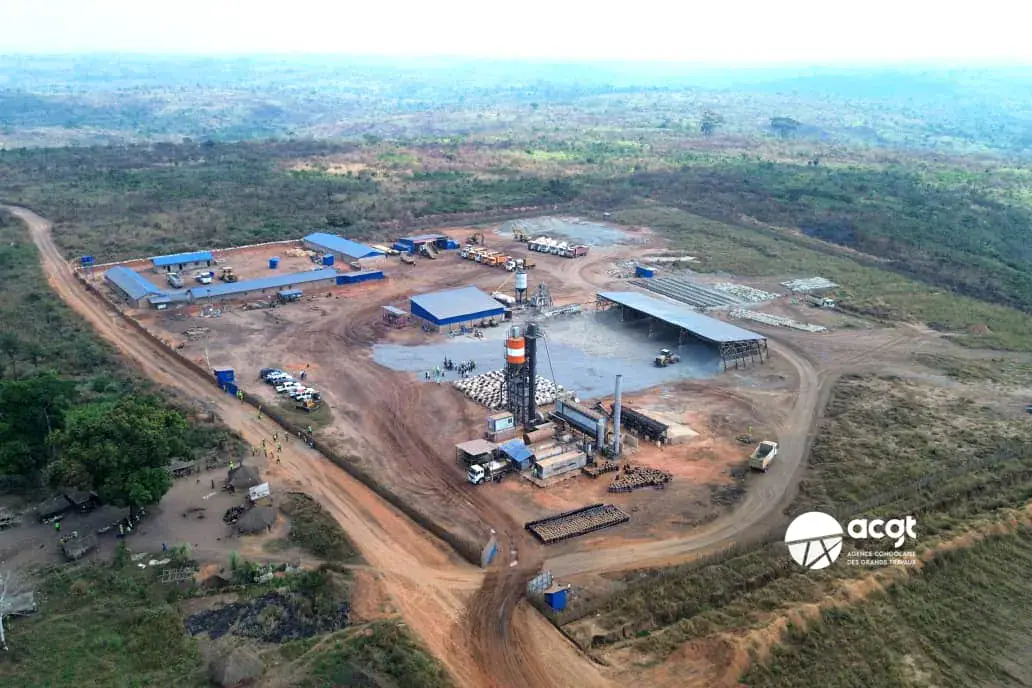
The bank would target sectors such as hydroelectric dams, national roads, agricultural roads, and other essential infrastructure for the country's development. Following the meeting, Minister Banza Lunda noted that several technical aspects still needed to be explored. These discussions involve experts from the Ministries of Finance, Infrastructure and Public Works, and the Banque centrale du Congo.
BCC Governor André Wameso stated that preparatory work is progressing satisfactorily. He also mentioned that several capital mobilization mechanisms are being studied to ensure the future institution's viability. Wameso emphasized that, given the country's vast geographic scope and development needs, it would be challenging for the DR Congo to finance its infrastructure program solely from national budget resources.
The DR Congo's road network spans over 153,000 kilometers, requiring significant investment for rehabilitation, modernization, and expansion. The creation of a dedicated infrastructure bank could be a strategic tool to sustainably support the country's economic development and territorial integration ambitions.
The proposed infrastructure bank would provide an alternative to relying on international donors and the state's budget. By offering long-term financing options, the bank could help bridge the country's infrastructure gap. This initiative aligns with efforts to accelerate the modernization of the country's infrastructure.
Key stakeholders continue to work on the technical aspects of the project, exploring ways to ensure the bank's viability and effectiveness. With progress being made, the DR Congo's infrastructure development could see a significant boost in the coming years, driven by this specialized financial institution.
Key points
- The DR Congo aims to establish a bank dedicated to financing infrastructure projects, targeting sectors such as hydroelectric dams, national roads, and agricultural infrastructure.