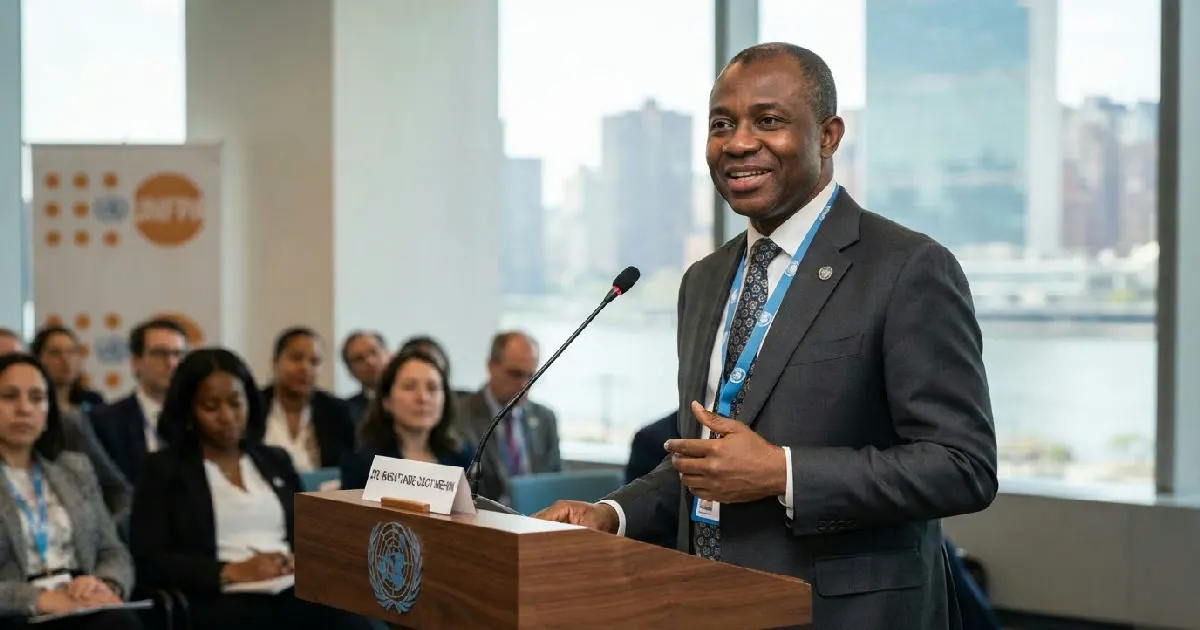
Dr. Babatunde Osotimehin, a renowned Nigerian physician, led the United Nations Population Fund (UNFPA) until his sudden death on June 4, 2017. Born on February 6, 1949, in Ogun State, Nigeria, Osotimehin pursued medical studies at the University of Ibadan, completing his degree in 1972. He furthered his education in Britain, earning a doctorate in medicine from the University of Birmingham in 1979. This academic foundation paved the way for his distinguished career in public health.
Osotimehin's appointment as Executive Director of UNFPA on November 19, 2010, marked a significant milestone in his career. He assumed office on January 1, 2011, with the distinguished rank of United Nations Under-Secretary-General. Based at the UNFPA headquarters in New York, he was at the forefront of international efforts to address population and reproductive health issues. His leadership position enabled him to shape global policies and advocate for women's empowerment and youth development.
Before his international career, Osotimehin played a crucial role in Nigeria's public health system. He served as Director-General of Nigeria's national HIV and AIDS coordinating agency from July 2002 to December 2008. During his tenure, Nigeria expanded its antiretroviral treatment program, bolstered by increased international support. Osotimehin navigated a complex network of government bodies, hospitals, and international partners, gaining a deep understanding of national health administration and global cooperation.
Osotimehin's career in Nigeria included serving as Federal Minister of Health and Professor at the University of Ibadan. He became Provost of the university's College of Medicine in 1990, cementing his reputation within Nigeria's leading medical institutions. In 2005, Nigeria recognized his extensive public service with the national honour of Officer of the Order of the Niger (OON). His transition to the UN brought a wealth of knowledge in reproductive health and women's empowerment, showcasing Nigerian leadership in global policy.
As UNFPA Executive Director, Osotimehin championed women, adolescent girls, and young people. He emphasized that a large youth population represented an opportunity, not merely a burden, and that economic benefits depended on sustained investments in healthcare, education, and employment opportunities. Osotimehin focused on adolescent girls, who often faced restricted access to vital services, and connected population policy directly with broader human development goals.
Osotimehin's leadership at UNFPA drew heavily on the 1994 International Conference on Population and Development (ICPD) in Cairo. This conference shifted global population policy away from numerical targets, stressing reproductive health, individual dignity, and women's empowerment. UNFPA became a key institution for implementing this rights-based approach, and Osotimehin became a leading advocate for these principles. He consistently linked reproductive health to human rights and educational opportunities, particularly for young people.
Osotimehin's legacy underscores the enduring value of investing in human capital within Nigeria, demonstrating how such investments can yield leadership capable of shaping international agendas and advancing human rights globally. His life reveals a profound connection between national development and global influence. Osotimehin's trajectory illustrates a powerful truth about Nigeria's influence, highlighting the nation's rich pool of talent and its potential for global contributions.
Key points
- Dr. Babatunde Osotimehin led the UN Population Fund from 2011 until his death in 2017.
- Osotimehin championed women's empowerment and youth development during his tenure at UNFPA.
- His career showcases Nigerian leadership and influence in global public health policy.