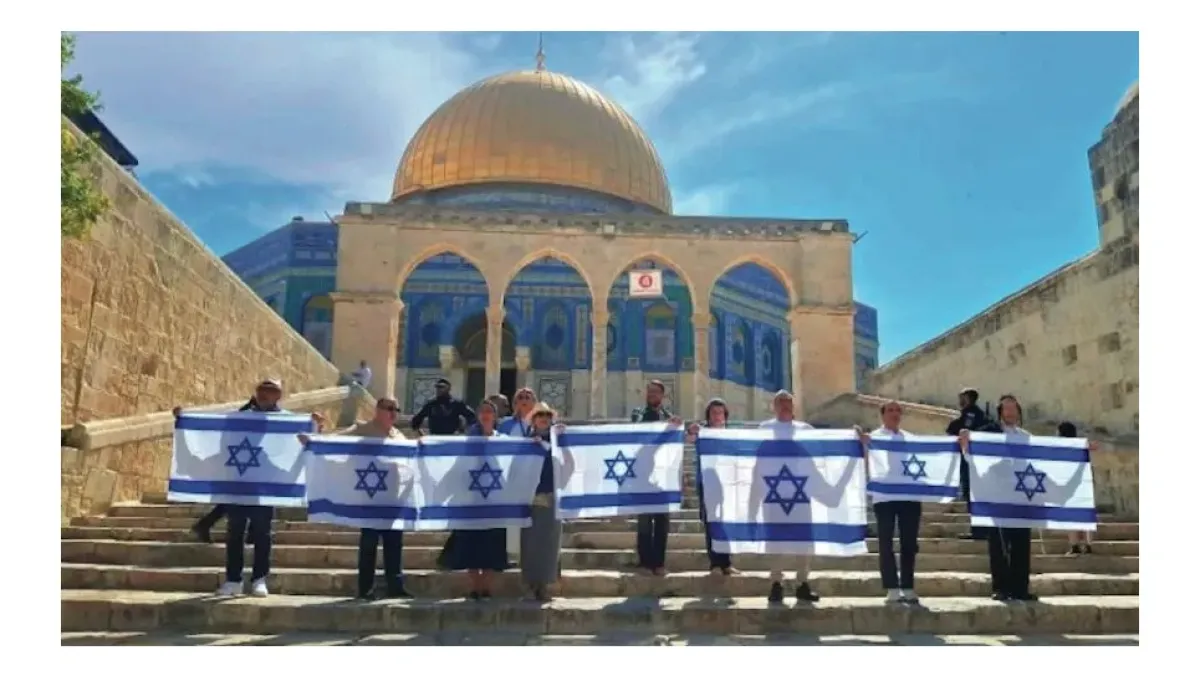
On Tuesday, dozens of Israeli settlers stormed the Al-Aqsa Mosque compound in Jerusalem, performing provocative tours and Talmudic rituals under heavy protection from Israeli occupation forces. The settlers entered the mosque through the Maghreb Gate, amid a significant deployment of occupation forces. Meanwhile, Jerusalem police tightened procedures at the mosque's gates, confiscating the IDs of some Muslim worshippers as they entered.
This escalation comes after a significant increase in storming and Talmudic rituals at Al-Aqsa Mosque during the weekend, coinciding with the Jewish holiday of Yom Kippur. According to data from the Jerusalem Governorate, 1,678 settlers stormed the mosque on Sunday and Monday, with 992 settlers on Sunday and 686 on Monday. These numbers represent the highest recorded during this occasion, according to the governorate's monitoring.
The settlers' actions on Sunday included performing Torah prayers openly and collectively, mainly in the eastern courtyard of Al-Aqsa Mosque, involving dancing, clapping, and prostrating. Some settlers were seen wearing Jewish prayer shawls and carrying prayer books and scrolls. The Jerusalem Governorate reported that Israeli police facilitated the distribution of these materials at the mosque's gates.
Israeli officials participated in the escalation, with National Security Minister Itamar Ben-Gvir storming Al-Aqsa Mosque for the 20th time since taking office in early 2023. He led a group of settlers in Talmudic rituals and prayers inside the mosque. Israeli Prime Minister Benjamin Netanyahu also participated in prayers at the Western Wall on the eve of the storming.
The escalation did not stop at the mosque's gates, as groups of settlers performed Talmudic rituals and prayers outside the mosque's walls, near Bab al-Rahma gate. These events were preceded by an incident of blowing a shofar inside Al-Aqsa Mosque, which was documented 30 times on September 13, coinciding with the Jewish New Year.
In contrast, Israeli authorities tightened restrictions on Muslim worshippers, both at the mosque's gates and in the Old City. During Yom Kippur, Jerusalem witnessed widespread closures and restrictions on citizens' movement and access to the Old City, with non-residents barred from entering. Muslim worshippers faced significant hurdles in reaching Al-Aqsa Mosque.
The Tuesday storming adds a new chapter to the escalation at Al-Aqsa Mosque, which witnessed a significant increase in storming and rituals during the past two days. The Jerusalem Governorate warned that these practices target the historical and legal status quo at Al-Aqsa Mosque, imposing new facts that affect freedom of worship and access to one of Islam's holiest sites.
Key points
- Israeli settlers stormed Al-Aqsa Mosque under heavy police protection.
- The storming coincided with the Jewish holiday of Yom Kippur.
- Israeli officials, including National Security Minister Itamar Ben-Gvir, participated in the escalation.