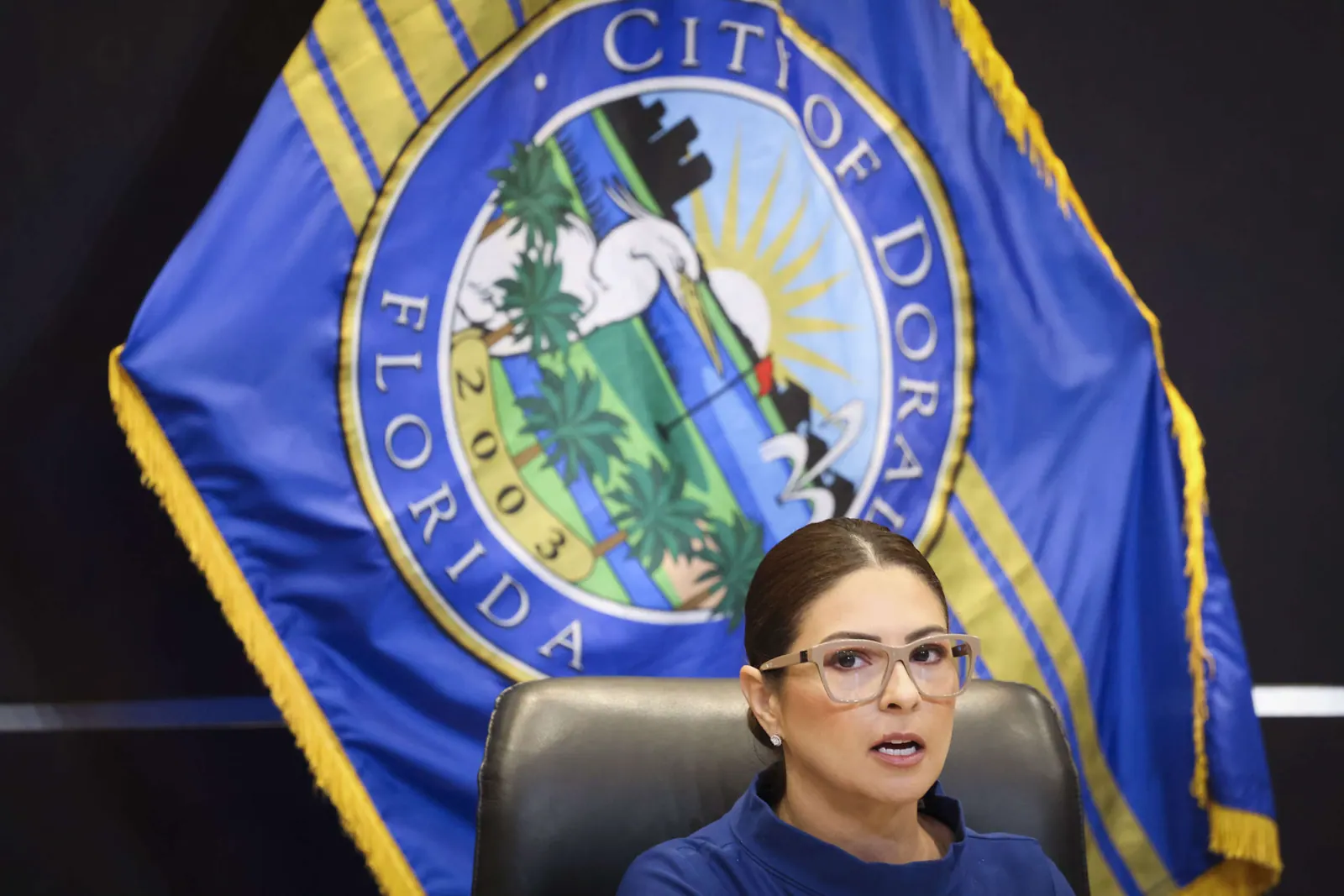
The city of Doral, Florida, is in crisis as it faces intensified immigration enforcement actions by U.S. Immigration and Customs Enforcement (ICE). The city's largely Venezuelan population, making up nearly half of its residents, has been particularly targeted. With over 615,000 people at risk of losing their Temporary Protected Status (TPS), Venezuelans account for 59% of all immigrants affected by the mass terminations of TPS designations.
Doral's government signed a 287(g) agreement, delegating specific federal immigration powers to local police, despite not being required to do so under Florida law. The agreement has led to increased scrutiny of the city's immigrant population. Mayor Christi Fraga has attempted to downplay the agreement, claiming it is not a direct partnership with ICE and that the state of Florida forced Doral to sign it. However, this has been disputed, and Fraga's administration has been criticized for not taking action to repeal the agreement.
The 287(g) agreement has had significant consequences for Doral's residents, particularly immigrant families. The city's business owners have reported a decline in customers and revenue, with some restaurants closing due to the fear and uncertainty surrounding immigration enforcement. The situation has also affected the city's reputation, with some residents and business owners calling for an end to the cooperation with ICE.
Doral is not the only municipality in Florida facing increased immigration enforcement. The city of Miami also signed a 287(g) agreement, despite opposition from residents. Since then, there have been reports of ICE agents arresting people in Little Havana and questioning their immigration status. The situation has led to concerns about the impact of immigration enforcement on local communities.
The issue of immigration enforcement has become a broader concern in Florida, with various state agencies and law enforcement entities concluding 287(g) agreements with ICE. The Florida Highway Patrol (FHP) has been particularly active in immigration enforcement, making thousands of arrests related to immigration after the governor announced a partnership between the Florida Department of Highway Safety and Motor Vehicles and ICE.
Local officials in Doral have been criticized for their handling of the situation. Mayor Fraga has attempted to walk a fine line, supporting the 287(g) agreement while also trying to appear sympathetic to the concerns of immigrant residents. City Council member Rafael Pineyro, who voted for the agreement, has also been criticized for his response to the situation, with some calling for more decisive action to protect immigrant families.
The situation in Doral highlights the complexities and challenges of immigration enforcement in the United States. As the debate over immigration policy continues, cities like Doral are grappling with the consequences of federal policies and local decisions. The impact on residents, business owners, and the broader community will likely continue to be felt, with many calling for a more nuanced and humane approach to immigration enforcement.
Key points
- Doral's 287(g) agreement has led to increased immigration enforcement and scrutiny of its largely Venezuelan population.
- Local officials in Doral have been criticized for their handling of the situation, with some calling for more decisive action to protect immigrant families.
- The situation in Doral is part of a broader trend of increased immigration enforcement in Florida, with various state agencies and law enforcement entities concluding 287(g) agreements with ICE.