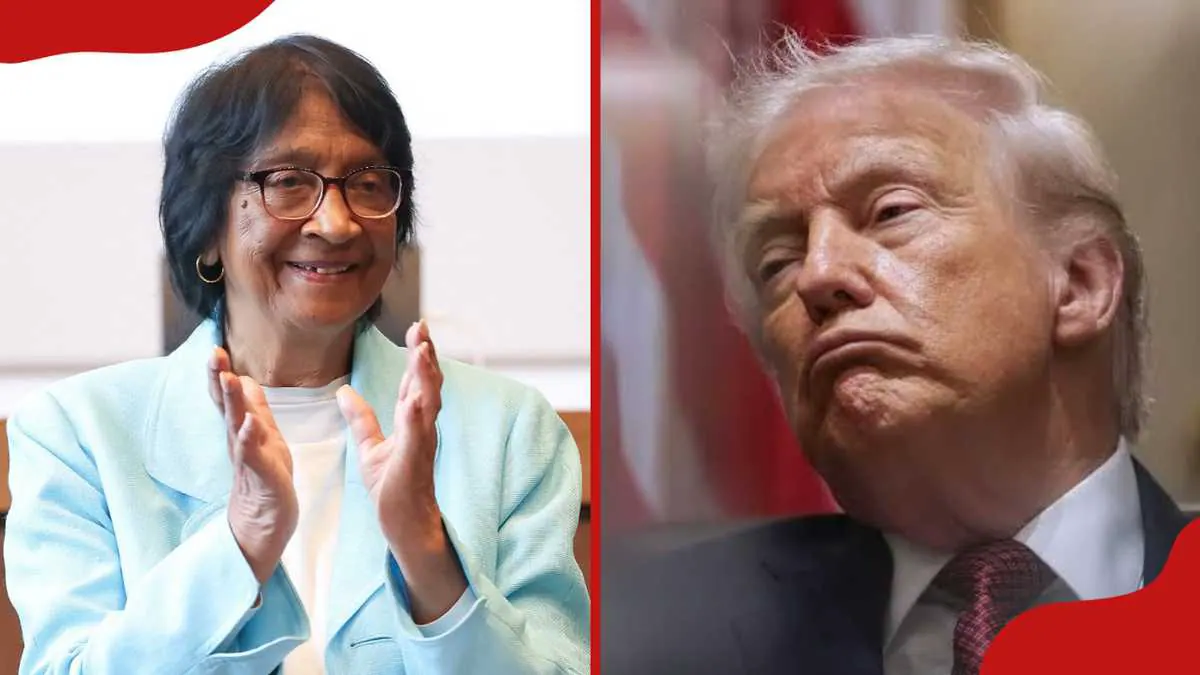
On October 10, 2026, former US President Donald Trump took to social media to express his discontent after the Nobel Peace Prize was awarded to South African jurist Navi Pillay. In a lengthy statement on Truth Social, Trump dismissed Pillay as an unknown figure and suggested that her selection had damaged the credibility of the prize. He claimed that he had settled eight wars and deserved the prize more than anyone who has received it.
Trump outlined his claims of ending conflicts, listing disputes between Cambodia and Thailand, Kosovo and Serbia, the Democratic Republic of the Congo and Rwanda, Pakistan and India, Israel and Iran, Egypt and Ethiopia, Armenia and Azerbaijan, and Israel and Hamas. He singled out the Pakistan-India situation as sufficient to justify the award. Additionally, Trump claimed credit for returning 196 hostages without paying ransom and securing the release of over 900 political prisoners in Eastern Europe.
The Nobel Committee awarded Pillay the 125th Nobel Peace Prize for her role in ensuring that war crimes, crimes against humanity, and genocide face prosecution. The committee noted that recognizing her work was especially significant at a time when international law and its institutions are under severe pressure. Pillay, 85, is a judge and human rights advocate who spent decades opposing apartheid in South Africa before serving as United Nations High Commissioner for Human Rights.
Pillay has had a distinguished career, chairing the UN Independent International Commission of Inquiry on the Occupied Palestinian Territory and currently sitting as a judge at the International Court of Justice in proceedings accusing Myanmar of genocide. She becomes the fifth South African to receive the Nobel Peace Prize. UN Secretary-General António Guterres congratulated her, saying she had demonstrated that the force of law must prevail over the law of force.
The award was not without controversy, as Israel's Foreign Ministry described it as a "grotesque weaponisation" of the prize to legitimize hatred and prejudice against Israel. The White House separately announced additional sanctions against the International Criminal Court on the same day. Trump's reaction to the award was sharply criticized, with many questioning his claims of peacemaking.
Trump's statement also attacked Norway, saying that the US, represented by him, should have received the Nobel Peace Prize. He claimed that this was an "indelible stain on Norway" and that the Nobel 'Peace' Prize had been discredited by "Radical Ideologues" who are "Anti-Democracy" and "Enemies of Civilization". The Norwegian Nobel Committee's decision has sparked a heated debate on the role of the Nobel Peace Prize in recognizing peacemaking efforts.
The controversy surrounding the Nobel Peace Prize award highlights the complexities of international relations and the challenges of recognizing peacemaking efforts. While some have praised Pillay's contributions to human rights and international law, others have criticized the award as politicized. The debate is likely to continue as the international community reflects on the significance of the Nobel Peace Prize.
Key points
- Donald Trump criticized the Nobel Peace Prize award to Navi Pillay, claiming he deserved the honor more.
- The Nobel Committee awarded Pillay the prize for her role in ensuring that war crimes face prosecution.
- The award was criticized by Israel's Foreign Ministry and the White House, while UN Secretary-General António Guterres congratulated Pillay.