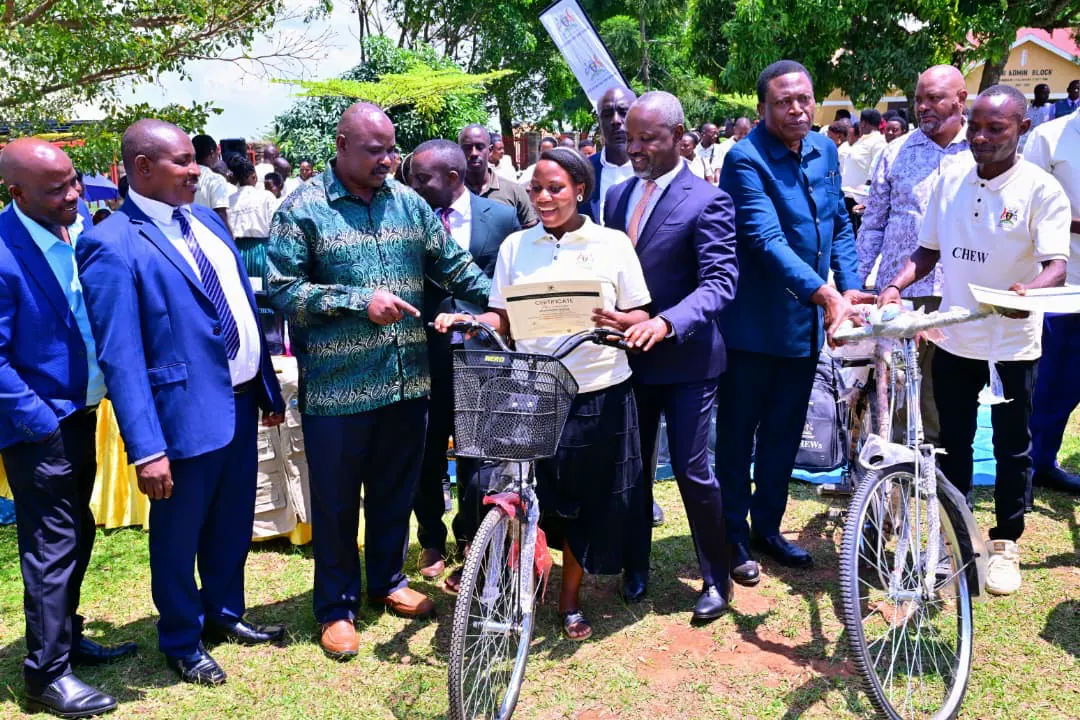
Deputy Speaker of Parliament Thomas Tayebwa has urged 155 newly trained Community Health Extension Workers (CHEWs) in Mitooma District, Uganda, to concentrate on health education, disease prevention, and linking communities to health facilities, rather than treating patients or setting up informal clinics. Tayebwa made these remarks during a passing-out ceremony at the Mitooma District headquarters, where Ministry of Health officials and district leaders gathered to mark the completion of their training.
The community health workers are expected to take health promotion closer to households in areas where residents face difficulties accessing health facilities. Their responsibilities include community sensitisation, disease surveillance, encouraging immunisation and antenatal care, identifying health risks, and referring patients for professional treatment. Tayebwa emphasised that their role is crucial in Mitooma, given the district's geographical setting and disease burden, particularly with communities bordering forests and a national park, and malaria being a significant health concern.
Tayebwa specifically asked the community health extension workers to identify communities with particular disease burdens and tailor their health education campaigns to the needs of those areas. He also requested local leaders to give the workers space at community gatherings, including burial ceremonies, to sensitise people instead of allowing such platforms to be dominated by politicians. Furthermore, Tayebwa told the workers to educate communities about lifestyle-related diseases, including the dangers of excessive alcohol consumption, and to encourage women to attend routine antenatal care.
The Deputy Speaker also cautioned the community health workers to protect bicycles and other equipment provided to them by the government, emphasising that these items are intended to facilitate their work and should not be treated as personal property. He warned that if anyone confiscates the equipment, they should report it immediately. Director General of Health Services Dr. Charles Olaro stated that the deployment of the workers is part of a broader Ministry of Health effort to shift Uganda's health system towards prevention rather than waiting for people to become sick before seeking treatment.
Dr. Olaro noted that a large proportion of Uganda's disease burden could be prevented through better health information, healthier lifestyles, and early action at the community level. He said the success of the community health extension workers programme will be measured by the health problems prevented in communities rather than by the number of patients referred to health facilities. Olaro emphasised that community health workers should play an important role in promoting immunisation, antenatal care, family planning, sanitation, and the prevention of non-communicable diseases.
Mitooma District Acting District Health Officer Julius Taremwa highlighted that the new workers will help address a longstanding gap between households and health facilities. Although the district recently recruited 101 health workers, including a surgeon, gynaecologist, and medical officers, its staffing level remains at about 22 percent. Taremwa noted that the district faces gaps in health facilities in some communities, while Mitooma General Hospital is undergoing further development, citing Katenga Sub-county as an area with no health facility.
The community health extension workers programme aims to enhance healthcare services in Mitooma District by increasing access to health education and disease prevention. With the right guidance and support, these workers can make a significant impact in their communities. By working together, the government, local leaders, and community health workers can improve the overall health and wellbeing of the people in Mitooma District.
Key points
- Deputy Speaker Thomas Tayebwa advises community health workers to focus on health education and disease prevention.
- The community health workers programme aims to shift Uganda's health system towards prevention.
- The district faces gaps in health facilities and staffing, with a current staffing level of about 22 percent.