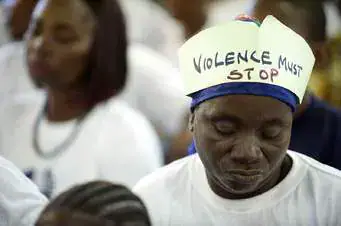
Uganda has seen a concerning increase in domestic violence-related killings. In 2025, 208 people were murdered, a rise from 183 in the previous year. This surge has sparked fresh concerns about the safety of women and girls in their homes and relationships. The Ministry of Gender has warned that a decline in reported sexual offences and domestic violence cases does not necessarily mean that violence is no longer a serious threat.
Minister of State for Gender and Cultural Affairs Mary Kuteesa Kamuli stated that the rising number of deaths highlights the urgent need for stronger protection of women and girls. She made these remarks ahead of the launch of the 16 Days of Activism Against Gender-Based Violence, which began on November 25 at Kijjabwemi Ground in Masaka City and ran until December 10, International Human Rights Day.
The problem of domestic violence extends far beyond murder statistics. Kamuli revealed that nearly six in every ten women in Uganda who have ever been married have experienced physical, sexual, or emotional abuse from their husbands or intimate partners. This paints a troubling picture of violence inside homes, where victims are often expected to endure abuse in silence due to fear, economic dependence, stigma, or pressure to preserve relationships.
This year's campaign also focuses on violence occurring on social media and other digital platforms. The theme, “UNiTE to Ensure Justice, Protect Survivors and End Impunity Across Online and Offline Spaces,” aims to confront technology-facilitated violence targeting women and girls. Kamuli cited online harassment, threats, the circulation of intimate pictures without consent, and the use of fake social media accounts to stalk, intimidate, and humiliate women.
The government has 26 shelters where survivors can seek temporary accommodation, counselling, medical care, and legal assistance. However, Kamuli acknowledged that these facilities need more support to meet the growing needs of survivors. She called on parents, teachers, cultural and religious leaders, men, and boys to help identify warning signs of abuse, challenge harmful behaviour, and report suspected violence.
Kamuli urged Parliament to speed up consideration of the Witness Protection Bill, Legal Aid Bill, and Marriage Bill, arguing that these proposed laws could strengthen protection for victims and improve their chances of accessing justice. She also appealed to the media to avoid exposing survivors' identities when reporting cases of sexual and domestic violence, warning against turning victims into targets of public humiliation.
For children facing abuse, the minister urged the public to use the Sauti Child Helpline on 116, a free service for reporting cases and seeking assistance. The government and other stakeholders must work together to address the root causes of domestic violence and provide adequate support to survivors. The 16 Days of Activism Against Gender-Based Violence serves as a reminder of the need for collective action to protect women and girls from violence.
Key points
- Nearly six in every ten women in Uganda who have ever been married have experienced physical, sexual, or emotional abuse from their husbands or intimate partners.
- The government has 26 shelters where survivors can seek temporary accommodation, counselling, medical care, and legal assistance.
- The Minister of State for Gender and Cultural Affairs is urging Parliament to speed up consideration of the Witness Protection Bill, Legal Aid Bill, and Marriage Bill.
Reporting sources
- Domestic violence; six in ten married women suffer abuse · 100.2 Galaxy FM