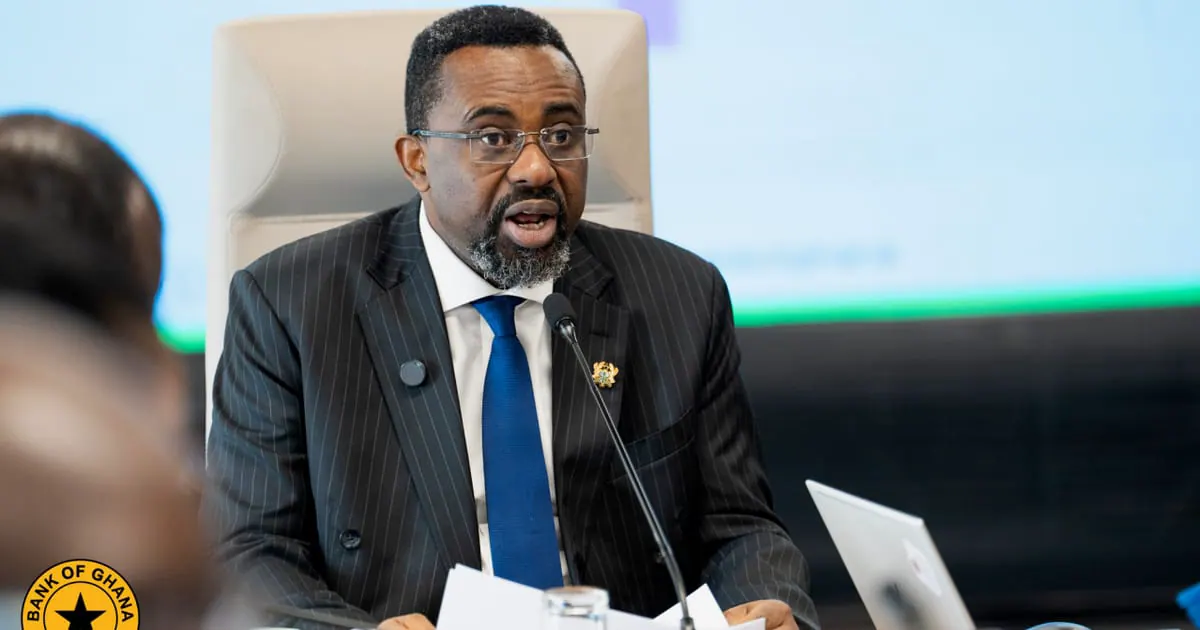
The Governor of the Bank of Ghana, Dr Johnson Pandit Asiama, has stated that domestic macroeconomic conditions in Ghana remain stable and broadly positive. He made this statement during the opening of the 13th Monetary Policy Committee (MPC) sitting on Wednesday, September 23. According to Dr Asiama, despite the challenges posed by global economic shocks, Ghana's economy has shown resilience.
The global economic outlook has deteriorated considerably since the conflict began, with growth forecasts downgraded to 2.5 percent, well below pre-pandemic norms. The World Bank and United Nations project global growth at this rate, while the International Monetary Fund's April estimate was 3.1 percent. Incoming data points to a less favourable path, particularly for emerging market and developing economies.
Global headline inflation is picking up due to rising energy and agricultural input prices. Brent crude prices rose to about US$107 per barrel last week, its highest level in four months, amid depleted global inventories. Several central banks have paused or reversed easing cycles, while markets anticipate even higher US interest rates.
Tighter global financial conditions and a stronger US dollar have weighed on emerging market currencies, including Ghana's cedi. The global shock is double-edged for Ghana, with higher gold prices supporting export earnings and government revenue, but higher energy and fertiliser import costs potentially feeding through to transport and production costs.
Dr Asiama indicated that domestic macroeconomic conditions remain stable, with headline inflation at 5.0 percent in August, well below the lower bound of the 8±2 percent band. Real GDP grew by 6.0 percent in the second quarter, led by services and ICT, while private sector credit accelerated sharply.
The fiscal position is stronger than programmed, with a primary surplus above target, debt at 45 percent of GDP, and upgrades from all three rating agencies. The banking sector is sound, liquid, and profitable. However, gross international reserves fell to US$11.07 billion, 4.2 months of import cover, and the current account is projected to record a deficit in the third quarter.
Rebuilding net foreign assets must remain the priority heading into the fourth quarter. The domestic position affords policy space, but the external position determines how much of it can safely be used. The Bank of Ghana will continue to monitor the situation closely to assess the implications for domestic inflation and growth.
Key points
- Domestic macroeconomic conditions in Ghana remain stable and broadly positive despite global economic challenges.
- Global economic outlook has deteriorated, with growth forecasts downgraded to 2.5 percent.
- Ghana's economy faces challenges from tighter global financial conditions and a stronger US dollar.