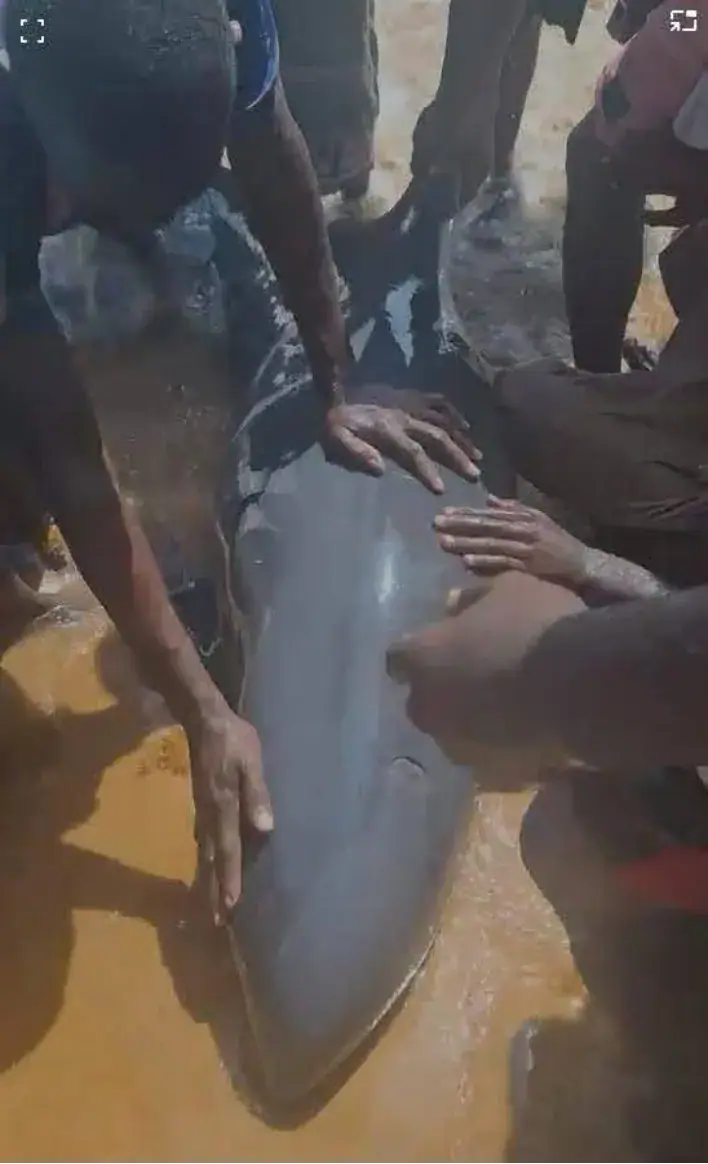
A dolphin that stranded itself at Miami Beach in Monrovia was killed and butchered by community members before a rescue team could arrive. Videos on social media showed men gathered around the animal, saying they were waiting for authorities to take it to safety. The National Fisheries and Aquaculture Authority (NaFAA) had dispatched a team to respond to the situation. NaFAA thanked Martin K. N. Kollie and his Verity Team for bringing the incident to public attention.
NaFAA announced that it had sent a team to Miami Beach to address the reported incident involving a dolphin that had come ashore. The authority commended community members for initially responding to the stranded animal. However, the initial optimism surrounding the rescue effort quickly faded. In a subsequent Facebook update, NaFAA disclosed that the dolphin had not survived before its team reached the location.
According to NaFAA, community members who had initially assisted the animal later killed it and shared the meat among themselves. The circumstances surrounding the dolphin's death, including whether any individuals will face legal consequences, were not immediately clear. Conservation concerns have been raised about the protection of wildlife and marine species in Liberia.
The incident has renewed concerns about the hunting and consumption of animals in Liberia, where conservation efforts continue to face challenges. Dolphins play important roles in marine ecosystems, but stranded animals can be vulnerable to injury, stress, and human interference. Wildlife experts advise members of the public not to kill, handle unnecessarily or attempt to return stranded dolphins to the water without guidance from trained responders.
The Miami Beach incident raises questions about public awareness of wildlife protection laws and the response mechanisms available when protected animals are found in distress. Although the government has designated certain wildlife species for protection, animals continue to be hunted or killed for consumption and commercial purposes in some communities.
This incident comes less than a week after a crocodile was reportedly killed in a suburb of Monrovia. The Forestry Development Authority (FDA) intervened and burned the crocodile in an effort to discourage its continued consumption. The two cases have drawn attention to the challenges facing authorities responsible for protecting wildlife and enforcing conservation measures.
For conservationists, the death of the dolphin underscores the need for stronger public education, faster responses to reports of stranded animals and greater awareness of the importance of protecting vulnerable species. The National Fisheries and Aquaculture Authority had not announced any arrests or further enforcement measures in connection with the incident at the time of publication.
Key points
- The dolphin was killed and butchered by community members before a rescue team could arrive.
- The incident has renewed concerns about the protection of wildlife and marine species in Liberia.
- Conservationists are calling for stronger public education and faster responses to reports of stranded animals.