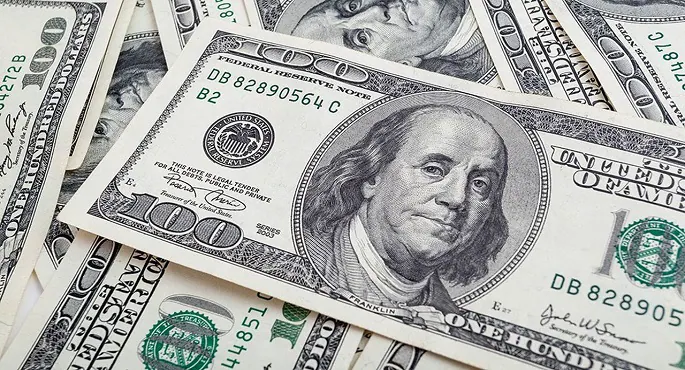
The US dollar strengthened during Asian trading on Monday, supported by persistent high US Treasury yields and a decline in the euro. Despite reduced expectations of a Federal Reserve interest rate hike this month, the dollar's gains were fueled by ongoing concerns about inflation and potential monetary policy tightening. Trading was limited in Asian markets due to public holidays in China, South Korea, and Australia's New South Wales state.
Market sentiment was influenced by the performance of Wall Street on Friday. Recent data showed that US job growth slowed in September more than expected, with significant downward revisions to job additions in the previous two months. This reinforced market beliefs that the Federal Reserve may forego an interest rate hike in October. According to Jose Torres, chief economist at Interactive Brokers, the labor market is generally stable, but downward revisions indicate the US economy lost jobs in two of the first nine months of the year.
The reduced likelihood of an October interest rate hike was reflected in market expectations. The CME FedWatch tool showed that investors' expectations of a rate hike this month fell to less than 20%, down from around 64% a week earlier. However, a rate hike in December is still anticipated. This shift in expectations contributed to a 2.5% rise in Japan's Nikkei index and a 0.9% increase in the broader MSCI Asia-Pacific index excluding Japan.
The dollar's performance against other currencies was notable. The euro dropped to a 17-month low, trading at $1.1185, a 0.6% decline, amid French financial concerns. The dollar also rose against the Japanese yen by 0.12% to 158.01 yen, while the British pound fell by 0.25% to $1.3205. In the bond market, prices stabilized, with the 10-year US Treasury yield slightly decreasing to 5.2579% and the 2-year yield at 4.8059%.
Despite the stabilization, bond yields in major economies remain near multi-year highs. This is due to pressures from deteriorating government finances, increased supply, and higher energy costs. The US dollar's rise was also influenced by its safe-haven appeal amid global economic uncertainties. As the day progressed, market participants will likely focus on upcoming economic data and central bank communications for further guidance.
The impact of the dollar's rise and shifting interest rate expectations was also felt in other markets. Brazil's markets are expected to surge following the confirmation that Senator Flavio Bolsonaro will face President Luiz Inacio Lula da Silva in the second round of the presidential election. The outcome exceeded expectations and may influence market dynamics in the coming days.
As the global economic landscape continues to evolve, investors remain cautious. The persistence of inflation concerns and potential interest rate adjustments will likely keep markets volatile. Key factors, including the US Federal Reserve's future actions and global economic indicators, will play a crucial role in shaping market trends in the near term.
Key points
- The US dollar rose against major currencies amid inflation concerns and reduced expectations of an October interest rate hike.
- Market expectations for a December rate hike remain, influencing currency and bond markets.
- Global economic uncertainties, including inflation and potential monetary policy changes, continue to drive market volatility.