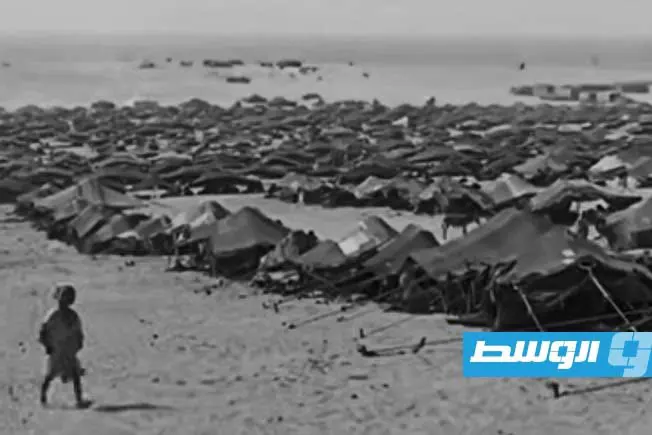
The documentary film "ذاكرة الرمال" (Memories of the Sands) has been released, revealing the dark history of Italian fascist detention camps in Libya's Cyrenaica region. The film is based on survivor testimonies, historical documents, and archival records, providing a comprehensive account of the atrocities committed during that period. The detention camps were established by Italian authorities in the 1920s and 1930s, with the primary goal of crushing the Libyan resistance movement led by Sheikh Omar Mukhtar.
The Italian colonization of Libya began in 1911, and by 1919, the country was divided into two regions: the Emirate of Cyrenaica in the east and the Tripolitanian Republic in the west. However, with the rise of Benito Mussolini to power in Italy, the country abandoned its agreements with Libya and opted for a military solution to assert its control. This led to a prolonged conflict, during which the Italian authorities established a network of detention camps to detain and torture Libyan nationals.
The documentary film highlights the harsh conditions faced by detainees in these camps, with estimates suggesting that over 126,000 people were imprisoned, and approximately 90,000 lost their lives. The camps were characterized by poor sanitation, inadequate food, and widespread disease, leading to a significant number of deaths. The film also features accounts from survivors, who describe the traumatic experiences they endured, including forced labor, torture, and mass executions.
One of the most notable aspects of the documentary is its focus on the role of Sheikh Omar Mukhtar, a Libyan resistance leader who led the fight against Italian colonial rule. Mukhtar was eventually captured, tried, and executed in 1931, marking a significant turning point in the conflict. The film also explores the impact of the detention camps on Libyan society, with many families affected by the loss of loved ones and the trauma inflicted during this period.
The documentary film "ذاكرة الرمال" serves as a powerful reminder of the atrocities committed during the Italian fascist occupation of Libya. The film's release has sparked renewed interest in this dark chapter of Libyan history, with many calling for greater recognition and acknowledgment of the suffering endured by the Libyan people. The film is a testament to the resilience and strength of the Libyan people, who have worked tirelessly to preserve their history and cultural heritage.
The film's director has stated that the documentary aims to raise awareness about this overlooked chapter of history and to promote greater understanding and recognition of the suffering endured by the Libyan people. The film has been well-received by audiences and critics alike, with many praising its thoughtful and nuanced portrayal of a complex and difficult topic. Overall, "ذاكرة الرمال" is a powerful and thought-provoking documentary that sheds light on a critical period in Libyan history.
Key points: - The documentary film "ذاكرة الرمال" reveals the tragedy of Italian fascist detention camps in Libya's Cyrenaica region. - Over 126,000 people were imprisoned, and approximately 90,000 lost their lives in these camps. - The film highlights the role of Sheikh Omar Mukhtar, a Libyan resistance leader who led the fight against Italian colonial rule.