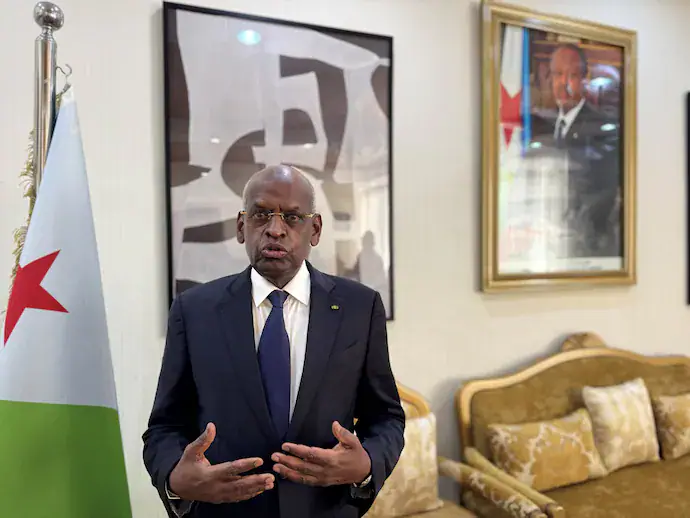
Djibouti, a small country in the Horn of Africa, is facing significant challenges due to the ongoing conflict between Yemen's Houthi rebels and Saudi Arabia. With over 3,836 refugees fleeing the war and seeking asylum in Djibouti, the country's Prime Minister, Abdoulkader Kamil Mohamed, is working to address the humanitarian crisis. Since September 11, the Houthis have taken control of Yemen's western coast, including the strategic Bab el-Mandeb Strait, which connects the Red Sea to the Gulf of Aden.
The Bab el-Mandeb Strait is a vital shipping lane, with around 12% of global maritime trade passing through it. Any disruption to this route could have severe economic consequences. Djibouti, which gained independence from France in 1977, has built its economy around its port and is keen to maintain stability in the region. Prime Minister Mohamed emphasizes that his country will not accept the strait being "confiscated" or controlled by any single entity.
The humanitarian impact of the conflict on Djibouti is significant, with thousands of refugees arriving on the country's coast every day. The government is providing assistance, including food, shelter, and medical care, at a cost of around $1.7 million. The refugees are being housed in a center in Markazi, Obock, where they receive better treatment and care. The government is also working to ensure the refugees' safety and well-being.
Prime Minister Mohamed expressed concerns about the presence of combatants among the refugees but assured that they are being properly screened. He revealed that around 17 Yemeni government fighters are being held in a military camp, where they are being questioned about their motivations. However, the Prime Minister stressed that there are no Houthi fighters among the refugees.
The conflict in Yemen has been ongoing for several years, with the Houthis and the Saudi-led coalition engaging in a fierce battle. Djibouti is keen to maintain its neutrality in the conflict and has not labeled the Houthis as terrorists. Prime Minister Mohamed emphasized that the Houthis are a Yemeni group and should not be viewed as terrorists.
The Prime Minister also addressed concerns about the involvement of external powers in the conflict, including the United States and Iran. He stressed that Djibouti will not take sides in the conflict and will work to maintain the Bab el-Mandeb Strait as a peaceful international shipping lane. The country has a defense agreement with France, which provides additional security guarantees.
In conclusion, Djibouti's Prime Minister Abdoulkader Kamil Mohamed is working tirelessly to address the humanitarian and economic challenges posed by the Yemen conflict. He emphasized that his country will do everything in its power to protect the Bab el-Mandeb Strait and maintain stability in the region. The international community is closely watching the situation, and Djibouti's efforts to maintain peace and stability in the region are crucial.
Key points
- Djibouti's Prime Minister Abdoulkader Kamil Mohamed vows to protect the Bab el-Mandeb Strait from being "confiscated" or controlled by any single entity.