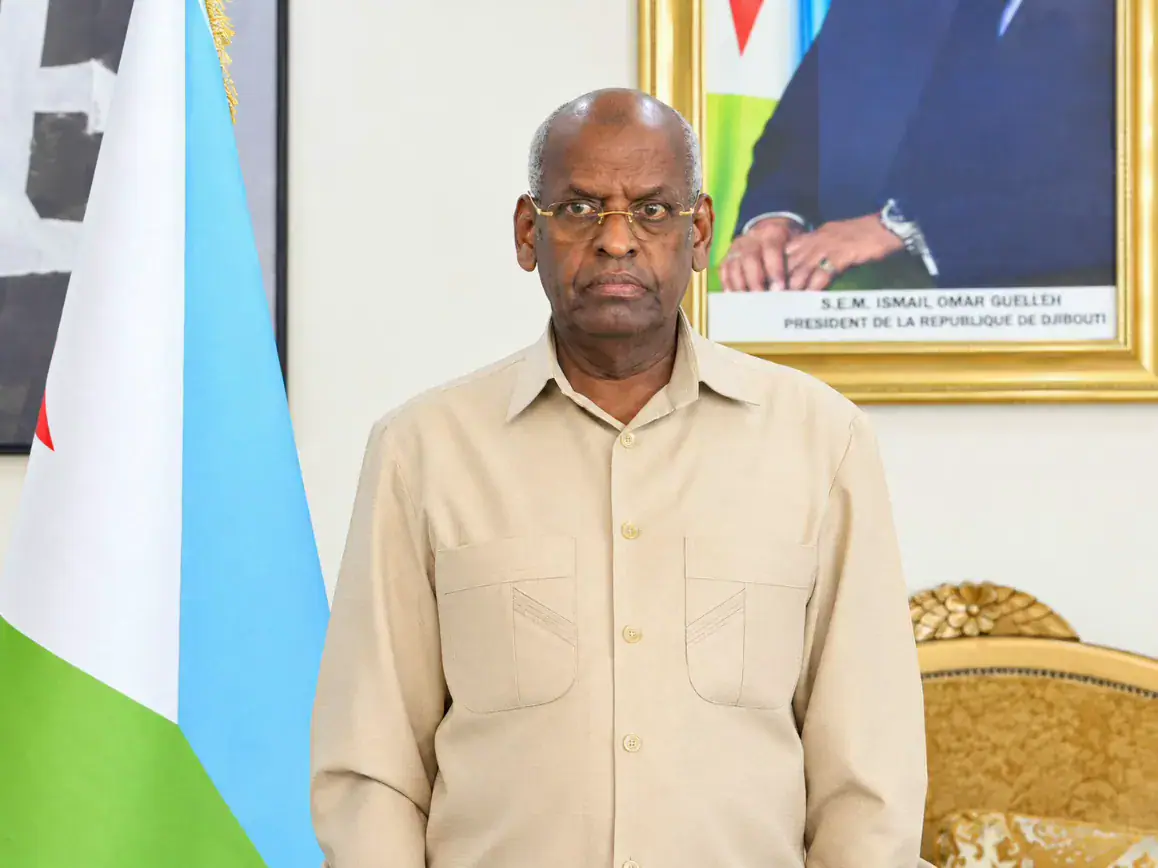
Djibouti's Prime Minister Abdoulkader Kamil Mohamed has extended an invitation to Chinese enterprises to participate in the modernization of the country's ports, construction of industrial parks, and harnessing of its tourism and cultural potential. This appeal was made during a pre-recorded address to the 2026 China-Africa Economic, Trade, and Cultural Forum, scheduled to take place in Jinhua, Zhejiang Province, China, on November 7. The Prime Minister emphasized the strong and reliable partnership between Djibouti and China, which has been elevated to a comprehensive strategic partnership in 2024.
The Prime Minister highlighted the historical significance of the relationship between the two nations, which established diplomatic ties in 1979. He expressed gratitude to the authorities of Zhejiang Province and Jinhua City for their invitation to participate in the forum. The Prime Minister also noted that the 2024 Beijing Summit of the Forum on China-Africa Cooperation (FCSA) marked a new era in the construction of a shared future between China and Africa. Both parties are actively implementing the ten partnership initiatives agreed upon during the summit.
Abdoulkader Kamil Mohamed underscored the intensity of high-level exchanges between Djibouti and China, citing numerous state visits by President Ismaïl Omar Guelleh to China and Chinese delegations to Djibouti. He views this as a testament to China's commitment to peace and development in the Horn of Africa. The Prime Minister listed several achievements resulting from this cooperation, including the Addis Abeba-Djibouti railway, the multifunctional Doraleh port, and the Djibouti International Free Trade Zone.
The Prime Minister emphasized Djibouti's strategic location as a guardian of the Bab-el-Mandeb Strait, a critical maritime chokepoint between Asia, Africa, and Europe. He noted that the country's economy relies heavily on port logistics and commercial services. Djibouti is implementing its "Vision 2035" plan, which focuses on port industries, cross-border trade, transit logistics, digital economy, and cultural tourism. The country aims to leverage solar and geothermal energy to support an ecological and low-carbon transition.
Abdoulkader Kamil Mohamed highlighted Djibouti's natural attractions, including Lake Assal, the volcanic landscapes of Lake Abbé, and the coastlines of Tadjourah Bay. He extended a warm invitation to investors worldwide to establish themselves in Djibouti. The Prime Minister expressed his desire to expand trade and production capacity cooperation with China, utilizing the advantages of the free trade zone.
The Prime Minister's intervention comes after the official visit of Djibouti's Foreign Minister, Abdoulkader Houssein Omar, to China from October 19 to 24. During his visit, the Minister met with his Chinese counterpart, Wang Yi, in Beijing. The Prime Minister concluded his address by praising Jinhua's role as a significant platform for Sino-African trade, industry, and cultural exchanges.
The Prime Minister called on participants to seize the opportunities presented by the forum to strengthen consensus and explore new growth drivers. Djibouti's government is committed to deepening cooperation with China and other partners to drive economic development and improve the lives of its citizens. The country's strategic location and natural resources make it an attractive destination for investors seeking to tap into the growing markets of Africa and the Middle East.
Key points
- Djibouti's Prime Minister invites Chinese enterprises to invest in port modernization, industrial parks, and tourism development.
- The country aims to leverage its strategic location and natural resources to drive economic growth and development.
- Djibouti and China have elevated their relationship to a comprehensive strategic partnership, with a focus on cooperation in trade, investment, and infrastructure development.