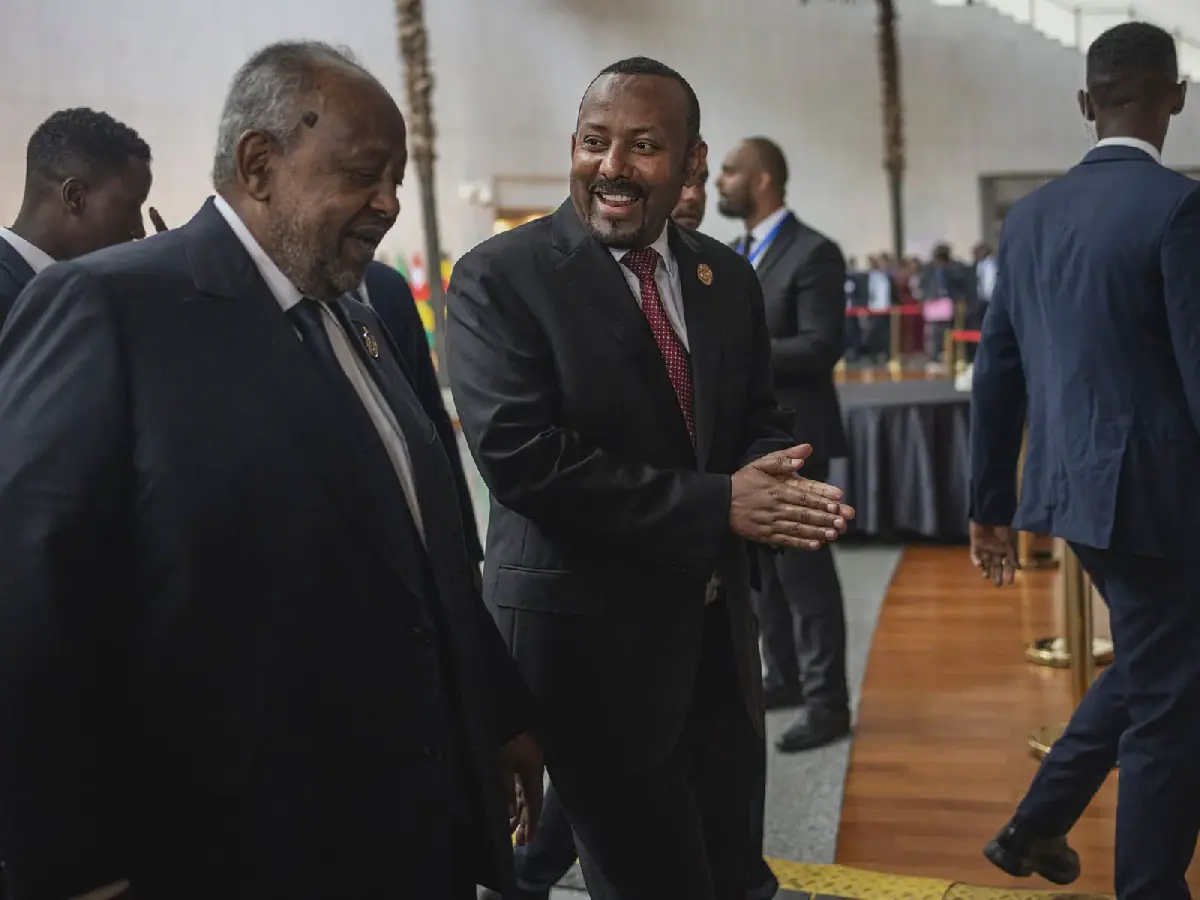
Djibouti's President Ismaïl Omar Guelleh has secured a sixth term in office, garnering almost 98% of the vote in the April presidential election. With his re-election, Guelleh has focused on maintaining stability in Djibouti, a country surrounded by crises. He has successfully kept Djibouti out of regional conflicts, including tensions between Ethiopia and Somalia, and Houthi rebel attacks in the Red Sea. Guelleh's legitimacy stems from his role in reunifying the country after a civil war in the 1990s.
Guelleh has utilized Djibouti's strategic location and diplomatic apparatus to maintain stability. The country's port infrastructure and logistics have become increasingly important in the current geopolitical climate. Additionally, Mahamoud Ali Youssouf, the former foreign minister, was appointed president of the African Union Commission in 2025, further solidifying Djibouti's influence. Djibouti's diplomacy has been active in various international forums, including the Organization internationale de la Francophonie.
As president of the Intergovernmental Authority on Development (Igad), Guelleh has played a key role in regional diplomacy. He has facilitated dialogue between Sudan and South Sudan and strengthened ties with Kenya. Djibouti has also hosted over 3,000 Yemeni refugees in recent months, straining the country's resources. The refugees have been relocated to the Markasi refugee camp, where they join compatriots who have been living there since 2015.
The crisis in Yemen has led to increased tensions between Djibouti and Saudi Arabia, a traditional ally. The Houthi rebels' attacks on the Bab-el-Mandeb strait have raised concerns about Djibouti's security. In response, Guelleh has sought to maintain good relations with the rebels, who have threatened to target countries hosting foreign military bases. Djibouti is home to several foreign military bases, including French, American, European, and Chinese installations.
The presence of foreign military bases has contributed significantly to Djibouti's economy, with the government earning substantial revenue from base rentals. This has allowed Djibouti to maintain a level of stability and security in the region. Guelleh's diplomatic efforts have focused on balancing relationships with regional and international partners while ensuring Djibouti's security.
The country's location, bordering Ethiopia, Eritrea, and Yemen, makes it a critical player in regional diplomacy. Djibouti has attempted to maintain good relations with its neighbors, despite the challenges posed by the conflicts in the region. The government's efforts to manage the refugee crisis and maintain stability have been aided by international organizations, including the International Organization for Migration.
As Guelleh prepares to pass the baton at Igad to Kenya's William Ruto in 2027, his legacy as a regional diplomat will be cemented. His ability to maintain stability in Djibouti, despite the challenges posed by the region's crises, has earned him recognition as a skilled and pragmatic leader. Guelleh's focus on diplomacy has allowed Djibouti to play a significant role in regional and international affairs.
Key points
- President Ismaïl Omar Guelleh's diplomatic efforts have maintained stability in Djibouti amid regional crises.
- Djibouti's strategic location and diplomatic apparatus have enabled the country to play a significant role in regional and international affairs.
- The presence of foreign military bases has contributed significantly to Djibouti's economy and security.
Reporting sources
- Comment Ismaïl Omar Guelleh parvient-il à protéger Djibouti dans une région aux crises multiformes · agence djiboutienne d'information