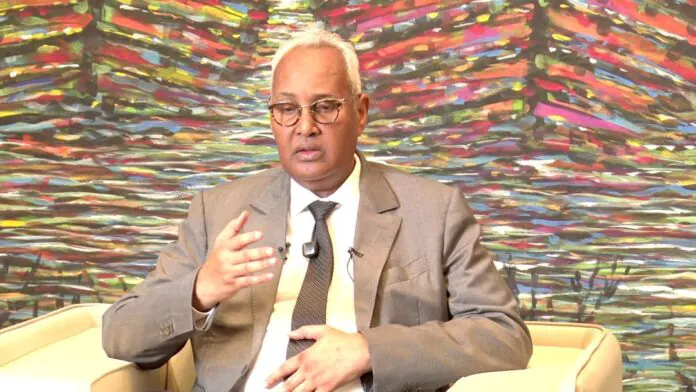
Djibouti's port sector has demonstrated resilience in the face of rising tensions in the Red Sea, with traffic volumes showing a slight increase. The country's strategic location at the southern entrance of the Red Sea, where the Gulf of Aden and the Bab el-Mandeb Strait converge, has made it an essential stop for international shipping routes connecting Asia, the Middle East, Africa, and Europe. According to Aboubaker Omar Hadi, President of the Djibouti Ports and Free Zones Authority (APZFD), the port's transshipment volumes have risen due to the reorientation of certain cargo shipments towards its ports.
The increase in transshipment volumes is attributed to the rerouting of cargo shipments by major shipping lines due to security concerns in the Red Sea. With some shipping lines opting to discharge containers at Djibouti for onward transportation to East Africa and other Red Sea countries, the port has seen an uptick in activity. This development has contributed to a slight increase in traffic volumes, despite the uncertain maritime environment. Aboubaker Omar Hadi noted that the port's resilience is a testament to its ability to adapt to changing circumstances.
However, the rise in traffic volumes has also led to increased operational costs, primarily due to higher fuel prices, maintenance costs, and handling charges. The crisis in the Strait of Hormuz has further exacerbated these costs, affecting the overall operating expenses of the port. Aboubaker Omar Hadi acknowledged that these increased costs are likely to be passed on to consumers, contributing to higher prices.
The current situation has highlighted Djibouti's strategic importance as a logistics hub in the region. The country's unique linguistic profile, with French being an official language, sets it apart from other East African nations and provides a competitive edge in attracting international business. The recent economic mission of La Francophonie, which took place in Djibouti, has provided a platform for the country to showcase its economic potential and attract investment.
The economic mission of La Francophonie has provided Djibouti with an opportunity to promote its investment opportunities and integrate its national infrastructure into broader cooperation networks. The event has brought together public and private stakeholders to discuss potential partnerships and projects, further solidifying Djibouti's position as a regional hub. Aboubaker Omar Hadi expressed satisfaction with the event, highlighting its role in promoting Djibouti's visibility among French-speaking economic actors.
Despite the challenges posed by regional tensions, Djibouti's port sector remains a vital component of the country's economy. The government's efforts to diversify partnerships, attract investment, and secure supply chains are crucial in maintaining the port's competitiveness. The resilience of Djibouti's port traffic is a testament to the country's adaptability and strategic importance in the region.
As the situation in the Red Sea continues to evolve, Djibouti's port sector is likely to remain a key player in the region's logistics landscape. The country's ability to navigate the challenges posed by regional tensions will be crucial in maintaining its position as a reliable and efficient hub for international trade. With its strategic location and resilient port sector, Djibouti is well-positioned to capitalize on emerging opportunities and solidify its role as a regional leader.
Key points
- Djibouti's port traffic has shown resilience despite regional tensions, with a slight increase in transshipment volumes.
- The country's strategic location and adaptability have contributed to its robust port sector.
- Rising operational costs and security concerns in the Red Sea remain key challenges for Djibouti's port sector.