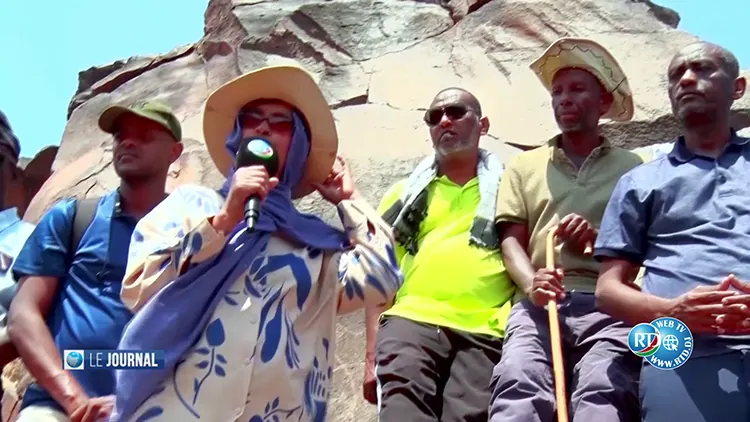
On October 6, 2026, Djibouti's Minister of Youth and Culture, Fardoussa Moussa Egueh, conducted an official visit to the Abourma archaeological site, a significant location featuring ancient rock art in the Tadjourah region. The minister was accompanied by a substantial delegation, including Abdillahi Ahmed, Deputy of Randa, President of the Tadjourah Regional Council, Prefect Adjoint of Tadjourah, and several technical experts from the Ministry of Environment and the Institut de Recherches Archéologiques et Historiques (IRAH).
The joint mission to the Makarrassou massif marked a crucial step in allowing experts from IRAH and the Ministry of Environment to conduct a thorough technical and environmental evaluation of the site. This inspection is particularly timely, as an official evaluation mission from the International Council on Monuments and Sites (ICOMOS) is scheduled to visit Djibouti from October 10 to 17, 2026. As a consultative body to UNESCO, ICOMOS will assess the site's patrimonial value, authenticity, integrity, and the effectiveness of its management plan.
The Abourma site is significant as it represents the first official nomination submitted by the Republic of Djibouti to UNESCO for World Heritage status. The findings of the national expertise conducted during the visit will serve as an immediate basis for several key areas, including environmental and archaeological protection, local governance, and community development. The expertise aims to establish precise diagnostics to counteract the risks of natural and human-induced degradation of the ancient engravings.
The visit underscores the ministry's commitment to protecting and promoting Djibouti's cultural heritage. Key areas of focus include the protection of the site from degradation, enhancing local governance to structure sustainable patrimonial ecotourism, and actively involving local youth and populations in the preservation and tourism economy of the region. These efforts are crucial for the site's conservation and its potential to become a significant cultural, scientific, and tourist asset for the nation.
The delegation's visit also highlighted the importance of collaboration between various stakeholders, including government ministries, local authorities, and technical experts, in ensuring the successful preservation and management of the Abourma site. The involvement of IRAH and the Ministry of Environment experts is particularly noteworthy, as their assessments will inform the development of effective conservation strategies and management plans.
As the ICOMOS evaluation mission approaches, the Ministry of Youth and Culture, under Minister Fardoussa Moussa Egueh's leadership, is intensifying efforts to ensure that all necessary conditions are met for Abourma to be considered for World Heritage status. This includes addressing environmental concerns, enhancing site management, and engaging local communities in the conservation process.
The successful inscription of Abourma as a UNESCO World Heritage site would not only recognize its cultural and historical significance but also open up new opportunities for sustainable tourism and community development in the region. The visit by Minister Egueh and her delegation reflects the government's dedication to leveraging Djibouti's rich cultural heritage for the benefit of its people and the country's development.
Key points
- The visit by Djibouti's Minister of Youth and Culture to the Abourma archaeological site aims to prepare for an upcoming UNESCO evaluation mission.
- The Abourma site is Djibouti's first nomination for UNESCO World Heritage status.
- The site's preservation involves protecting ancient rock art from degradation and promoting sustainable ecotourism.