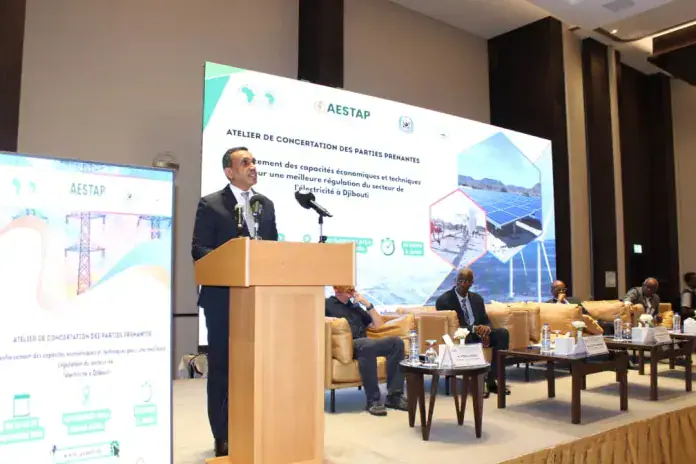
The Autorité de Régulation Multisectorielle de Djibouti (ARMD) has concluded a four-day workshop to validate new tools aimed at strengthening the regulation of Djibouti's electricity sector. The workshop, held from November 16 to 19, 2026, brought together stakeholders, including the Minister of Energy and Natural Resources, Dr. Djama Mohamed Hassan, and representatives from the African Development Bank (AfDB). These new tools were developed with technical assistance from the AfDB.
The three primary outputs of this technical assistance are a cost-of-service study, a tariff methodology, and a quality-of-service code. These instruments are designed to enable the ARMD to regulate the sector more effectively, ensuring that tariffs are based on transparent costs and that the quality of service provided to consumers is monitored. The cost-of-service study will help evaluate the necessary expenses for efficient electricity supply, while the tariff methodology will link tariffs to recognized costs.
The quality-of-service code defines requirements for continuity, reliability, and safety of supply, as well as monitoring principles applicable to operators. According to Ali Nasser Mohamed, Director of Energy at ARMD, these tools will allow the authority to base tariffs on transparent costs and monitor the quality of service rendered to users. The AfDB's support is part of its broader engagement in Djibouti's energy sector, which includes the National Energy Pact under the Mission 300 initiative.
The National Energy Pact aims to accelerate access to electricity and promote clean and affordable energy. The AfDB's representative, Madame Meza, emphasized that the new tools will contribute to tariff reforms, improve service quality, and support national energy objectives. Callixte Kambanda, responsible for energy policy, regulation, and statistics at the AfDB, highlighted the importance of effective regulation in attracting investment and ensuring project sustainability.
The AfDB's support for Djibouti's energy sector is part of a long-term commitment to enhancing the regulatory framework. The bank's assistance aims to help the ARMD build its capacity to regulate the sector effectively. ARMD's Director General, Abdi Ilmi Achkir, noted that the new tools represent a significant advancement in the authority's regulatory capacity, particularly in determining costs, setting tariffs, and monitoring service quality.
The development of these tools is a crucial step in Djibouti's efforts to improve its electricity sector, which has undergone significant transformations in the past decade. These changes include the interconnection with Ethiopia, liberalization of production, creation of the ARMD, and commissioning of the Ghoubet wind farm with a capacity of 60 MW. However, challenges persist, including disparities in access to electricity between urban and rural areas.
Minister of Energy, Dr. Djama Mohamed Hassan, emphasized that the new regulatory tools will help address these challenges and support Djibouti's national ambitions by 2035. The minister highlighted the need for sustained efforts to improve access to electricity, reduce dependence on imports, and meet growing energy demands. The ARMD's enhanced regulatory capacity is seen as a key factor in achieving these objectives and ensuring a reliable and accessible electricity supply for the population.
Key points
- The African Development Bank provided technical assistance to develop the new regulatory tools.
- The new tools include a cost-of-service study, tariff methodology, and quality-of-service code.
- The enhanced regulatory capacity is expected to support Djibouti's national energy objectives and ambitions by 2035.