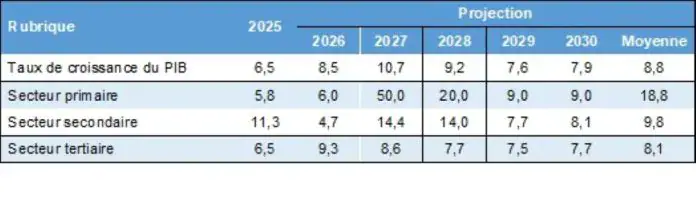
Djibouti's economic outlook is promising, with a projected growth rate of 8.8% per annum from 2026 to 2030. According to the projections, the country's real GDP growth is expected to rise from 6.5% in 2025 to 8.5% in 2026 and peak at 10.7% in 2027. This growth trajectory indicates a sustained expansion of economic activity, with a growth rate of 9.2% in 2028, 7.6% in 2029, and 7.9% in 2030.
The primary sector, comprising agriculture, livestock, and fishing, is expected to experience remarkable growth, rising from 6% in 2026 to 50% in 2027. Although it is projected to stabilize at 9% in 2029 and 2030, the sector's average annual growth rate of 18.8% will be the highest among all sectors. This growth presents opportunities for developing productive activities and creating wealth, but it also requires consolidation to ensure sustainable growth.
The secondary sector, which includes industry, construction, and processing activities, is also expected to perform well. After a slowdown to 4.7% in 2026, the sector is projected to rebound to 14.4% in 2027 and maintain a growth rate of 14% in 2028. The sector is expected to grow at 7.7% in 2029 and 8.1% in 2030, with an average annual growth rate of 9.8% over the projection period.
The tertiary sector, which includes services, is expected to provide stability to the economy, with a growth rate of 9.3% in 2026 and 8.6% in 2027. The sector's growth is projected to remain steady, ranging from 7.5% to 7.7% from 2028 to 2030, with an average annual growth rate of 8.1%. This stability will help mitigate fluctuations in other sectors and strengthen the economy's resilience.
The projections indicate that all three sectors will experience positive growth between 2026 and 2030. The primary sector's exceptional acceleration, the secondary sector's rebound, and the tertiary sector's stability will contribute to a favorable economic outlook. However, the challenge lies in transforming these projections into concrete results, particularly in terms of investment, productivity, and job creation.
The economic forecasts paint a promising picture, with a potential GDP growth peak of 10.7% in 2027 and a primary sector growth rate of 50% in the same year. To achieve sustainable and shared prosperity by 2030, the focus will be on consolidating growth through productive investments, increased diversification, and improved competitiveness.
According to La Nation, these projections offer a positive outlook for Djibouti's economic development, highlighting the potential for growth and job creation. The government and stakeholders will need to work together to ensure that these projections translate into tangible benefits for the country's economy and population.
Key points
- Djibouti's economy is expected to grow at an average annual rate of 8.8% from 2026 to 2030.
- The primary sector is projected to experience significant growth, rising from 6% in 2026 to 50% in 2027.
- The country's economic growth will be driven by expansion in the primary, secondary, and tertiary sectors.