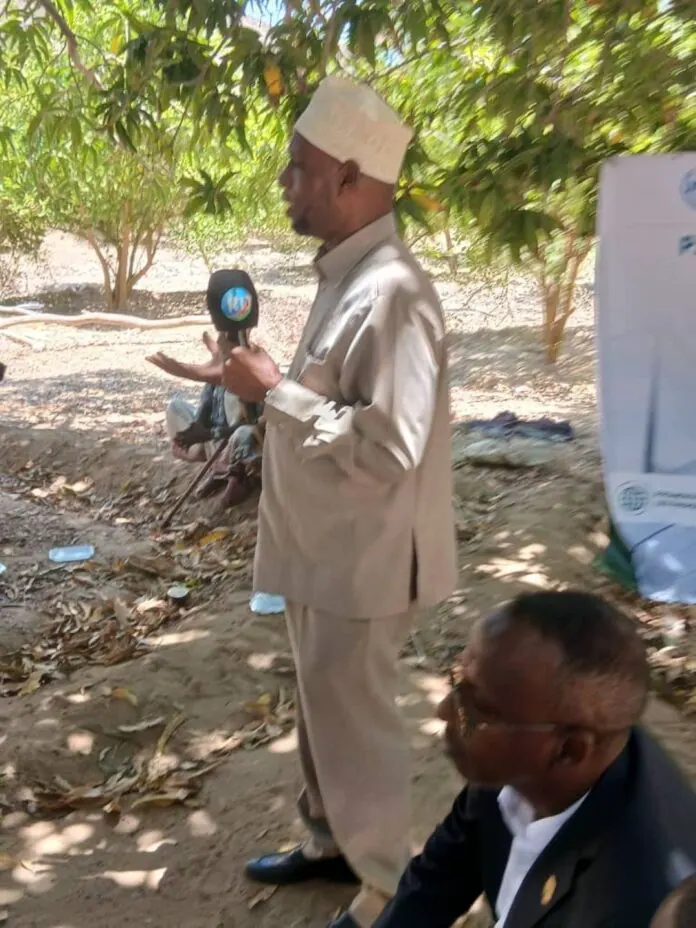
The village of Assamo in Djibouti's Ali-Sabieh region is facing significant challenges due to climate change. A recent mission of parliamentarians, accompanied by ministry officials, local leaders, and civil society representatives, visited the area to discuss these issues. The visit aimed to raise awareness about climate change and transition to renewable energy. The delegation met with local stakeholders, including farmers, herders, and community leaders, to understand the region's specific challenges.
The Assamo region is particularly vulnerable to climate change, with limited rainfall and water scarcity affecting agricultural and pastoral activities. The mission's visit was part of the "Parliamentarians for Climate Finance" (PCF) project, which aims to support Djiboutian parliamentarians in mobilizing green investments. The project is funded by the Green Climate Fund and implemented by the United Nations Industrial Development Organization (UNIDO) in partnership with Climate Parliament.
The mission's discussions focused on the region's water scarcity, with many wells and boreholes struggling to provide sufficient water for irrigation. Local stakeholders highlighted the impact of sand extraction for construction projects in the capital, which they claim is exacerbating water scarcity. An former agriculture ministry official recalled a past program aimed at improving water retention and availability for farmers.
The mission also discussed ways to finance and support the transition to renewable energy and ecological sustainability. The PCF project aims to validate a national climate finance strategy and identify priority projects that can attract public, private, and international funding. The goal is to involve regional authorities, local leaders, and civil society organizations in defining the priorities of the future Assamo Green Energy Zone.
Djibouti is highly vulnerable to climate change, with a strong aridity and significant climate variability affecting rural and nomadic populations. The country has set ambitious targets to reduce greenhouse gas emissions, aiming to increase its reduction target from 40% to 65% by 2025. The Assamo region's challenges and opportunities serve as a microcosm for the country's broader climate change goals.
The mission's visit concluded with a call for sustainable solutions and support for local communities. Stakeholders emphasized the need for concrete actions to address water scarcity, promote sustainable agriculture and pastoralism, and support the transition to renewable energy. The discussions highlighted the importance of involving local communities in climate change decision-making and ensuring that their needs and concerns are addressed.
The "Parliamentarians for Climate Finance" project and the Assamo mission demonstrate Djibouti's commitment to addressing climate change and promoting sustainable development. By engaging local stakeholders and parliamentarians, the project aims to create a more inclusive and effective approach to climate change mitigation and adaptation. The outcomes of the Assamo mission will inform future climate change initiatives and policy decisions in Djibouti.
Key points
- The Assamo region's vulnerability to climate change highlights the need for sustainable solutions to address water scarcity and support local communities.