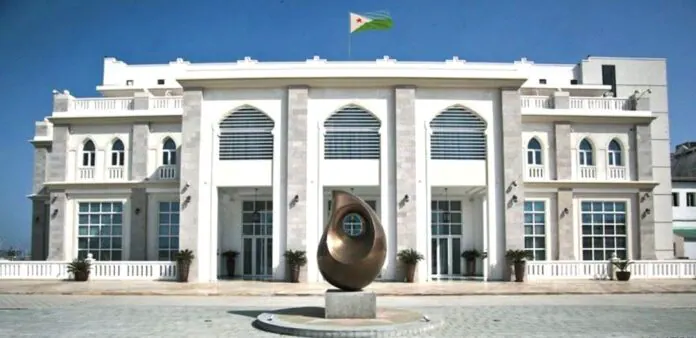
On September 22, 2026, President Ismail Omar Guelleh of Djibouti presided over the 10th Council of Ministers meeting. The session saw the examination and approval of several crucial financial projects. These projects pertain to various ministries, including the Ministry of Muslim Affairs and Waqfs, Ministry of Energy, and Ministry of City Planning and Housing. The meeting's agenda included the review of financial accounts for several state institutions.
The Council approved the financial accounts of the Diwan des Biens Waqfs for the 2025 fiscal year. The accounts reveal that the Diwan recorded 706.6 million FDJ in revenue and 687.7 million FDJ in expenses, resulting in a net profit of 18.9 million FDJ. This represents a decrease of 33.2 million FDJ compared to the 2024 fiscal year. The primary sources of revenue include private and state cemetery dues, as well as rental income.
The Council also approved the financial accounts of the Société Internationale des Hydrocarbures de Djibouti (SIHD) for 2025. SIHD's accounts show 37.17 billion FDJ in revenue and 36.76 billion FDJ in expenses, yielding a profit of 412 million FDJ. Despite a challenging environment marked by volatile oil prices, the company saw a 27% decline in revenue compared to the previous year. This decline is attributed to reduced volumes of petroleum products commercialized.
Furthermore, the Council reviewed and approved the financial accounts of the Société Immobilière d'Aménagement Foncier (SIAF) for 2025. SIAF's accounts reveal 3.41 billion FDJ in revenue and 3.42 billion FDJ in expenses, resulting in a net loss of 8.9 million FDJ. This represents a significant decline from the 2024 fiscal year, which recorded a profit of 82.8 million FDJ. The decrease is notable despite an increase in operational and commercial activities.
The Council also examined the financial accounts of the Imprimerie Nationale de Djibouti (IND) for 2025. IND's accounts show 392 million FDJ in revenue and 449.4 million FDJ in expenses, resulting in a loss of 57.4 million FDJ. The revenue decline is attributed to decreased exploitation products. However, the company managed to reduce operational expenses.
In addition to financial approvals, the Council discussed a bill aimed at modifying the law governing the Office Djiboutien de Développement de l'Energie Géothermique (ODDEG). The proposed changes seek to clarify the institutional affiliation of ODDEG under the Ministry of Energy and Natural Resources. This move aims to enhance coordination in the development and implementation of geothermal energy policies.
The modifications to the law will ensure that ODDEG, as a public industrial and commercial establishment, works in harmony with the current organization of the energy and natural resources sector. The changes are expected to bolster institutional coordination and policy implementation in the energy sector.
Key points
- The Council of Ministers approved several key financial projects, including the accounts of the Diwan des Biens Waqfs, SIHD, SIAF, and IND.
- The financial accounts of various state institutions reveal mixed results, with some recording profits and others experiencing losses.
- The Council also discussed modifications to the law governing ODDEG to enhance coordination in the energy sector.