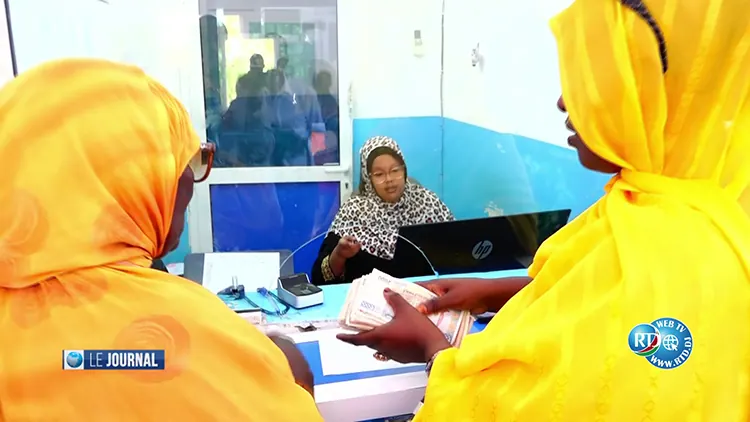
A joint mission comprising representatives from Djibouti's Ministry of Women and Family and Ministry of Agriculture has embarked on a three-day visit to Ali-Sabieh and Dikhil regions. The mission aims to oversee the distribution of microcredits granted by the CPEC to beneficiaries from cooperatives and community mutuals. This initiative is part of the Dress-EA project, which seeks to bolster economic and social resilience in vulnerable communities.
A total of 356 beneficiaries from 7 cooperatives and 19 community mutuals will receive these microcredits to finance their income-generating activities. The overall fund allocated for this purpose is 49 million Djibouti francs, provided in the form of interest-free loans. Beneficiaries are expected to gradually repay the amounts received, allowing other community members to benefit from this financing mechanism in turn.
Prior to this operation, beneficiaries participated in several awareness and training sessions on entrepreneurship and accounting. These sessions aimed to enhance their capacity to manage their activities, promote responsible use of funding, and contribute to the sustainability of supported initiatives. The training sessions were crucial in equipping beneficiaries with necessary skills to manage their microcredits effectively.
The Dress-EA project, implemented by the Ministry of Women and Family in collaboration with the Ministry of Agriculture, focuses on enhancing the economic and social resilience of vulnerable communities in Ali-Sabieh and Dikhil. Special attention is given to women, with the microcredit scheme serving as a tool to support their economic empowerment and develop income-generating activities.
The microcredit distribution is part of a broader strategy to reduce poverty within the concerned communities. By providing access to finance, the project aims to enable beneficiaries to initiate or expand their income-generating activities, thereby improving their livelihoods. The initiative also seeks to foster a culture of financial responsibility among beneficiaries.
The joint mission will assess the impact of the microcredit distribution and identify areas for further intervention. This will enable the Ministry of Women and Family and the Ministry of Agriculture to refine their approach and ensure the long-term sustainability of the project. The success of this initiative could lead to its replication in other regions of Djibouti.
The distribution of microcredits in Ali-Sabieh and Dikhil is a significant step towards promoting economic development and social stability in these regions. With the support of the CPEC and the collaborative efforts of the two ministries, the project is poised to make a positive impact on the lives of beneficiaries and their communities.
Key points
- The project aims to support the economic empowerment of women and vulnerable communities in Djibouti.
- A total of 356 beneficiaries will receive microcredits to finance their income-generating activities.
- The project is implemented in collaboration with the CPEC and focuses on sustainable community development.