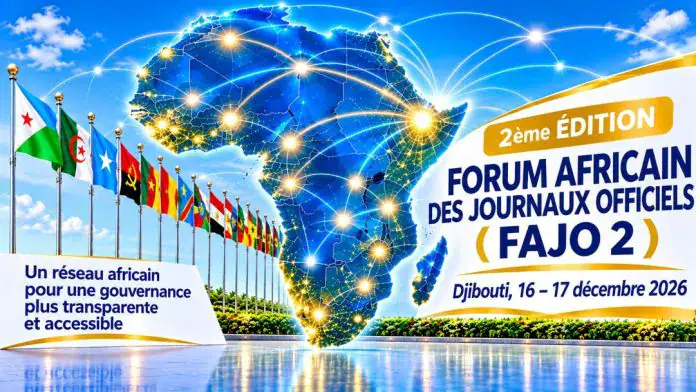
The Republic of Djibouti is set to host the second edition of the African Forum on Official Gazettes from December 16-17. The forum aims to establish a permanent African network of official gazettes, with a charter of cooperation and a permanent secretariat. This initiative prioritizes access to law, digital sovereignty, and institutional cooperation in African governance. Official gazettes play a crucial role in the functioning of states, providing a legal memory of institutions and guaranteeing the publicity of public acts.
The current state of official gazettes in Africa is marked by disparities, with some countries having digitalized their publications while others rely on printed copies. The lack of interoperability between systems, absence of shared standards, and limited technical and human capacities hinder the circulation of legal information. The Djibouti forum seeks to address these challenges and promote a collective transformation in access to law. The first edition of the forum was held in 2025, and this year's event aims to build on that momentum.
Djibouti has made significant strides in digitalizing its legal information, with the implementation of the e-JO project. This project involves the digitization of the country's legal heritage from 1901 to the present day. The online platform provides access to legislative and regulatory texts through a powerful search engine and features a newsletter that informs users of new regulations and laws. The platform is set to integrate artificial intelligence features to index and query archives.
The ambition of the Djibouti forum extends beyond the modernization of a national tool. It seeks to share experiences and competencies among African states to promote access to law, legislative consolidation, and harmonization of practices. The forum aims to establish a permanent African network of official gazettes, with a charter of cooperation and a permanent secretariat. This institutional architecture will enable the coordination of activities, monitoring of commitments, and continuity of exchanges between member states.
A triennial action plan covering 2027-2029 is expected to be adopted, outlining the major orientations of this cooperation. The plan will focus on resource sharing, personnel training, and digital infrastructure development. The forum will also explore technological areas such as artificial intelligence, cybersecurity, and electronic archive management. A common database of African official gazettes is also envisioned, which could facilitate cross-border consultation of texts.
The modernization of official gazettes has significant implications for economic transparency, transaction security, and the business environment. The Djibouti forum will also discuss complementary initiatives such as the Bulletin of Mandatory Legal Announcements and the Official Bulletin of Public Market Announcements. These projects aim to strengthen integrated digital ecosystems for the continent, promoting economic transparency and securing exchanges.
The African Forum on Official Gazettes is a crucial step towards promoting access to law and institutional cooperation in Africa. The establishment of a permanent African network of official gazettes will facilitate the circulation of legal information and reinforce the integration of the continent. The forum's outcomes are expected to have a positive impact on the business environment, economic transparency, and the rule of law in Africa.
Key points
- The forum aims to establish a permanent African network of official gazettes with a charter of cooperation and a permanent secretariat.
- Djibouti has made significant strides in digitalizing its legal information through the e-JO project.
- The modernization of official gazettes has significant implications for economic transparency, transaction security, and the business environment.