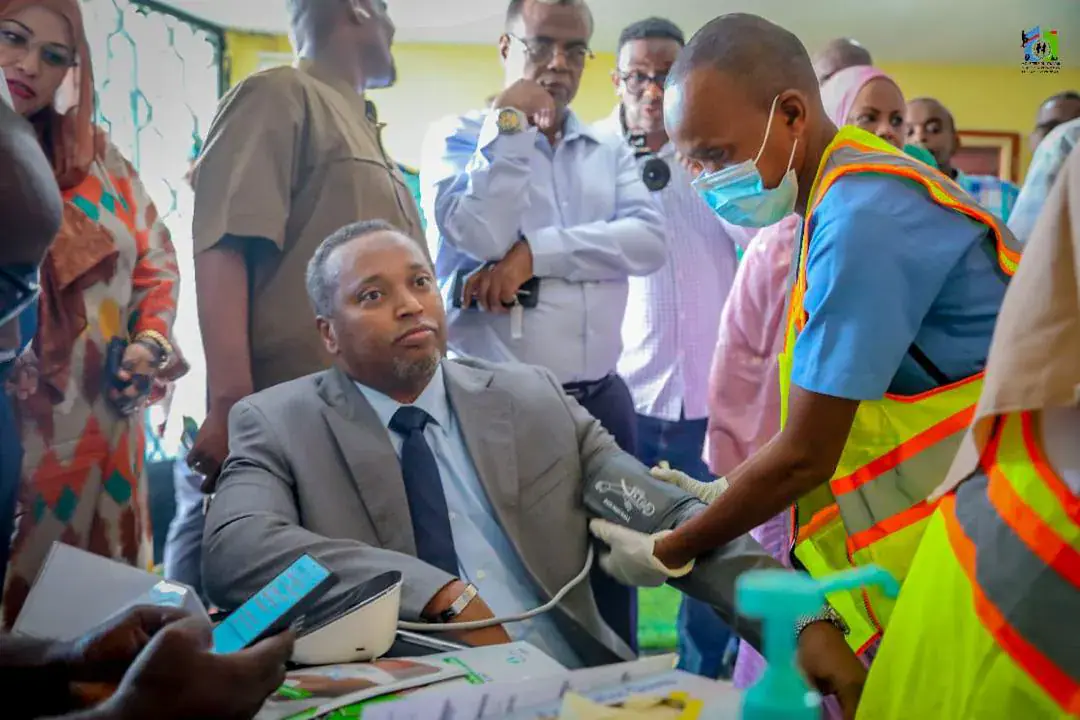
The government of Djibouti has initiated a campaign to raise awareness about the risks of sedentary lifestyle at work, with three ministers undergoing medical screening to set an example. The campaign, which runs from November 15 to 19, is a joint effort by the Ministries of Labor, Health, and Sports, in collaboration with the World Health Organization (WHO). The ministers who participated in the screening are Yonis Ali Guedi, Minister of Labor; Mouna Osman Aden, Minister of Health; and Fatouma Ali Abdallah, Secretary of State for Sports.
The campaign aims to promote regular physical activity and healthy habits among employees, with a focus on reducing the risk of non-communicable diseases such as hypertension, diabetes, and cardiovascular diseases. The WHO representative in Djibouti was present at the launch event, which took place at the Cité ministérielle, a hub for government administration. Several health screening stations have been set up, offering blood pressure and blood sugar tests to employees and visitors.
The government's initiative seeks to make employee health an integral part of improving working conditions. By combining the efforts of the Ministries of Labor, Health, and Sports, the campaign aims to encourage employees to adopt healthier lifestyles. According to the WHO, non-communicable diseases account for approximately three-quarters of global deaths, with cardiovascular diseases, cancer, diabetes, and chronic respiratory diseases being the leading causes.
The campaign's organizers hope to inspire employees to prioritize their health and well-being by making healthy choices in their daily lives. The three ministers who underwent medical screening have set an example for their colleagues, encouraging them to take proactive steps towards maintaining their health. The campaign's focus on sedentary lifestyle at work is particularly relevant, given the growing concern about the health risks associated with prolonged periods of sitting.
The government of Djibouti is taking a proactive approach to addressing the health needs of its employees, recognizing the importance of a healthy workforce in driving economic growth and development. By promoting healthy habits and providing access to medical screening, the government aims to create a supportive environment that encourages employees to prioritize their health.
The campaign against sedentary lifestyle at work is part of a broader effort to improve public health in Djibouti. The government has been working to strengthen its healthcare system, with a focus on preventing and managing non-communicable diseases. The WHO has been providing technical assistance and support to the government in this effort, helping to build capacity and promote best practices in healthcare.
The success of the campaign will depend on the level of engagement and participation from employees, as well as the government's continued commitment to promoting healthy habits and providing access to medical screening. If successful, the campaign could serve as a model for other countries in the region, highlighting the importance of prioritizing employee health and well-being in the workplace.
Key points
- The campaign aims to promote regular physical activity and healthy habits among employees to reduce the risk of non-communicable diseases.
Reporting sources
- Trois ministres se font dépister pour lancer une campagne contre la sédentarité au travail · agence djiboutienne d'information