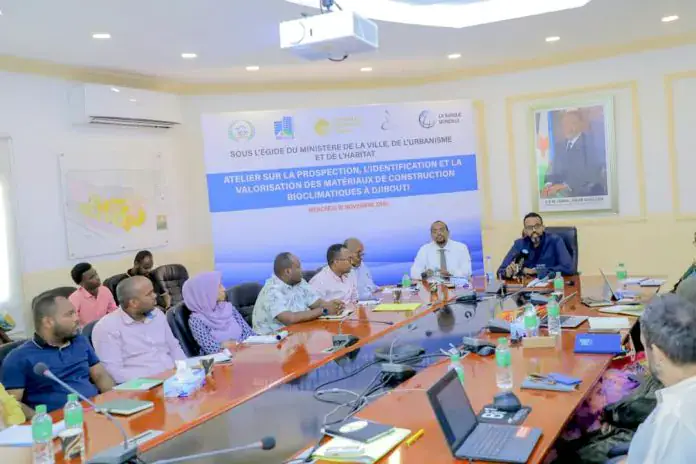
The Ministry of City, Urban Planning and Housing in Djibouti recently organized a workshop to discuss the potential of bioclimatic construction using local materials. The event, held on November 18, 2026, brought together public officials and building professionals to explore ways to promote sustainable and affordable housing solutions. The initiative aims to reduce the country's reliance on imported materials and lower construction costs.
The workshop focused on identifying and valorizing local materials that can be used in construction, with the goal of reducing costs and improving the quality and durability of buildings. Participants discussed the importance of developing local capacities and encouraging private sector involvement in the development of bioclimatic construction solutions. The event was attended by several high-ranking officials, including Abdoulkarim Mahmoud Hassan, Secretary General of the Ministry of City, Urban Planning and Housing.
The bioclimatic construction approach is seen as a way to address the challenges of housing in Djibouti, where the demand for affordable housing is high. By using local materials and adapting construction techniques to the country's climate, the government hopes to increase access to affordable housing while reducing the environmental impact of construction. The workshop was conducted in collaboration with the Chamber of Commerce of Djibouti and the ARULoS Agency.
The study on bioclimatic construction is being carried out by the Chiwara Projects office, in coordination with a team of Djiboutian researchers. The goal is to identify local materials that can be used in construction and to develop strategies for their promotion and use. The workshop marked an important step in the development of bioclimatic construction in Djibouti, with participants agreeing on the need to pursue efforts to promote sustainable and affordable housing solutions.
The use of local materials in construction can have several benefits, including reducing transportation costs and supporting local economic development. Additionally, bioclimatic construction can help reduce the environmental impact of buildings, which are often adapted to the local climate and use natural materials. The Djiboutian government hopes that this approach will help address the country's housing challenges while promoting sustainable development.
The workshop highlighted the importance of collaboration between public and private sector actors to promote bioclimatic construction in Djibouti. Participants emphasized the need for a coordinated approach to develop local capacities and promote the use of local materials in construction. The government has expressed its commitment to supporting the development of bioclimatic construction, with the aim of increasing access to affordable housing and promoting sustainable development.
The development of bioclimatic construction in Djibouti is seen as a key strategy for addressing the country's housing challenges. With a growing population and increasing demand for housing, the government is under pressure to deliver affordable and sustainable housing solutions. The use of local materials and bioclimatic construction techniques offers a promising approach, with the potential to reduce costs, improve quality, and promote sustainable development.
Key points
- The workshop aimed to promote bioclimatic construction using local materials to reduce housing costs and improve sustainability.