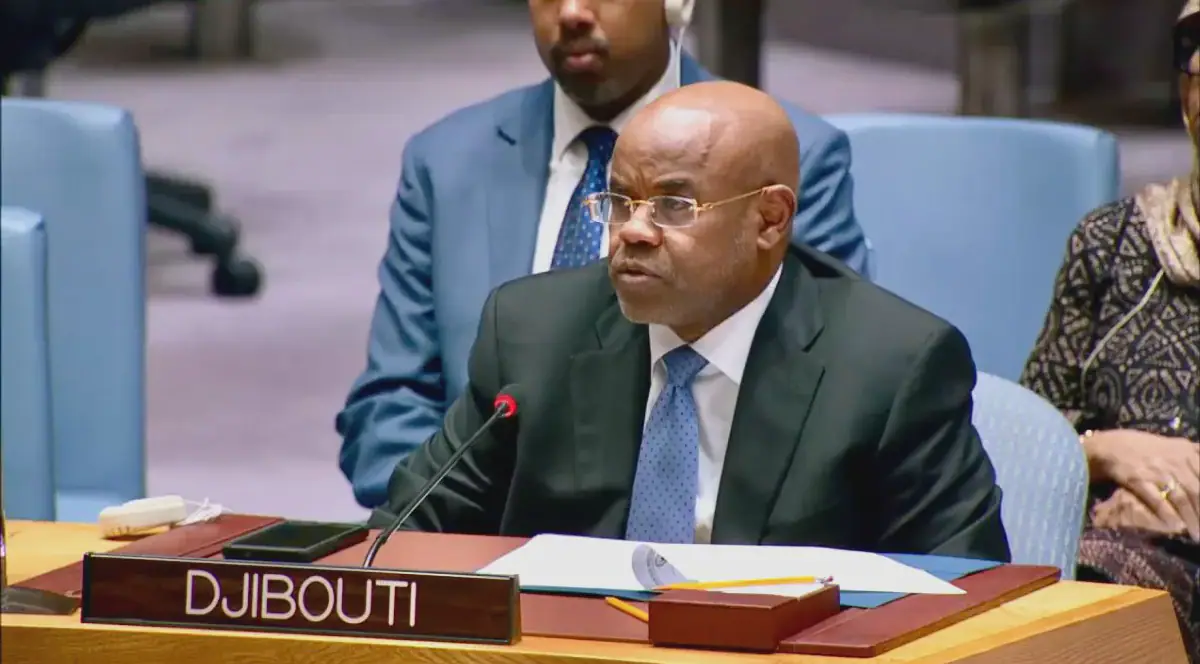
Djibouti has called on the UN Security Council to establish a binding treaty regulating autonomous weapons, emphasizing the need for human control over life-and-death decisions. Ambassador Mohamed Siad Doualeh, Djibouti's representative to the UN, stated that the decision to end human life cannot be delegated to an algorithm without human oversight and accountability. He made these remarks during a high-level debate on conflict resolution in the era of rapid technological changes.
The Djiboutian ambassador stressed the importance of maintaining significant human control over the use of force and supported the development of a legally binding instrument to ban and regulate autonomous weapon systems. He also advocated for a robust international regulatory framework for the use of unmanned drones. Doualeh emphasized that this is crucial for the millions of people caught in conflicts worldwide, particularly in Africa, and for future generations.
Autonomous weapons have become increasingly prominent on various battlefields, including Ukraine and Sudan. These devices are inexpensive, easily accessible, and used by both regular armies and armed groups. Djibouti, strategically located near the Bab el-Mandeb Strait, has highlighted the need for enhanced maritime security and international cooperation to protect commercial vessels, ports, and undersea cables.
The importance of maritime security was underscored by recent incidents in the Red Sea, where commercial navigation has been targeted by drone and missile attacks claimed by Yemen's Houthi rebels. Several undersea cables have also been damaged, demonstrating the vulnerability of global commerce and communication infrastructure. Djibouti's ambassador called for assistance to small states and developing countries in addressing these threats.
While acknowledging the dangers of artificial intelligence, Ambassador Doualeh noted its potential benefits, such as enhancing early warning systems, supporting mediation, and improving peacekeeping. He emphasized the need for collective action to preserve peace, save lives, and protect human dignity. The ambassador's statements reflect Djibouti's commitment to promoting international cooperation and regulation of emerging technologies.
The debate on autonomous weapons and their regulation is ongoing at the UN, with various countries and organizations contributing to the discussion. Djibouti's stance aligns with the concerns of many nations regarding the accountability and control of autonomous systems. The push for a binding treaty aims to establish clear guidelines and prevent unintended consequences.
As the international community continues to grapple with the implications of emerging technologies, Djibouti's call for a binding treaty on autonomous weapons highlights the need for proactive regulation. The outcome of these discussions will have significant implications for global security, human rights, and the future of warfare.
Key points
- Djibouti urges UN to regulate autonomous weapons.
- Ambassador Doualeh emphasizes human control over life-and-death decisions.
- International cooperation is crucial for protecting maritime security and global commerce infrastructure.
Reporting sources
- A l'ONU, Djibouti refuse de confier « à un algorithme » la décision de tuer · agence djiboutienne d'information