The government of Djibouti and the World Bank have launched preparations for a new country partnership framework that will cover the period 2028-2032. This agreement was reached on the sidelines of the World Bank and International Monetary Fund annual meetings held in Bangkok, Thailand. The new framework will prioritize private sector-led economic growth and job creation.
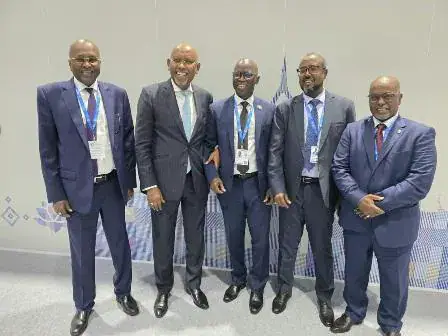
The agreement was made during a meeting between Djibouti's Minister of Economy and Finance, Elias Moussa Dawaleh, and World Bank Vice President for the Middle East and North Africa, Ousmane Dione. The meeting was attended by a high-level delegation from Djibouti, including the Minister of Budget, Ousmane Ibrahim Robleh, and the Governor of the Central Bank, Hassan Moussa Yasin.
Minister Dawaleh highlighted the challenging regional situation, with ongoing conflicts in the Horn of Africa and Yemen, leading to an increase in migrants and refugees. He emphasized that Djibouti is facing additional humanitarian burdens, requiring more resources to provide shelter, healthcare, and decent living conditions for the influx of people.
The Minister also stressed that Djibouti's stability is closely linked to the stability of the entire region. He called for enhanced international support and more flexibility in implementing aid programs to respond effectively to rapidly evolving developments on the ground.
The new partnership framework will focus on four main priorities: youth employment, the energy sector, public institution reform, and promoting the private sector and investment. World Bank Vice President Dione reaffirmed the bank's commitment to supporting Djibouti and expressed readiness to accelerate project implementation to achieve tangible results.
The World Bank and Djibouti have a history of collaboration, with the bank providing support in various sectors, including infrastructure, energy, and social development. The new partnership framework is expected to build on this cooperation and address the country's development challenges.
The launch of the new partnership framework preparations marks an important step in the relationship between Djibouti and the World Bank. The framework is expected to be finalized after consultations with various stakeholders, including government agencies, civil society, and the private sector.
Key points
- The new partnership framework will prioritize private sector-led economic growth and job creation in Djibouti.
- The framework will focus on four main priorities: youth employment, the energy sector, public institution reform, and promoting the private sector and investment.
- The World Bank has reaffirmed its commitment to supporting Djibouti's development efforts.