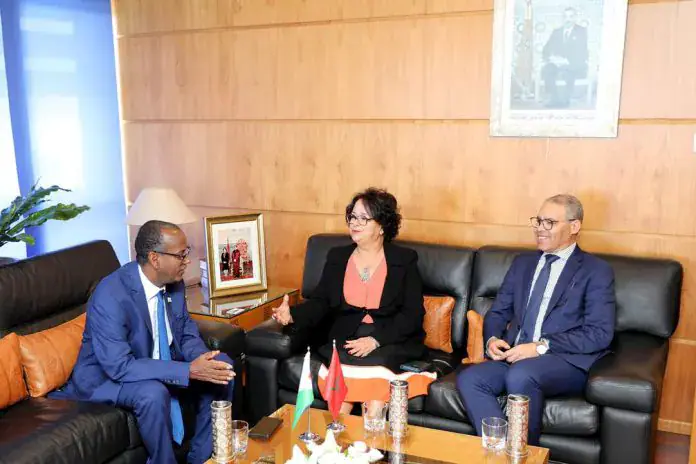
Djibouti and Morocco have taken a significant step in strengthening their cooperation in the field of media regulation. The National Communication Commission (CNC) of Djibouti and the High Authority of Audiovisual Communication (HACA) of Morocco signed their first cooperation agreement on November 24 in Rabat. This agreement aims to enhance the regulatory capacities of the Djiboutian institution through knowledge transfer, specialized training, and the provision of technological tools.
The cooperation agreement between Djibouti and Morocco marks a new stage in their collaboration in the field of communication. The agreement was signed during a working visit by the President of the CNC, Ali Mohamed Dimbio, and a delegation from the Djiboutian institution to Morocco on November 24 and 25. The visit allowed for in-depth discussions with Moroccan officials on contemporary challenges in audiovisual regulation and future cooperation prospects between the two institutions.
A key aspect of the cooperation agreement is the enhancement of technical and professional capacities of Djiboutian teams. The HACA plans to provide the CNC with its HMS+ audiovisual monitoring solution, a technological tool developed by the Moroccan authority for monitoring audiovisual content. The partnership also includes training programs for CNC teams and technical support over time.
The cooperation between Djibouti and Morocco aims to contribute to more effective media regulation, serving citizens' rights and public space pluralism. In today's rapidly evolving media landscape, regulatory bodies must continuously adapt their methods and instruments. Strengthening their competencies is crucial for promoting content diversity, guaranteeing expression pluralism, and preserving public debate quality.
The agreement reflects a shared ambition to promote a pluralistic and professional media landscape that respects citizens' right to information. The visit by the Djiboutian delegation included bilateral consultations on the experiences of both institutions and concrete prospects for collaboration. These discussions brought together the presidents of both institutions, the director-general of HACA, and several directors of the Moroccan authority.
The Djiboutian delegation also explored Morocco's public audiovisual service experience during their visit. In Casablanca, they met with Salim Cheikh, director-general of SOREAD 2M, and discovered various departments of the public operator, including its television and radio newsrooms. This immersion into a major Moroccan audiovisual actor's operations provided another opportunity for exchanging professional practices and discussing sector challenges.
With this first agreement, Djibouti and Morocco lay the groundwork for an institutional partnership that will develop around shared experiences, technological innovation, and strengthened regulatory mechanisms. This cooperation is part of a broader effort to consolidate a pluralistic, professional media landscape that respects citizens' right to information.
Key points
- The agreement includes the provision of the HMS+ audiovisual monitoring solution to enhance Djiboutian regulatory capacities.