The University of Djibouti is set to introduce a new degree in agronomy, thanks to a partnership with France's Agrocampus de Saintonge. The program, slated to begin in 2027, aims to equip students with the skills needed to address the country's agricultural challenges. Djibouti, a nation characterized by its arid climate and heavy reliance on food imports, sees this development as a strategic step towards enhancing local agricultural capabilities. By training local talent, the initiative seeks to bolster the country's agricultural sector and move towards greater food sovereignty.
A delegation from Agrocampus de Saintonge, in collaboration with Charente-Maritime Coopération, recently visited Djibouti to advance the development of this new academic program. Their mission, which took place from October 13 to 23, focused on refining the curriculum for the upcoming agronomy degree. The program is being designed in conjunction with the Faculty of Sciences at the University of Djibouti, with a focus on addressing the specific agricultural challenges faced by the country. Key areas of study will include sustainable water management, climate change adaptation, agropastoral systems, and the structuring of agricultural sectors.
The development of this agronomy degree is part of a broader effort to enhance agricultural education and practices in Djibouti. The country's arid climate and limited arable land pose significant challenges to its agricultural sector, which currently relies heavily on imports. By investing in local agricultural education and training, the initiative aims to reduce dependence on external food sources and promote sustainable agricultural practices. This approach aligns with the goals of the University of Djibouti and its partners to foster national development through education and capacity building.
The project has involved extensive collaboration between French and Djiboutian institutions, including the Ministry of Agriculture, the Centre d'études et de recherche de Djibouti (CERD), and the Faculty of Sciences at the University of Djibouti. This cooperative effort ensures that the new degree program is tailored to meet the specific needs of Djibouti's agricultural sector. The curriculum is being developed with input from local stakeholders to ensure its relevance and effectiveness in addressing the country's agricultural challenges.
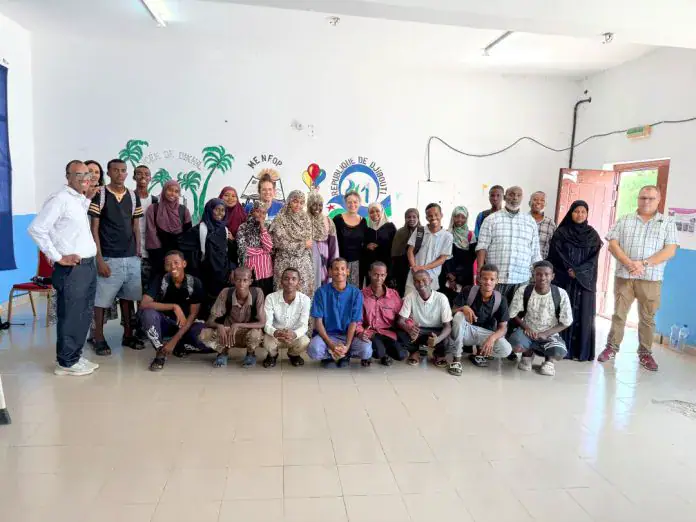
As part of the project, a series of awareness-raising workshops were conducted in various regions of Djibouti, including Dikhil, Ali-Sabieh, Tadjourah, and Djibouti-ville. These workshops, which reached over 130 high school students, aimed to introduce young people to agricultural careers and the opportunities available in this sector. The initiative also included visits to local farms, such as the Ferme de Harou and the Jardins d’Assamo, which showcase innovative agricultural practices like agroforestry and permaculture.
The project partners also organized a roundtable discussion at the French Institute in Djibouti, focusing on the valorization of local agricultural products. This event provided a platform for stakeholders to share experiences and best practices in promoting local agricultural initiatives. By highlighting successful models and strategies, the discussion aimed to inspire further innovation and investment in Djibouti's agricultural sector.
The new agronomy degree program represents a significant step forward in Djibouti's efforts to develop its agricultural sector and achieve greater food sovereignty. With the support of French institutions like Agrocampus de Saintonge, the University of Djibouti is poised to play a crucial role in shaping the country's agricultural future. As the program prepares to launch in 2027, it holds promise for enhancing local agricultural capabilities and contributing to the nation's sustainable development.
Key points
- University of Djibouti to launch agronomy degree with French support in 2027.