A recent study in the Democratic Republic of Congo emphasized the need for diversifying financial resources to support free education and guarantee equitable access to quality education. According to the study, presented by researcher Pelé Beya, diversification of funding sources, combined with improved governance and increased mobilization of actors, is crucial for the sustainability of free education. The study focused on the contribution of innovative resources to financing basic education in the DRC.
The researcher recommended that the government establish a specific institutional and legal framework for mobilizing, allocating, and managing innovative resources. This framework should ensure transparency, accountability, and traceability of resources mobilized for education. The study also suggested increasing the share of public expenditure allocated to basic education and diversifying funding sources to reduce dependence on classical budget resources and foreign aid.
The study identified various innovative resources that could contribute to financing basic education, including mining and oil royalties, academic fees, telecommunications revenue, and financial messaging services. However, the researcher noted that these resources have limited effects and are not yet sufficient to cover the financing deficit generated by free education. The study also found that households continue to play a significant role in financing schools, highlighting the limitations of the current financing model.
The introduction of free basic education has led to a significant increase in school enrollment, but it has also put pressure on the education system's capacity, resulting in overcrowded classrooms, inadequate infrastructure, and a shortage of teachers. The researcher emphasized that structural constraints in the education system affect the quality of learning and contribute to high dropout rates, particularly due to poverty and unfavorable learning conditions.
The study recommended that school administrators improve planning and management of financial and material resources, ensure their use in line with school priorities, and strengthen transparency through regular accounting and financial reporting. It also suggested involving parent committees and other stakeholders in monitoring resource utilization and identifying opportunities to mobilize complementary local resources.
The researcher called on the Ministry of National Education and New Citizenship to develop an operational mechanism for mobilizing and integrating innovative resources into basic education financing. This mechanism should be accompanied by a reliable monitoring and evaluation system to measure the impact of these resources on access, enrollment, and education quality.
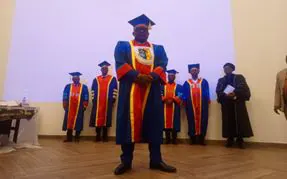
The study concluded that a combination of institutional governance, innovative resource mobilization, and community participation is necessary to sustainably address the growing educational needs in the DRC. The researcher, Pelé Beya, was awarded a doctorate in economics with the highest distinction after presenting his thesis.
Key points
- Diversification of financial resources is crucial to sustain free education in the DRC.
- Improved governance and increased mobilization of actors are necessary to ensure equitable access to quality education.
- Innovative resources, such as mining and oil royalties, can contribute to financing basic education but are not yet sufficient to cover the financing deficit.