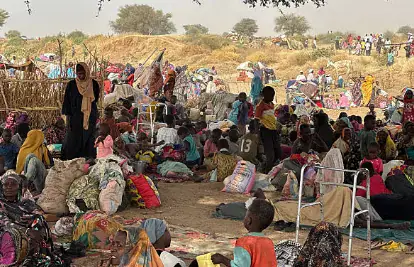
Thousands of people displaced by fighting in Geissan locality in Sudan's Blue Nile region are facing extremely difficult humanitarian conditions. They have been forced to seek refuge in forests, where they are struggling with acute shortages of food, medicine, and shelter materials. The lack of healthcare services has driven some families to turn to herbal remedies in an attempt to treat illnesses. Many residents fled from areas such as Geissan, Bakori, and Al-Yas, only to find themselves stranded in forests and surrounding areas.
Displaced people are constructing makeshift shelters from tree fronds and old plastic sheeting. Yagoub Abini, a displaced person, described the dire circumstances, stating that mosquitoes and the spread of disease have compounded their suffering. Some families have between five and six members suffering from various illnesses, particularly children, women, and older people. Abini also stated that they have yet to receive any assistance from humanitarian organizations or other agencies.
The lack of healthcare services and medicines has led to fears over the spread of disease among displaced people, particularly women and children. Inam Hussein recounted her sick daughter's ordeal, saying the girl was vomiting and suffering from headaches and back pain. Displaced families are unable to obtain basic medicines, including Panadol tablets, forcing them to use tree barks and leaves as remedies. The plants are boiled in water before the resulting liquid is consumed.
According to Ayman Abdel-Karim, a local activist with the Geissan Displaced People's Gathering, displaced families are spread across four main gathering centers: Al-Madina 10, Dandan, Shaira, and Abu Qumai. The humanitarian situation is catastrophic, with many families lacking essential supplies. The Al-Madina 10 center is hosting 562 families, while the Dandan center is hosting 314 families without any humanitarian assistance.
Abdel-Karim also reported cases of an illness referred to as "sea worm," which causes skin irritation and throat pain. Malaria is also widespread, and some displaced families have turned to herbal remedies because medicines and medical services are unavailable. At the Shaira center, the number of displaced people has reached approximately 1,700 families, comprising nearly 8,000 people, without sufficient humanitarian assistance.
Displaced people are appealing for urgent intervention from humanitarian organizations and relevant authorities to provide food, medicine, and shelter materials, as well as healthcare services. The humanitarian crisis is unfolding as fighting continues between the Sudanese Armed Forces and the Rapid Support Forces in Geissan, Kurmuk, and Wad Al-Mahi localities in the Blue Nile region.
The situation is expected to worsen, with fears of further displacement and escalating humanitarian needs. Humanitarian organizations and relevant authorities are urged to intervene urgently to address the needs of displaced people and provide essential assistance.
Key points
- Thousands displaced by fighting in Sudan's Blue Nile region face dire humanitarian conditions
- Displaced people are struggling with acute shortages of food, medicine, and shelter materials
- Humanitarian organizations and authorities are urged to intervene urgently to address the needs of displaced people